ARCHIVED CONTENT
You are viewing ARCHIVED CONTENT released online between 1 April 2010 and 24 August 2018 or content that has been selectively archived and is no longer active. Content in this archive is NOT UPDATED, and links may not function.Extract from article by Cynthia Larose and Brian Lam
Imagine you are the CEO of company sitting across from an interviewer. The interviewer asks you the age old question, “So tell me about your company’s strengths and weaknesses?” You start thinking about your competitive advantages that distinguish you from competitors. You decide to talk about how you know your customers better than the competition, including who they are, what they need, and how your products and services fit their needs and desires. The interviewer, being somewhat cynical, asks “Aren’t you worried about the liabilities involved with collecting all that data?”
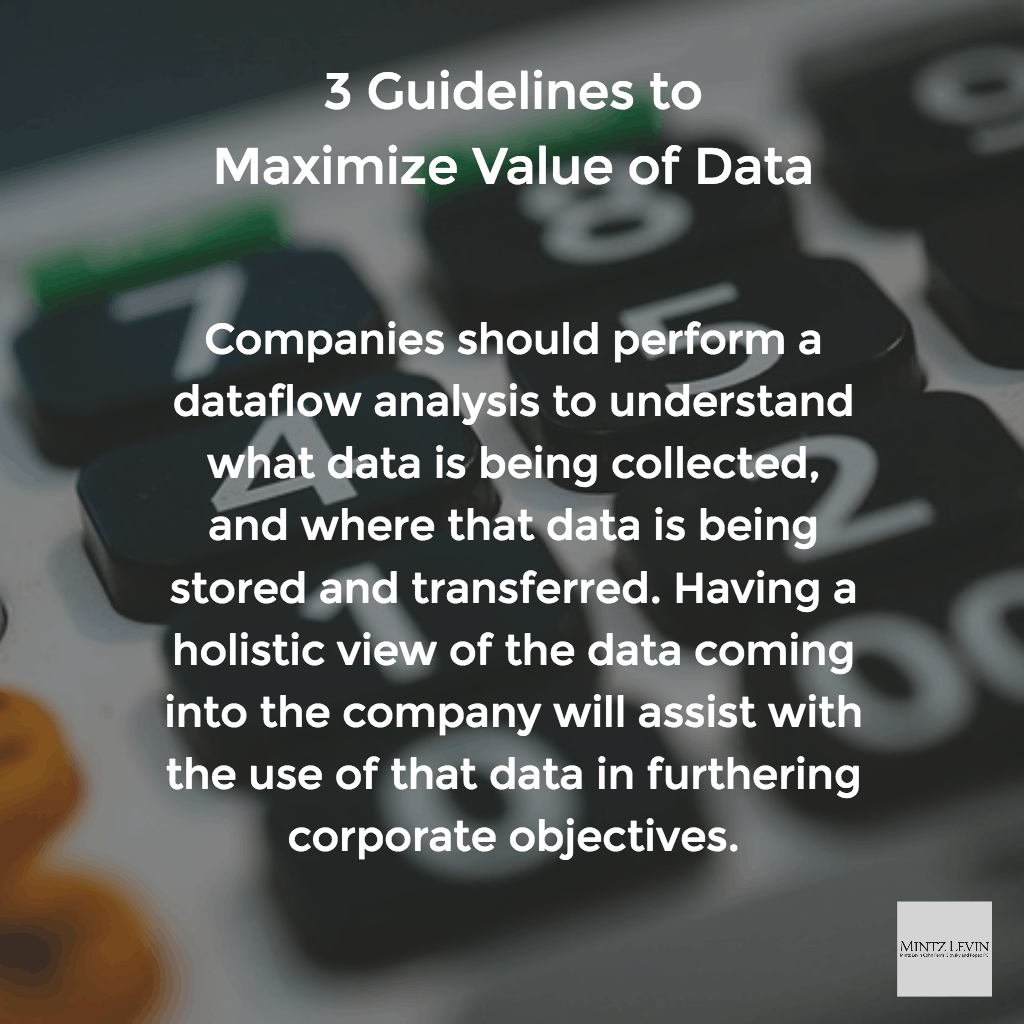
In honor of National Cyber Security Awareness Month , we at Mintz Levin wanted to take the chance to remind our readers of data’s value as an asset and the associated liabilities that stem from its collection and use, as well as provide guidelines for maximizing its value and minimizing its liabilities.
Data’s Value as an Asset
More than ever before, data is now recognized as an asset in corporate transactions. This year, Unilever PLC was widely reported to have paid $1 billion in cash for Dollar Shave Club , a mail-order service that ships customers disposable razors. While four year old Dollar Shave Club is not profitable, Kees Kruythoff, president of Unilever North America, credit the purchase with providing Unilever “unique consumer and data insights.” According to some , the transaction “would represent the largest multiple for a e-commerce startup in history.” However, don’t think that data is only a value driver for stratospheric M&A valuations. It can also form a significant portion of the remaining value of a company during the bankruptcy process.
Read the complete article at 3 Guidelines to Maximize Value of Data