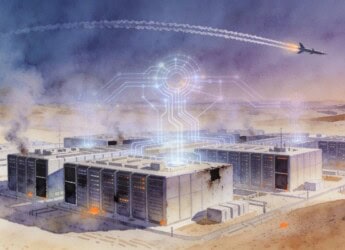

Editor’s Note: Cross-border drone incursions into NATO territory have shifted from theoretical risk to operational fact in the span of a single week. Three Baltic states — Estonia, Latvia, and Lithuania — each absorbed stray Ukrainian drones between March 23 and 25 as Kyiv’s forces executed their largest coordinated strike campaign of 2026 against Russian energy infrastructure on the Baltic Sea. The Auvere power plant strike in Estonia and the Kraslava explosion in Latvia occurred alongside attacks that knocked roughly 40 percent of Russia’s oil export capacity offline, per Reuters calculations. For cybersecurity, data privacy, regulatory compliance, and eDiscovery professionals, the convergence of kinetic strikes, electronic warfare, and EU regulatory frameworks like NIS2 creates a new category of operational risk in the Baltic theater. GPS jamming and signal spoofing degrade the data integrity that organizations depend on for compliance and litigation readiness, while incident reporting obligations under NIS2 extend to critical infrastructure operators now physically within range of military operations. Watch for NATO’s response at the upcoming Ankara summit, where Baltic allies are pushing for formalized counter-drone protocols — and track how insurers adjust war exclusion clauses for organizations with Baltic exposure.
Content Assessment: Ukraine's Drone War Spills Into NATO Territory, Rattling Baltic Airspace and Global Energy Markets
Information - 93%
Insight - 94%
Relevance - 90%
Objectivity - 90%
Authority - 94%
92%
Excellent
A short percentage-based assessment of the qualitative benefit expressed as a percentage of positive reception of the recent article from ComplexDiscovery OÜ titled, "Ukraine's Drone War Spills Into NATO Territory, Rattling Baltic Airspace and Global Energy Markets."
Russo-Ukrainian Conflict Update – Geopolitics Beat
Ukraine’s Drone War Spills Into NATO Territory, Rattling Baltic Airspace and Global Energy Markets
ComplexDiscovery Staff
A Ukrainian strike drone slammed into the chimney of an Estonian power plant at 3:43 a.m. on Wednesday, and a second exploded in a field in Latvia’s Kraslava district hours later — marking the first time Ukrainian weapons have struck infrastructure inside two NATO member states in a single night. The incidents, which occurred during Ukraine’s largest coordinated drone offensive of 2026 against Russian Baltic Sea energy infrastructure, have forced allied capitals to confront an uncomfortable reality: the air war between Kyiv and Moscow no longer respects borders.
Estonia’s Internal Security Service Director General Margo Palloson confirmed that wreckage recovered at the Auvere thermal power station was Ukrainian in origin. The drone, he said, likely deviated from its planned route toward targets in Russia’s Leningrad Oblast, “possibly affected” by Russian electronic warfare measures while transiting Russian airspace. No one was injured, and the plant’s operator, Enefit Power, reported no damage to Estonia’s electricity grid. But the symbolism landed harder than the drone itself — a live munition from an allied nation’s war effort had struck critical energy infrastructure on NATO soil.
In Latvia, the National Armed Forces tracked the second drone crossing from Russian airspace before early warning sensors registered an explosion near the town of Kraslava, near the Russian border. President Edgars Rinkevics confirmed the drone was Ukrainian. Defense Minister Andris Spruds, who had been in Kyiv that same day discussing joint drone production with President Volodymyr Zelenskyy, cut short his visit and flew home to manage the fallout.
The twin incidents did not occur in a vacuum. They were collateral effects of what Reuters, in a March 25 dispatch, called the most severe disruption to Russian oil exports in modern history. Overnight, Ukrainian long-range drones struck the port of Ust-Luga, a terminal handling roughly 700,000 barrels of crude per day, setting multiple storage tanks ablaze. That attack followed a separate wave on the night of March 22–23 that ignited fuel reservoirs at Primorsk, Russia’s largest oil-loading facility on the Baltic Sea and the terminus of the Baltic Pipeline System.
By Wednesday morning, Reuters calculated that approximately 40 percent of Russia’s crude oil export capacity — around 2 million barrels per day — was offline. Loadings at both Primorsk and Ust-Luga had been suspended. Combined with earlier strikes on the Black Sea port of Novorossiysk and damage to the Druzhba pipeline through Ukraine, the coordinated campaign has disrupted Russian oil exports on a scale that analysts say ranks among the most severe in the post‑Soviet era.
Leningrad Oblast Governor Alexander Drozdenko said air defenses intercepted dozens of drones over the region during the attack waves, though official tallies varied by timeframe — with figures ranging from over 50 to over 70 depending on the reporting period. Several drones penetrated to their targets regardless. Fires broke out at fuel storage facilities in both ports, and Ust-Luga was sealed off. Russia’s Defense Ministry claimed 249 Ukrainian drones were destroyed across multiple regions, including Leningrad, Bryansk, Belgorod, and Kursk — figures that, if accurate, underscore the sheer volume of the assault.
Expanded domestic drone production underpins Kyiv’s capacity to sustain operations at this tempo. Deputy Defense Minister Serhii Boiev told a NATO operational planning conference in January that Ukraine would manufacture over 7 million drones in 2026, up from roughly 5 million in 2025 — a production curve that has doubled annually since 2023. Among the newer platforms is the Peklo, a jet-powered cruise missile developed domestically with a range of 700 kilometers at speeds matching conventional cruise missiles, at a fraction of the cost. Ukraine’s drone forces have also struck Engels-2, the Saratov Oblast airfield housing Russia’s Tu-95, Tu-22, and Tu-160 strategic bombers, in repeated operations designed to degrade Moscow’s long-range strike capability.
For the Baltic states, the immediate concern is not Ukrainian intent but the physical reality that long-range drone corridors now cross their airspace. Estonia’s northeastern airspace was closed for hours after the Auvere impact, and NATO Baltic Air Policing jets were scrambled. Estonian Prosecutor General Astrid Asi said available information suggests the drone was not deliberately directed at Estonia, a judgment that Palloson echoed while warning that “for as long as Russia’s war against Ukraine continues, similar incidents may occur again.”
Lithuania has faced its own reckoning. A Ukrainian drone crashed in Lithuania’s Varena district on Monday, March 23, prompting confirmation the following day from Prime Minister Inga Rugienė and a sharp statement from Foreign Minister Kestutis Budrys, who called the accumulating incidents “an alarming sign of the spillover of Russia’s aggression against Ukraine onto NATO territory.” Budrys wrote directly to NATO Secretary General Mark Rutte requesting immediate measures to enhance allied air defense capabilities in the region, and has pushed for NATO to formalize a response protocol for drone and aircraft incursions at the upcoming Ankara summit.
The electronic warfare dimension adds another layer of unpredictability. Russia’s Tobol system and related platforms are designed to jam GPS, Galileo, and GLONASS navigation signals across wide areas — disrupting not only military drones but civilian aviation and maritime navigation. Lithuania has recorded a 22‑fold increase in GPS spoofing incidents over the past year, and Estonia reports that 85 percent of its civil flights have experienced signal interference, according to national aviation and communications authorities. When a drone’s navigation is degraded, it does not simply stop flying. It continues on whatever heading physics dictates, which is how a weapon aimed at a Russian port ends up embedded in an Estonian smokestack.
The strategic calculus behind Ukraine’s campaign is straightforward: target the revenue streams that fund Russia’s war machine. Primorsk and Ust-Luga together handle the bulk of Russia’s Baltic crude exports, and their disruption has immediate consequences for Moscow’s budget. But the secondary effects ripple outward. Global oil benchmarks tightened on Wednesday as traders priced in the supply disruption, and shipping insurers began reassessing risk premiums for Baltic Sea routes. For energy-dependent European economies already navigating the aftermath of the 2022 supply shock, the concentration of hostilities around Baltic energy corridors introduces fresh volatility.
The defensive side of the equation is evolving in parallel. Lithuania has formally requested NATO air defense support, and the European Commission is rolling out an anti-spoofing authentication service for satellite navigation in 2026 — a direct response to the jamming campaign. But integrated counter-UAS systems capable of detecting, tracking, and neutralizing small drones across a multi-country theater remain a work in progress, and the Baltic states have become the live testing ground for technologies that the entire alliance will eventually need.
The legal and diplomatic dimensions are equally tangled. Under international law, a military drone entering allied airspace — even accidentally — is an airspace violation, and a drone striking infrastructure constitutes a use of force. Estonia and Latvia have so far treated the incidents as unintentional consequences of Ukraine’s campaign against Russia, declining to characterize them as attacks. But that restraint has limits. Palloson noted that the investigation is ongoing, and Estonia’s government has reserved the right to demand accountability if the facts warrant it.
The Auvere strike also triggers regulatory obligations that extend well beyond diplomacy. As a power generation facility in an EU member state, the plant falls within the scope of the NIS2 Directive, which requires operators of essential services to report cybersecurity and security incidents within 24 hours, with follow-up updates within 72 hours and a full report within 30 days. Estonia’s implementation of NIS2 through amendments to its Cybersecurity Act swept an estimated 5,500 to 7,000 organizations into scope as of January 2026. Whether a kinetic drone strike on critical energy infrastructure qualifies as a reportable incident under the directive’s framework — and what preservation obligations that triggers — is a question that information governance and compliance teams across the Baltic region are now actively grappling with.
For organizations with operations, personnel, or digital infrastructure in the affected area, the electronic warfare environment creates a distinct category of data integrity risk. GPS spoofing corrupts location metadata embedded in everything from vessel tracking systems to automated log files. Communications disruption can create gaps in record-keeping that regulators and litigants will later scrutinize. When the electromagnetic spectrum itself becomes contested terrain, the reliability of the digital records that organizations depend on for compliance, audit, and litigation readiness degrades in ways that are difficult to detect and harder to remediate after the fact.
Maritime logistics companies, energy traders, defense contractors, and their legal counsel face an expanding universe of evidentiary challenges. Aviation data, radar logs, satellite imagery, and electronic warfare telemetry are becoming central to incident investigations that span multiple jurisdictions and multiple legal frameworks simultaneously. The forensic chain of evidence from a drone strike — launch telemetry, navigation data, impact analysis, attribution modeling — implicates the same digital preservation and cross-border discovery frameworks that eDiscovery professionals navigate in complex international litigation. As NATO allies formalize protocols for responding to airspace incursions, the evidentiary standards for attributing drone activity will increasingly intersect with the tools and methodologies of digital forensics.
The insurance dimension compounds the exposure. War exclusion clauses in property and casualty policies, political risk coverage, and emerging cyber-physical damage policies are all being tested by events that blur the line between armed conflict and collateral accident. Organizations with Baltic operations should expect their insurers to ask pointed questions about risk mitigation, and litigation arising from drone-related damage or disruption will generate preservation obligations and discovery demands that reach across borders.
The deeper question is whether the current framework — where allied nations absorb collateral strikes from a partner’s military operations, investigate them quietly, and move on — can hold as Ukraine’s drone campaigns grow in scale and frequency. Palloson himself framed the outlook bluntly: further incidents are likely for as long as the war continues. With Kyiv projecting 7 million drones in production this year and Russian electronic warfare systems actively degrading their guidance, his assessment is difficult to dispute.
What protocols should NATO adopt to balance support for Ukraine’s defense with the obligation to protect allied airspace — and how should organizations with Baltic exposure prepare for an operating environment where electronic warfare and kinetic strikes are becoming routine?
News Sources
- Drone entering Estonian airspace from Russia hits Auvere power station chimney (ERR News)
- Drone that crashed in Latvia confirmed as Ukrainian (LSM Latvia)
- Ukrainian Drone Strikes Halt at Least 40% of Russia’s Oil Export Capacity (The Moscow Times)
- Ukraine Hits Ust-Luga Oil Terminal in Largest Overnight Drone Attack of the Year (The Moscow Times)
- Lithuania blames Russia’s war in Ukraine for Baltic drone crashes (LRT Lithuania)
- Latvian defence minister cuts short Kyiv visit after second drone incident on NATO’s eastern flank (EU Today)
- Drones enter Baltic airspace, hitting power plant in Estonia (Bloomberg)
- Ukraine Strikes Primorsk Port in Northwestern Russia, Damaging Fuel Reservoirs (The Moscow Times)
- Lithuania Says Stray Drone That Crashed Monday Came From Ukraine (Bloomberg)
- Russia’s Vital Baltic Oil Hubs Crippled by Ukrainian Drone Campaign (OilPrice.com)
Background Note: ComplexDiscovery’s staff offers distinctive perspectives on the Russo-Ukrainian war and Middle Eastern conflicts, informed by their military experience on the West German, East German, and Czechoslovakian borders during the Cold War, as well as in Sinai as part of Camp David Accord compliance activities, during the timeframe of the first Persian Gulf War. This firsthand regional knowledge has been further enhanced by recent staff travels to Eastern European countries, including Estonia, Finland, Latvia, Lithuania, and Poland. These visits have provided up-to-date, on-the-ground insights into the current geopolitical climate in regions directly impacted by the ongoing conflict.
Combined with cybersecurity, information governance, and eDiscovery proficiency, this multifaceted experience enables comprehensive analysis of these conflicts, including the critical impact of cyber warfare, disinformation, and digital forensics on modern military engagements. This unique background positions ComplexDiscovery to provide valuable insights for conflict-related investigations and litigation, where understanding the interplay of technology, data, and geopolitical factors is crucial.

Assisted by GAI and LLM Technologies
Additional Reading
- Russia Launches Spring Offensive Against Ukraine’s Fortress Belt as Diplomats Gather in Miami
- Platform as Trap: The Kremlin’s Max App and the Architecture of Digital Control
- Rails, Water, and Public Security as the War Nears Its Fifth Year
- Negotiations Amid Escalation: Strategic Intransigence and the Enduring Consequences of the War in Ukraine
- Negotiating Peace in a Drone War: Telemetry, Compliance, and Strategic Risk from Abu Dhabi to the Front
- Freezing a Nation Into Submission: Russia’s Nuclear Substation Campaign and the Human Cost of Infrastructure Warfare
- Ballistic Blackmail and Maritime Shell Games: Russia’s Evolving Hybrid Front
- Anchor Drag or Hybrid Attack? Finland Detains’ Fitburg’ Crew Amid Cable Sabotage Fears
- Valdai, Veracity, and the Winter War: Russia’s Claims Collide with Evidence
- Narva May Not Be as Far Away as One Thinks: The Challenge of Cyber and Physical Borders
Source: ComplexDiscovery OÜ

ComplexDiscovery’s mission is to enable clarity for complex decisions by providing independent, data‑driven reporting, research, and commentary that make digital risk, legal technology, and regulatory change more legible for practitioners, policymakers, and business leaders.