Editor’s Note: For cybersecurity, data privacy, regulatory compliance, and eDiscovery professionals, the war in Ukraine is increasingly offering more than battlefield lessons. Drawing on publicly available reporting, including assessments from the Institute for the Study of War (ISW), statements from President Volodymyr Zelensky, and publicly tracked reporting from Unmanned Systems Forces Commander Major Robert “Magyar” Brovdi, this article examines how drone-led attrition, infrastructure disruption, and sanctions enforcement may be shifting the operational calculus between Ukraine and Russia.
The developments outlined here carry both direct and indirect implications. Directly, they highlight the growing operational role of electronic warfare, AI-enabled targeting, maritime tracking, and sanctions enforcement. Indirectly, they underscore the rising importance of data integrity, source verification, registry inconsistencies, ownership opacity, and investigative resilience in environments shaped by contested information and fast-moving risk. Reports that Ukrainian deep-strike campaigns damaged an estimated 40 percent of storage capacity at Russia’s Primorsk oil export terminal, alongside stepped-up enforcement involving sanctioned tankers in Baltic shipping lanes, illustrate how military pressure and compliance exposure are increasingly converging.
The April 3 boarding of the Flora 1 offers a particularly useful case study. Conflicting flag information across sources, AIS disruption, and sanctions-linked maritime activity reflect the same kinds of verification and evidentiary challenges that investigators, compliance teams, and information governance professionals increasingly face across jurisdictions. As spring conditions improve visibility and potentially accelerate operational tempo, the key questions will center on Russia’s response to recruitment shortfalls, the resilience of Baltic oil export routes, and the evolution of European enforcement actions against the shadow fleet. Each of these threads has consequences not only for the conflict itself, but also for the regulatory, investigative, and cybersecurity frameworks surrounding it.
Content Assessment: Ukraine's Drones Are Killing Russian Soldiers Faster Than Moscow Can Replace Them
Information - 94%
Insight - 92%
Relevance - 90%
Objectivity - 92%
Authority - 94%
92%
Excellent
A short percentage-based assessment of the qualitative benefit expressed as a percentage of positive reception of the recent article from ComplexDiscovery OÜ titled, "Ukraine's Drones Are Killing Russian Soldiers Faster Than Moscow Can Replace Them."
Russo-Ukrainian Conflict Update* – Geopolitics Beat
Ukraine’s Drones Are Killing Russian Soldiers Faster Than Moscow Can Replace Them
ComplexDiscovery Staff
In March, satellite imagery showed eight oil reservoirs burning at a Russian Baltic port. A sanctioned tanker was leaking crude off the Swedish coast. And somewhere in the math between Ukrainian drones and Russian recruitment offices, the numbers stopped adding up for Moscow.
Cross-domain warfare is reshaping the battlefield calculus between Ukraine and Russia, and publicly available reporting from March and early April 2026 suggests the conflict may be approaching another inflection point.
According to statements from President Volodymyr Zelensky, publicly tracked reporting from Major Robert “Magyar” Brovdi, and assessments cited in open-source analysis, Ukrainian drone-led attrition appears to be outpacing Russia’s replacement capacity. Zelensky put the March toll at 33,988 Russian personnel killed or seriously wounded by drone operations alone, with conventional artillery and other fires claiming a further 1,363. Zelensky and Ukrainian intelligence report that Moscow set a 2026 recruitment target of 409,000 troops but managed to enlist only an estimated 80,000 in the first quarter — about 22 percent of the goal. Brovdi, commander of Ukraine’s Unmanned Systems Forces, has publicly tracked the recruitment-versus-loss deficit since it first appeared in December 2025, calling March the fourth straight month where battlefield attrition outpaced replenishment.
These are Ukrainian government figures, and they cannot be independently verified — Russia does not publish comparable casualty or recruitment data. But the trend line they describe aligns with assessments from the Institute for the Study of War, which reported on April 3 that both Ukrainian and British intelligence — specifically MI6 — now consider the frontline situation the best it has been for Kyiv in roughly 10 months, dating to mid-2025. ISW also assessed that Ukrainian counterattacks in southern sectors may have disrupted Russian planning for a spring-summer 2026 offensive campaign.
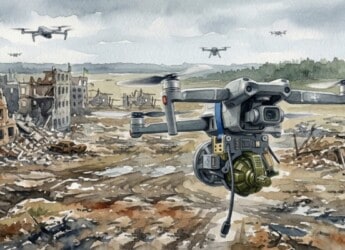
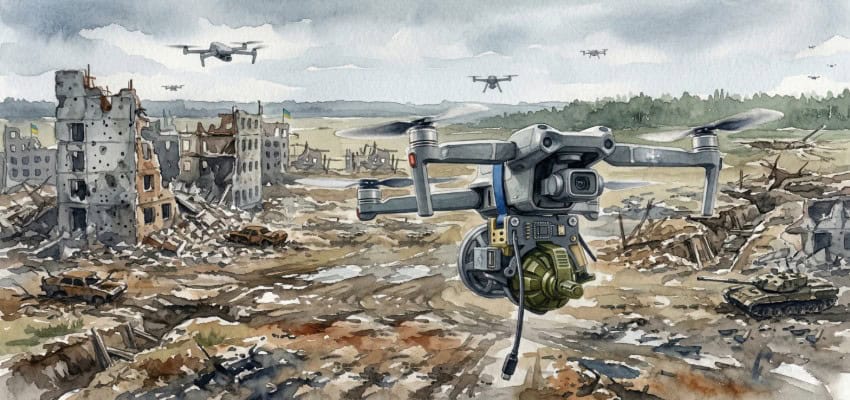
The force driving that shift is two years old and already reshaping how wars are fought. Ukraine’s Unmanned Systems Forces, established in June 2024 as the world’s first dedicated drone warfare branch, have compressed the innovation cycle for battlefield robotics to a tempo that defense ministries in peacetime cannot match. Tens of thousands of low-cost first-person-view drones deploy each month. Fiber-optic variants — physically tethered by cable rather than linked by radio — have neutralized much of Russia’s investment in electronic jamming. AI-assisted targeting, GPS-free navigation, optical tracking, and autonomous loitering are moving from prototype to field deployment at a pace closer to commercial software releases than to traditional weapons procurement.
Moscow is responding. Russia has launched its own drone recruitment drives, poured resources into electronic warfare, and compressed its counter-adaptation timelines. But a Russian military correspondent reported in late March that the Kremlin’s unmanned systems recruitment effort had effectively stalled, and the persistent loss-to-replacement gap suggests that Russian countermeasures have not yet matched the lethality Ukraine’s drone operators deliver daily.
Weather will compound the problem. ISW has previously assessed that foggy winter conditions hindered Ukrainian drone operations by degrading visibility for operators — a dynamic Russian ground forces exploited to conduct infiltration and small-unit attacks. Zelensky noted on April 3 that spring’s arrival, with clearer skies and longer days, will strip away that concealment. For Russian infantry crossing open terrain under persistent aerial surveillance, the seasonal shift is an operational liability.
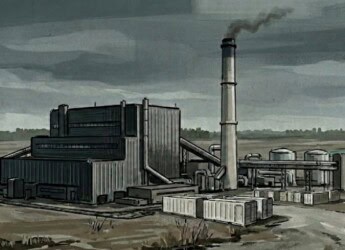
The damage Ukraine is inflicting extends well beyond the contact line. A Reuters exclusive published April 2, based on satellite imagery from U.S. spatial intelligence firm Vantor, showed that Ukrainian drone campaigns reportedly damaged at least 40 percent of oil storage capacity at Russia’s Primorsk port in Leningrad Oblast during March — eight reservoirs, each holding 50,000 cubic meters, at a terminal that moves roughly one million barrels of crude per day. The neighboring port of Ust-Luga absorbed five separate strikes between March 22 and March 31, according to Russian local authority reports and satellite analysis, with fire damage to eight product-storage reservoirs representing about a quarter of that facility’s total capacity. Loading operations at Ust-Luga were suspended repeatedly. The pace and pattern point to a deliberate Ukrainian effort to disable Russia’s Baltic oil export corridor, not opportunistic raids.
Ukraine’s defensive record is keeping pace with the offensive achievements. The Ministry of Defense reported that Ukrainian forces neutralized 89.9 percent of incoming Russian aerial threats in March — up from 85.6 percent in February, 82.5 percent in January, and 80.2 percent in December 2025. What makes that trajectory notable is context: March also set a record for the sheer volume of Russian aerial attacks, with over 6,400 one-way attack drones launched. The interception rate climbed even as the incoming threat scaled to unprecedented levels. Interceptor drones with semi-autonomous capabilities are adding a new layer to the defense network, supplementing conventional air defense systems that remain under constant strain.
On the ground, Ukrainian forces translated tactical pressure into territorial results. Advances in southern Ukraine beginning in late January 2026 produced net territorial gains by February — about 20 square kilometers, the first month since the Kursk operation where Ukraine recovered more ground than it lost. By early March, Zelensky told Italy’s Corriere della Sera that Ukrainian forces had recaptured 460 square kilometers since the start of the year. ISW’s independent tracking puts the figure closer to 257 square kilometers — a notable discrepancy, but both accounts confirm a meaningful reversal of the previous trend. The counterattacks forced Russian commanders to choose between defending threatened sectors in the south and allocating resources to offensive operations elsewhere along the front.
A separate thread of this conflict surfaced in the Baltic Sea on April 3 — one with implications for sanctions compliance and data integrity professionals. Swedish authorities boarded the Flora 1, an oil tanker already on the EU and UK sanctions lists, after a 12-kilometer oil slick was detected east of the island of Gotland. The vessel’s flag registration illustrates the data challenges these cases present: maritime databases listed it under Sierra Leone, while ship-tracking platform Starboard Maritime Intelligence recorded it under Cameroon — one of at least seven flags the vessel has flown since 2023. AIS tracking data showed the Flora 1 arriving at a Russian Baltic port on March 15, at which point its transponder went dark. It reappeared on April 1, bound for Santos, Brazil.
Swedish Minister for Civil Defence Carl-Oskar Bohlin, who said the boarding took place south of Ystad on Sweden’s southern coast, called the shadow fleet — the network of aging, underinsured tankers that move Russian oil outside sanctioned channels — a security and environmental threat. The spill released an estimated 18 cubic meters of oil, roughly 113 barrels. The Flora 1 was Sweden’s third shadow fleet boarding in a month, following the cargo ship Caffa on March 6 and the tanker Sea Owl I on March 12. Finland, Estonia, Germany, and France have conducted parallel enforcement operations in recent months.
For information governance and eDiscovery practitioners, the Flora 1 case is a live tutorial in modern sanctions investigation complexity. Tracing beneficial ownership through layers of shell companies, reconciling flag-state registries that contradict one another, and reconstructing vessel movements from AIS data that goes conveniently dark inside sanctioned ports — these are the same data manipulation and spoliation patterns compliance investigators encounter in corporate litigation, transplanted to maritime enforcement at scale. As the EU sanctions list grows to encompass hundreds of vessels, the investigative workload for compliance teams tracking these trade routes expands in lockstep.
Russia’s ability to fund its war effort depends partly on its ability to move oil to buyers willing to sidestep price caps. Every tanker detained is a node stripped from that logistics network. Combined with the physical destruction of Baltic export infrastructure at Primorsk and Ust-Luga, the financial pressure on Moscow’s war economy is compounding from multiple directions simultaneously.
Russian officials have pushed a narrative that Ukrainian frontlines are on the verge of collapse — a framing ISW has assessed is designed to pressure Western capitals into forcing Kyiv to accept terms Moscow cannot secure militarily. The evidence from March and early April 2026 points in the opposite direction. On the night of April 2 to 3 alone, Russia launched 10 Iskander-M ballistic missiles, 25 Kh-101 cruise missiles, two Iskander-K cruise missiles, and 542 drones at Ukrainian targets — a reminder that the war’s violence has not diminished.
Ukraine is not collapsing. By the available evidence, it is innovating at a pace that appears to be outrunning Russia’s ability to adapt, imposing attrition that Moscow’s recruitment apparatus has not yet matched, and degrading the economic infrastructure that funds the war. For cybersecurity professionals watching electronic warfare evolve in real time, for information governance teams navigating an expanding sanctions compliance landscape, and for eDiscovery practitioners confronting the investigative challenges of AIS manipulation and shell-company ownership structures — this conflict is generating the case studies and operational realities that will define their work for years ahead.
The oil reservoirs are still burning. The tankers are still getting pulled into port. And the numbers still aren’t adding up.
Accessed Control of Terrain
Russo-Ukrainian-War-April-3-2026News Sources
- Zelenskiy says frontline situation best for Ukraine in the last 10 months (Reuters/Detroit News)
- Ukraine Continues to Eliminate More Russian Troops Than Russia Can Recruit — 89,000 in 3 Months (United24 Media)
- Russia’s Primorsk oil terminal lost 40% of storage to drone attacks, satellite images show (Reuters/Investing.com)
- Swedish coastguard boards tanker believed to have caused oil spill in Baltic Sea (Euronews)
- Ukraine claims near-90% air-defense success in March as attacks increase (Defense News)
- Sweden Detains Third Shadow Fleet Vessel in a Month (The Maritime Executive)
- Battlefield analysis: What Ukraine’s recent front-line gains really mean (Kyiv Independent)
- Drone Warfare in Ukraine: AI, Swarms, and the Kill Zone (Small Wars Journal)
- European states take aim at shadow fleet as Russian sanctions tighten (Global Trade Review)
- Ukraine downs 541 air targets in massive Russian strike (Ukrinform)
Background Note: ComplexDiscovery’s staff offers distinctive perspectives on the Russo-Ukrainian war and Middle Eastern conflicts, informed by their military experience on the West German, East German, and Czechoslovakian borders during the Cold War, as well as in Sinai as part of Camp David Accord compliance activities, during the timeframe of the first Persian Gulf War. This firsthand regional knowledge has been further enhanced by recent staff travels to Eastern European countries, including Estonia, Finland, Latvia, Lithuania, and Poland. These visits have provided up-to-date, on-the-ground insights into the current geopolitical climate in regions directly impacted by the ongoing conflict.
Combined with cybersecurity, information governance, and eDiscovery proficiency, this multifaceted experience enables comprehensive analysis of these conflicts, including the critical impact of cyber warfare, disinformation, and digital forensics on modern military engagements. This unique background positions ComplexDiscovery to provide valuable insights for conflict-related investigations and litigation, where understanding the interplay of technology, data, and geopolitical factors is crucial.
Assisted by GAI and LLM Technologies
* Sourced and shared with permission from the Institute for the Study of War (ISW).
Additional Reading
- Ukraine’s Drone War Spills Into NATO Territory, Rattling Baltic Airspace and Global Energy Markets
- Platform as Trap: The Kremlin’s Max App and the Architecture of Digital Control
- Rails, Water, and Public Security as the War Nears Its Fifth Year
- Negotiations Amid Escalation: Strategic Intransigence and the Enduring Consequences of the War in Ukraine
- Negotiating Peace in a Drone War: Telemetry, Compliance, and Strategic Risk from Abu Dhabi to the Front
- Freezing a Nation Into Submission: Russia’s Nuclear Substation Campaign and the Human Cost of Infrastructure Warfare
- Ballistic Blackmail and Maritime Shell Games: Russia’s Evolving Hybrid Front
- Anchor Drag or Hybrid Attack? Finland Detains’ Fitburg’ Crew Amid Cable Sabotage Fears
- Valdai, Veracity, and the Winter War: Russia’s Claims Collide with Evidence
- Narva May Not Be as Far Away as One Thinks: The Challenge of Cyber and Physical Borders
Source: ComplexDiscovery OÜ
ComplexDiscovery’s mission is to enable clarity for complex decisions by providing independent, data‑driven reporting, research, and commentary that make digital risk, legal technology, and regulatory change more legible for practitioners, policymakers, and business leaders.