
Editor’s Note: Tallinn’s flagship startup competition has quietly become one of the most useful early-warning systems for Nordic compliance and cybersecurity technology, and the 2026 edition has just given professionals a fresh set of signals to read. Latitude59 said 465 startups from 53 countries applied to its May 20-22 pitch competition in Tallinn, its most geographically diverse field to date, and the syndicated prize pool grew by €100,000 to reach at least €400,000. The money now spans four Nordic investor groups including, for the first time, Finland’s FiBAN and Lithuania-based FIRSTPICK VC.
For cybersecurity, data privacy, regulatory compliance and eDiscovery professionals, the applicant pool carries three threads worth tracking: a doubling of African applicants that reflects a maturing RegTech and AML-tech pipeline, 24 Ukrainian filings that show a tech sector still shipping under wartime conditions, and a Nordic angel syndicate that consistently bets on firms selling into regulated workflows.
Watch the 15-team semi-finalist list and the May 22 winners’ roster — both tell you where Nordic capital thinks compliance demand is heading in 2027. ComplexDiscovery OÜ will be on the ground in Tallinn for the final and will report back from Kultuurikatel.
Content Assessment: Latitude59 pitch competition draws 465 startups from 53 countries as prize pool grows to €400,000
Information - 93%
Insight - 93%
Relevance - 91%
Objectivity - 90%
Authority - 92%
92%
Excellent
A short percentage-based assessment of the qualitative benefit expressed as a percentage of positive reception of the recent article from ComplexDiscovery OÜ titled, "Latitude59 pitch competition draws 465 startups from 53 countries as prize pool grows to €400,000."
Industry News – Investment Beat
Latitude59 pitch competition draws 465 startups from 53 countries as prize pool grows to €400,000
ComplexDiscovery Staff
Tallinn is about to host an audition for the New Nordic startup bench. Five weeks from the opening keynote, organizers said 465 startups from 53 countries have filed into the queue for the Latitude59 May pitch competition, with a syndicated prize pool of at least €400,000.
The applicant pool is the most geographically diverse the event has seen, based on Latitude59’s own comparison of 53 countries this year to 48 in 2025, and the money behind the main stage is bigger than last year’s. Both points matter for the cybersecurity, information governance, and eDiscovery professionals who track where regulated-sector technology gets built.
Over the past decade, Tallinn has built a reputation for a concentrated cyber and RegTech cluster, anchored by the NATO Cooperative Cyber Defence Centre of Excellence, which runs the annual Locked Shields exercise and produced the Tallinn Manual on the international law of cyber operations.
The 2026 field
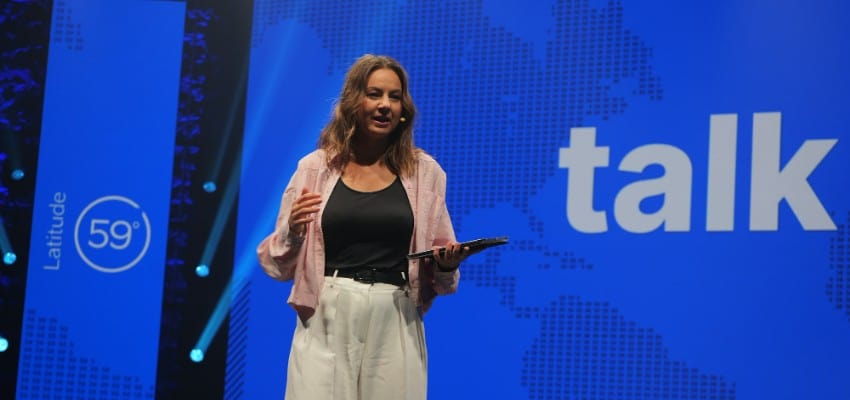
Latitude59, now in its 14th edition, runs May 20-22 at Kultuurikatel in the Estonian capital. The 2026 theme, “The Global Village Experiment,” tests the organizers’ working hypothesis that the most valuable connections happen when ecosystems collide. That framing also describes the structure of the applicant pool that just closed.
“This year, the Latitude59 pitch competition is set to become a true highlight for the New Nordic startup scene, with strong teams from five continents and 53 countries competing for the investment,” Latitude59 CEO Liisi Org said. “The jury will not have an easy task, but our investors are highly motivated to carefully assess all candidates. The most promising startups will get the chance to shine on the Latitude59 main stage in less than a month, and I am confident that new success stories that will shape the future of technology will begin here.”
Krista Meinarde, the event’s head of startup and investor relations, said the 2026 pool tops the prior year’s reach by five countries. “Last year, we had applicants from 48 countries. This year, 53 countries are represented, making the applicant pool more diverse than ever,” Meinarde said. “The New Nordic region is particularly strongly represented, accounting for 44 percent of all startups that applied. We have also seen remarkable growth from Africa, with 70 African startups applying this year, which is more than twice as many as last year. Ukraine is also very strongly represented, with 24 Ukrainian startups applying to the competition.”
The €400,000 syndicate
The money has moved too. Latitude59 said its 2026 prize pool is up €100,000 from last year’s €300,000 program, now at least €400,000 in syndicated investment for the winners. The Estonian Business Angels Network, known as EstBAN, is contributing up to €200,000. The Latvian Business Angels Network, LatBAN, adds up to €100,000. The Finnish Business Angels Network, FiBAN, joins the syndicate this year, and Lithuania-based venture capital fund FIRSTPICK VC is committing an additional investment of up to €100,000. Org said further prize-fund and award announcements will follow in the weeks before the event.
Readers who watch regulated-sector technology should hold that investor list up to the light. EstBAN, LatBAN, and FiBAN are three of the largest angel networks in the Baltic-to-Nordic corridor, and the syndicate’s presence signals where compliance-adjacent capital is flowing. Estonia’s own startup bench already carries firms built to sell into regulated workflows (financial crime, data protection, critical infrastructure, and public sector systems), including Guardtime in verifiable data infrastructure, Cybernetica in secure government systems, and Salv in anti-money-laundering analytics. Each of those firms grew out of roughly the same ecosystem that Latitude59 convenes each May.
Prior-year outcomes add a useful scale. At the 2025 event, three winners — Estonian green-energy developer MarkeDroid, Latvian construction startup Adventum Tech and Lithuanian defense-tech company Luna Robotics — shared roughly €675,000 in committed investment once co-investors joined the headline syndicate. That suggests the announced €400,000 for 2026 is likely a floor rather than a ceiling, given how co-investment lifted the 2025 total, and compliance-technology founders should read the syndicate as a live buyer pool rather than a ceremonial purse.
A wider geography
The geographic mix of the 2026 pool also tells a story. Ukraine’s 24 applicants reflect a tech sector that has continued to ship product through three-plus years of war, and several Ukrainian founders have relocated to Tallinn and Warsaw under special-status programs. African participation doubled, a trend that Latitude59’s 2025 expansions into Nairobi, Singapore, and South Africa are helping feed back into the Tallinn flagship, at least on the organizers’ own telling. Cross-border data flows, localization regimes, and mobile-money compliance regimes across sub-Saharan Africa are producing a class of RegTech and AML-tech founders who are increasingly comfortable pitching Nordic capital.
From the 465 filings, organizers plan to shortlist 15 semi-finalists, who will be given mentoring and coaching ahead of the final. Winners will be named on May 22 on the Latitude59 main stage. The jury, as Org described it, faces a compressed schedule and a broad field.
What to watch between now and May 22
Three dates and signals belong on the reader’s calendar between now and the final. Watch first for the semi-finalist list, typically published in the weeks before the event, to see the vertical mix. Watch second for the training and mentoring cohort’s composition, which historically indicates which teams are being prepared for live capital deployment versus pure visibility. Watch third for the May 22 finalists themselves, because the named-winner roster is the most useful short-form signal about where the three angel networks and FIRSTPICK VC collectively see durable compliance-technology demand.
Professionals evaluating the 2026 cohort should also track three structural questions as the shortlist emerges (the 15-team list had not been published at filing time). The first is how many semi-finalists operate in cybersecurity, identity, RegTech or information-governance adjacent verticals. The second is how FIRSTPICK VC’s €100,000 commitment deploys alongside the three angel networks, since venture-capital-plus-angel syndication is still relatively rare at this prize tier. The third is the composition of the African semi-finalist count, because it will show whether the Nairobi edition is producing durable deal flow or one-time tourism.
For cybersecurity and compliance leaders, Latitude59 functions less as a spectator event than as a forward indicator. The startups that take the Kultuurikatel stage on May 22 will be in enterprise sales cycles within 18 months. The ones who win will walk out with capital from Nordic angel networks operating in the same ecosystem that helped produce Estonian unicorns like Wise, Bolt, and Veriff. Watching who pitches, who closes, and what they build is a cheaper form of market intelligence than waiting for the vendor briefing.
What would a RegTech-heavy semi-finalist bench tell the profession about where Nordic capital thinks compliance demand is heading next?
News Sources
- Latitude59 opens applications for pitch competition 2026 (Latitude59)
- Estonia leads Europe in startups, unicorns and investments per capita (Invest in Estonia)
- New Nordics angel investors back Latitude59 Pitch Competition with up to €300,000 (EstBAN)
- Latitude59 Kenya 2025: Where pragmatism meets ambition in African tech (The Kenyan Wall Street)
- Top cybersecurity startups in Estonia (TechRound)
- Three startups will share the Latitude59 grand prize of €675K (Baltic VC)




Assisted by GAI and LLM Technologies
Additional Reading
- Baltic and Nordic Angel Networks Pool €300,000 for Latitude59 Pitch Competition as Cross-Border Startup Investing Deepens
- Latitude59 Opens Pitch Applications as Investors Raise the Bar on Operational Readiness
- The M&A Risk of Confusing Market Velocity with Marketing Capability
- From Principles to Practice: Embedding Human Rights in AI Governance
- Government AI Readiness Index 2025: Eastern Europe’s Quiet Rise
- Trump’s AI Executive Order Reshapes State-Federal Power in Tech Regulation
- From Brand Guidelines to Brand Guardrails: Leadership’s New AI Responsibility
- The Agentic State: A Global Framework for Secure and Accountable AI-Powered Government
- Cyberocracy and the Efficiency Paradox: Why Democratic Design is the Smartest AI Strategy for Government
- The European Union’s Strategic AI Shift: Fostering Sovereignty and Innovation
Source: ComplexDiscovery OÜ
ComplexDiscovery’s mission is to enable clarity for complex decisions by providing independent, data‑driven reporting, research, and commentary that make digital risk, legal technology, and regulatory change more legible for practitioners, policymakers, and business leaders.