
Editor’s Note: Daniel Di Martino, a fellow at the Manhattan Institute, PhD candidate in economics at Columbia University, and founder of the Dissident Project, brought a personal and policy-driven perspective to his lecture at Texas A&M on Venezuela’s economic collapse, hyperinflation, mass displacement, and the long institutional shadow of socialism. While his remarks were political and economic in substance, the article touches on issues relevant to cybersecurity, information governance, regulatory compliance, and eDiscovery professionals. Institutional breakdown rarely stops at markets and public services. It can also affect the systems that support records, communications, media, accountability, and access to trustworthy information. In that respect, the article extends the conversation beyond the lecture itself, connecting Venezuela’s experience to broader questions about information control, evidentiary integrity, and governance resilience.
Content Assessment: A Cash Shortage During Hyperinflation: One Economist’s Account of What Socialism Did to Venezuela
Information - 93%
Insight - 94%
Relevance - 90%
Objectivity - 88%
Authority - 92%
91%
Excellent
A short percentage-based assessment of the qualitative benefit expressed as a percentage of positive reception of the recent article from ComplexDiscovery OÜ titled, "A Cash Shortage During Hyperinflation: One Economist’s Account of What Socialism Did to Venezuela."
Industry News – Geopolitics Beat
A Cash Shortage During Hyperinflation: One Economist’s Account of What Socialism Did to Venezuela
ComplexDiscovery Staff
His grandfather’s 1956 letter home to Spain reads like a postcard from paradise. “Dear parents and siblings,” it begins. “Food is plenty.” Seventy years later, Daniel Di Martino stood before a packed lecture hall at Texas A&M University and described a Venezuela where families lined up for hours to buy rationed groceries, where hyperinflation made pocket cash worthless, and where nearly 8 million people — roughly a quarter of the population — fled on foot, by bus, or however they could manage.
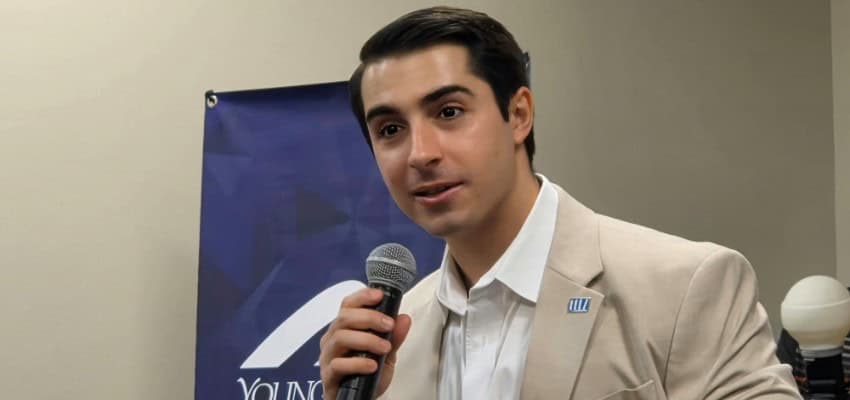
Di Martino, a Fellow at the Manhattan Institute, PhD candidate in economics at Columbia University, and founder of the Dissident Project — an organization that connects high school students with immigrants who fled authoritarian regimes — delivered a lecture on April 8 at Memorial Student Center, hosted by the Texas A&M chapter of Young Americans for Freedom. Three months after U.S. forces captured President Nicolás Maduro on January 3, the talk carried an urgency that extended well beyond historical retrospective. Di Martino’s central argument was blunt: Venezuela is the only country in modern history to vote itself into socialism from a position of wealth — and the American political class harbors factions that would repeat the experiment here.
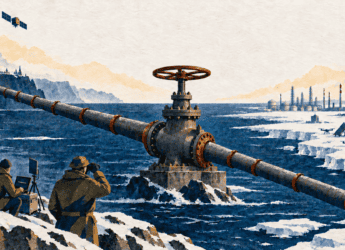
Venezuela holds an estimated 303 billion barrels of proven oil reserves, the largest on the planet according to OPEC data, ahead of Saudi Arabia’s 267 billion barrels. Di Martino used that fact as his recurring punchline. “How do you have no gasoline in a country with the most oil?” he asked the audience. The answer, he argued, is straightforward: when a government nationalizes industry, imposes price controls, and prints money to cover the gaps, the math collapses regardless of what sits underground.
Di Martino walked the audience through the mechanics. Under Hugo Chávez and then Maduro, the Venezuelan government seized farms, banks, manufacturers, and grocery chains. It dictated prices for staples including cocoa beans, forcing farmers to sell at a loss to the state and move the rest through black markets. His own mother’s chocolate business survived only because suppliers circumvented government mandates. “The government even told the farmers, ‘This is how much you can charge for cocoa beans and you can only sell them to us,’” Di Martino recounted. “And the farmers couldn’t make money.”
The consequences cascaded. Nationalized electricity, offered to consumers for free, produced chronic blackouts when no revenue existed to fund maintenance. Water systems failed for the same reason. Hyperinflation, which the International Monetary Fund projected would reach 1,000,000 percent for 2018, created what Di Martino called a scenario unique in world history: a cash shortage during hyperinflation. Venezuela did not have the machinery to print its own banknotes — it imported physical currency from Brazil. When the government ran out of U.S. dollars to pay for those shipments, it kept creating money digitally, crediting bank accounts and processing electronic transactions. But physical bills became scarce, and cash itself began trading at a premium over electronic funds. “Imagine you wanted to get 100,000 [bolívares],” he told students. “Someone would say, ‘I’ll give you 100,000 but you have to transfer me 120,000 by bank.’”
The refugee crisis that followed now ranks as one of the largest displacement events globally. The United Nations High Commissioner for Refugees estimates 7.9 million Venezuelans have left the country, with 6.7 million settled across Latin America and the Caribbean. Di Martino emphasized that Venezuela’s pre-crisis population of roughly 30 million makes the proportional loss staggering — nearly one in three residents gone — exceeding the displacement ratios of Syria and Ukraine despite Venezuela facing no foreign invasion and offering no free transit out.
The displacement is not just a population number — it is a human capital catastrophe. Di Martino described meeting a father at his church in New York City who had crossed the southern border with his nine-year-old son. The boy could not write in Spanish. His father told the priest the child had only been able to attend school one day a week in western Venezuela because there were no teachers left. Di Martino also recounted the story of a 21-year-old woman traveling alone with her six-year-old son, her parents dead, who walked thousands of miles to the U.S. border. “Now we have a generation of essentially illiterate children in Venezuela,” he said. “Illiterate because there are no teachers to teach you.”
“People only do that if they’re starving,” Di Martino said of those who made the journey. “Venezuelans shouldn’t even be in the United States. We should all be rich like the Arabs.”
One of Di Martino’s sharpest observations carried direct implications for information governance professionals. The Venezuelan regime never formally banned newspapers, he explained — it simply nationalized the paper industry. “They didn’t prohibit the newspapers from printing, but the paper industry was taken over by the government. So how do you buy paper to print the newspaper?” The point cuts to a principle that IG practitioners deal with daily in less dramatic form: controlling the infrastructure of information is controlling information itself. “Socialism is an excellent way to suppress free speech,” Di Martino said, “because if you have no private property, how do you express speech?”
What makes the Venezuelan case a warning rather than a distant tragedy, Di Martino argued, is that it started at the ballot box. Chávez won the 1998 presidential election democratically. The Soviet Union, China under Mao, Cuba under Castro, Eastern Europe under Soviet occupation — none of those populations chose their socialist governments through free elections. Venezuelans did.
Di Martino then turned his sights on American politics, naming members of Congress he said maintain direct relationships with authoritarian socialist regimes. He cited a sitting member of Congress who led a five-day congressional delegation to Cuba in early April and met with Cuban leader Miguel Díaz-Canel. He also pointed to the daughter of another member of Congress — whom Di Martino described as a self-identified “Marxist-Leninist,” referencing what he said was her social media biography — joining a separate activist-organized trip to Cuba in March. He noted delegations from a prominent U.S. socialist organization meeting with Maduro’s government in Caracas as recently as 2021.
He drew particular attention to an American tech billionaire who now resides in China. Congressional investigations have linked the individual to over $278 million in funding flowing to activist organizations that Di Martino described as the organizational backbone behind a range of social justice and political protest movements in recent years. “The organizers of all these events are the same people,” he said. “They’re all funded by an American billionaire who lives in China. He’s a traitor.”
The lecture’s sharpest policy segment challenged the popular Democratic talking point that American progressives simply want Nordic-style social democracy. Di Martino presented tax data showing that a top-1-percent earner in New York City already faces a combined federal, state, and local income tax rate comparable to Sweden’s. The difference, he argued, is on the consumption side. Denmark and Sweden levy a 25 percent value-added tax on all purchases — roughly triple the highest combined sales tax rate in California. “That’s how they pay for their free healthcare,” he told students. “Everybody pays 25 percent sales tax. And that’s not the rich — that’s everyone.” The underlying logic, Di Martino argued, is that Nordic governments understand their real tax base. The poor and middle class cannot afford to relocate to another country, so they absorb the consumption tax. The wealthy can leave — and their destination is not the United States, where top earners in cities like New York already face comparable income tax rates, but Dubai, where they pay zero and stay closer to Europe. “Billionaires of the world want to go to Dubai,” he said. The result is that Nordic social spending is funded less by redistribution from rich to poor and operated as a system where governments tax broadly and deliver services — a distinction lost, Di Martino argued, on American progressives who frame the model as “taxing the rich.”
He also pushed back against the assumption that Nordic prosperity depends on U.S. military spending. Sweden and Finland only joined NATO in 2023 and 2024, respectively, and Sweden maintained neutrality through the Cold War. “I wouldn’t say so necessarily,” Di Martino said when a student raised the point. “The reason they’re able to pay for a lot of things is because they just tax their population a lot.”
Di Martino argued that the United States already contains what he called existing socialist infrastructure: the United States Postal Service, which reported losses of $9 billion last year; Amtrak, which lost $1.8 billion; a federal government that owns over 25 percent of U.S. land through agencies like the Bureau of Land Management; and public school systems that resist consolidation even as enrollment declines. Each example, he said, operates as a jobs program or vote-buying mechanism rather than a service optimized for delivery.
The talk coincided with a volatile period for Venezuela’s future. Maduro’s January 3 capture during Operation Absolute Resolve led to his transfer to federal custody in New York, where he faces narco-terrorism and drug trafficking charges — a prosecution that will test cross-border evidence collection frameworks and digital forensics capabilities in ways that eDiscovery and compliance professionals should track closely, given the challenges of building an evidentiary chain from a hostile state environment. Vice President Delcy Rodríguez was sworn in as interim president on January 5 — the first woman to hold the position. While Rodríguez initially condemned the operation, she shifted tone within days, posting on social media her hope to build “respectful relations” with the current administration. The U.S. subsequently announced a 50-million-barrel oil supply agreement with the interim government, with an initial $300 million payment received on January 20.
Di Martino expressed cautious optimism about Venezuela’s trajectory, estimating a roughly 50 percent chance of democratic elections within the current administration’s term. But he tempered expectations. “If everything goes right, which is a big if, I do think Venezuela will be free,” he said. He drew a sharp contrast between Venezuelan regime figures and ideologically motivated actors in the Middle East, arguing that Rodríguez and her allies are motivated by self-preservation and money rather than ideology — making negotiation viable. “If the United States says, ‘You cooperate or we kill you,’ she will cooperate,” he said.
During the Q&A session, a student asked whether Di Martino would return to Venezuela if conditions improved. His answer captured the generational cost of the crisis. “Most of my family left. I don’t have family members in Venezuela. I don’t have a house,” he said. But he left the door open: “Maybe my children will want to move. Maybe I will want to retire in Venezuela. It will be cheaper, better weather. Why not?”
He closed with a broader warning about institutional fragility. “If you have a president that really wants to and a majority in Congress, you can pack the Supreme Court,” he said. “And if you can determine what the Constitution means, you can do whatever you want legally in this country.” He pointed to Venezuela’s trajectory as proof that democratic safeguards are only as durable as the electorate’s willingness to defend them.
The most powerful moment may have come not from Di Martino but from a video he described: an elderly Venezuelan woman weeping at a protest after the disputed July 2024 election. She had voted for Chávez decades earlier. “And now because of me, my grandchildren had to leave the country,” the woman said. “I belonged to a movement of trash.”
Di Martino told the audience he felt no animosity toward her. “She made a mistake. She owned it. She felt sorry. That’s all you can expect from people.” Then the kicker: “But you can’t vote them in and then just vote them out, no matter how much you cry about it after.”
A Smaller Question, Closer to Home
Di Martino’s lecture dealt in national-scale consequences — famine, displacement, the collapse of a petrostate. The comparison that follows is not an equivalence. Nobody starves because a law firm bills by the hour. But listening to Di Martino describe how centrally administered pricing, input-based incentives, and institutional resistance to reform hollowed out Venezuela’s economy, it is fair to ask whether a version of that same structural logic operates — at far lower stakes and with no human toll — inside one of the legal profession’s most durable institutions.
According to the 2026 Georgetown/Thomson Reuters Report on the State of the U.S. Legal Market, roughly 90 percent of U.S. legal spend still flows through traditional hourly billing arrangements. Consider what that model shares, structurally, with the command-economy pricing Di Martino described: the provider sets the price, not competitive market forces. The unit of production is time, not results. And the system penalizes efficiency — a lawyer who completes a task in two hours generates half the revenue of one who takes four, regardless of quality. As one analysis from the University of Nevada Las Vegas William S. Boyd School of Law observed, the billable hour model “rewards inefficiency” by design, stretching work across entries and assigning tasks at mismatched seniority levels.
Di Martino told the story of Venezuelan farmers forced to sell cocoa at government-set prices while the real market moved underground. Corporate legal departments may recognize a structural echo — however faint — in published billing rates that bear little relationship to the cost of delivery, in opacity that prevents comparison-shopping, and in the growing shadow economy of “alternative fee arrangements” that now represents the market’s attempt to route around a pricing structure disconnected from value. AI is sharpening the question — tools that accomplish in minutes what once required hours of associate time now press directly against a billing model built to sell those hours. Whether the analogy holds or breaks down is a conversation worth having: does an industry that prices by input rather than outcome risk, over time, the same kind of efficiency drag that Di Martino described — even if the consequences never approach the scale of what happened to a nation sitting on 303 billion barrels of oil?
News Sources
- Daniel Di Martino Lecture: The Impacts of Socialism and the Importance of Capitalism (Texas A&M Young Americans for Freedom, April 8, 2026)
- Trump Announces U.S. Military’s Capture of Maduro (U.S. Department of War)
- Venezuela Situation (UNHCR)
- Delcy Rodriguez Sworn In as Venezuela’s President After Maduro Abduction (Al Jazeera)
- Congressional Delegation Returns from Five-Day Visit to Cuba (Democracy Now)
- Chairman Smith Exposes U.S. Nonprofit as Likely CCP-Funded Propaganda Arm (House Ways and Means Committee)
- U.S. Postal Service Reports Fiscal Year 2025 Results (USPS Newsroom)
- Amtrak Reports Smaller Losses, Higher Ridership in FY 2025 (Eno Center for Transportation)
- AI Is Killing The Billable Hour. The Real Question Is What Comes Next. (Above the Law)
- Why Law Firms Should Rethink the Billable Hour in the Generative AI Era (UNLV William S. Boyd School of Law)
- Fault Lines Under Big Law: What the 2026 Legal Market Report Means for Data-Driven Providers (ComplexDiscovery)

Assisted by GAI and LLM Technologies
Additional Reading
- The AI Sanction Wave: $145K in Q1 Penalties Signals Courts Have Lost Patience with GenAI Filing Failures
- FTC’s OkCupid Action Reframes AI Training Data as a Consumer Protection Issue
- White House AI Framework Signals New Compliance Stakes for Legal, Cybersecurity, and eDiscovery
- The Gatekeeper’s Key: How the Conformity Assessment Unlocks the EU AI Market
- From Press Release to Data Layer: Scaling Brand Authority in the AI Era
- How Prompt Marketing Is Redefining Thought Leadership In The AI Era
- Raising The Age Ceiling: How AI Is Extending Executive Leadership
- Staying Curious: One Practical Defense Against Creative Burnout
- From Longbows To AI: Lessons In Embracing Technology
- 20 Ways Creative Professionals Battle Burnout And Find Fresh Ideas
- 14 Points For Brands To Consider Before Making Sociopolitical Statements
Source: ComplexDiscovery OÜ

ComplexDiscovery’s mission is to enable clarity for complex decisions by providing independent, data‑driven reporting, research, and commentary that make digital risk, legal technology, and regulatory change more legible for practitioners, policymakers, and business leaders.