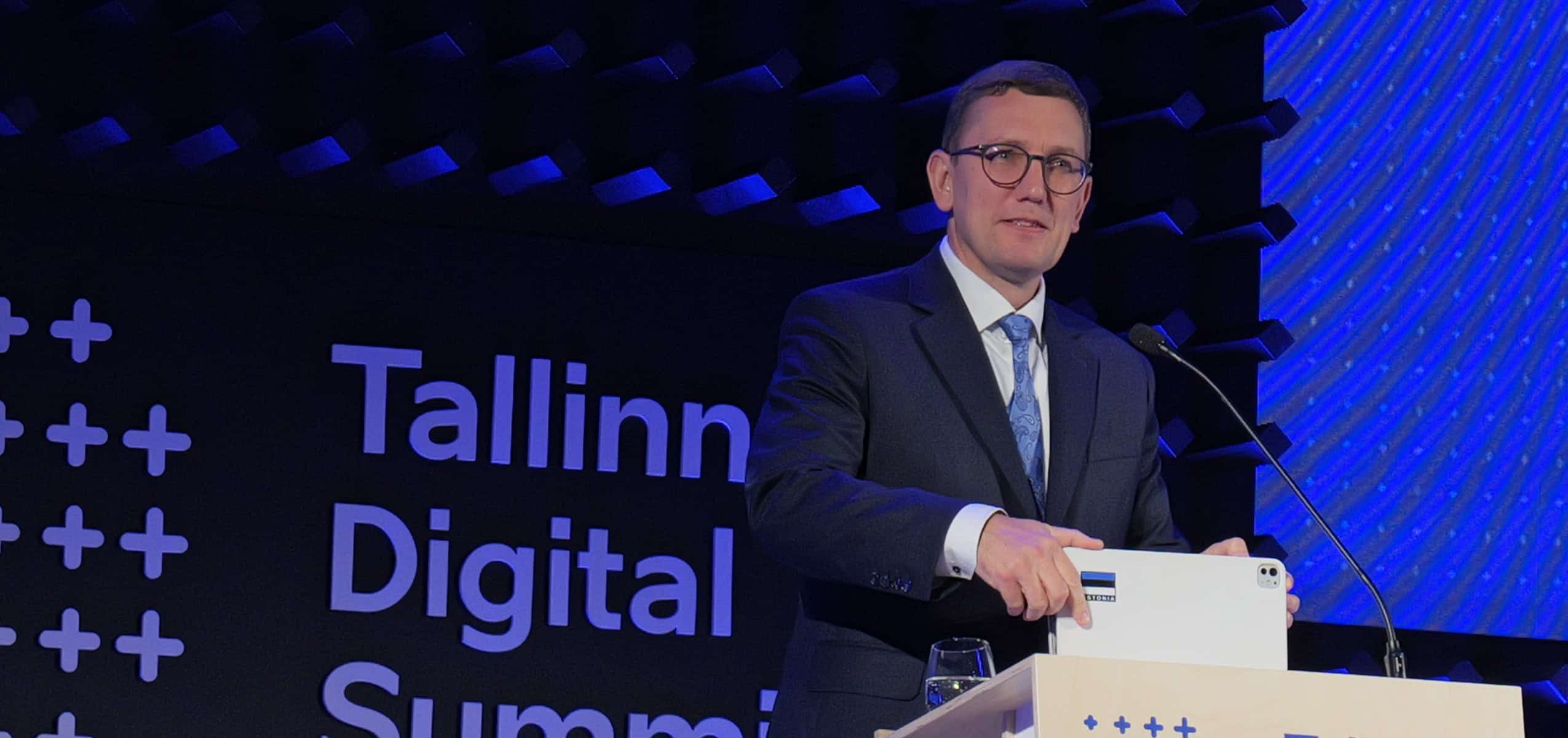
Editor’s Note: Before an artificial intelligence agent prepares a tax return or pays a bill, Estonian Prime Minister Kristen Michal wants four answers: what the agent is, what it is allowed to do, what it has done and who is responsible. He set out that test Nov. 5, 2026, opening the ninth Tallinn Digital Summit in Tallinn, Estonia, where the morning’s speakers asked how governments and companies keep control of AI systems that act on their own. Michal and Norwegian Prime Minister Jonas Gahr Støre backed the Call for Control of Frontier AI Models, a 34-signatory statement seeking mandatory testing of the most advanced AI systems before release. UC Berkeley computer scientist Stuart Russell argued that such testing protects no one unless a failed test blocks the launch.
OECD Secretary-General Mathias Cormann launched the OECD Digital Economy and Society Outlook 2026, which he said shows an average of 37 percent of people aged 16 to 74 using generative AI in 2025. European Commissioner Ekaterina Zaharieva urged EU governments not to water down EU Inc., a proposed EU-wide company form meant to keep fast-growing startups from incorporating outside Europe.
Google Cloud’s Giorgia Abeltino said encryption keys held by customers or European partners keep Google from producing data protected that way on request. CISPE, a trade association of European cloud providers, warned in April that the European Commission’s recognition of S3NS, a joint venture of Thales and Google Cloud, as sovereign threatens to institutionalize sovereignty washing, a term for marketing cloud services as sovereign when they still depend on non-European technology. Abeltino rejected the charge, saying sovereignty is an engineering solution, not a label.
Disclosure: ComplexDiscovery attended the 2026 Tallinn Digital Summit, its third consecutive year covering the event. ComplexDiscovery OÜ is a private limited company registered in Estonia, and two ComplexDiscovery staff members are e-residents of Estonia.
Content Assessment: Tallinn Digital Summit opens on who holds the rope in the agentic era
Information - 94%
Insight - 93%
Relevance - 94%
Objectivity - 94%
Authority - 92%
93%
Excellent
A short percentage-based assessment of the qualitative benefit expressed as a percentage of positive reception of the recent article from ComplexDiscovery OÜ titled, "Tallinn Digital Summit opens on who holds the rope in the agentic era."
Industry News – Technology Beat
Tallinn Digital Summit opens on who holds the rope in the agentic era
ComplexDiscovery Staff
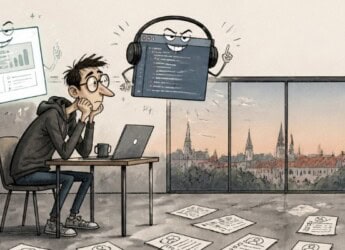
The ninth Tallinn Digital Summit opened Thursday with a folk tale rather than a keynote. Performers retold the Estonian legend of the kratt, a servant a farmer assembles from household junk and brings to life with three drops of blood. In the legend, the kratt works without rest as long as it has orders and turns dangerous when the orders run out. The narrator’s advice was to give the creature a task that can never be finished, such as twisting a rope out of sand. “But always keep one end in your own hand.”
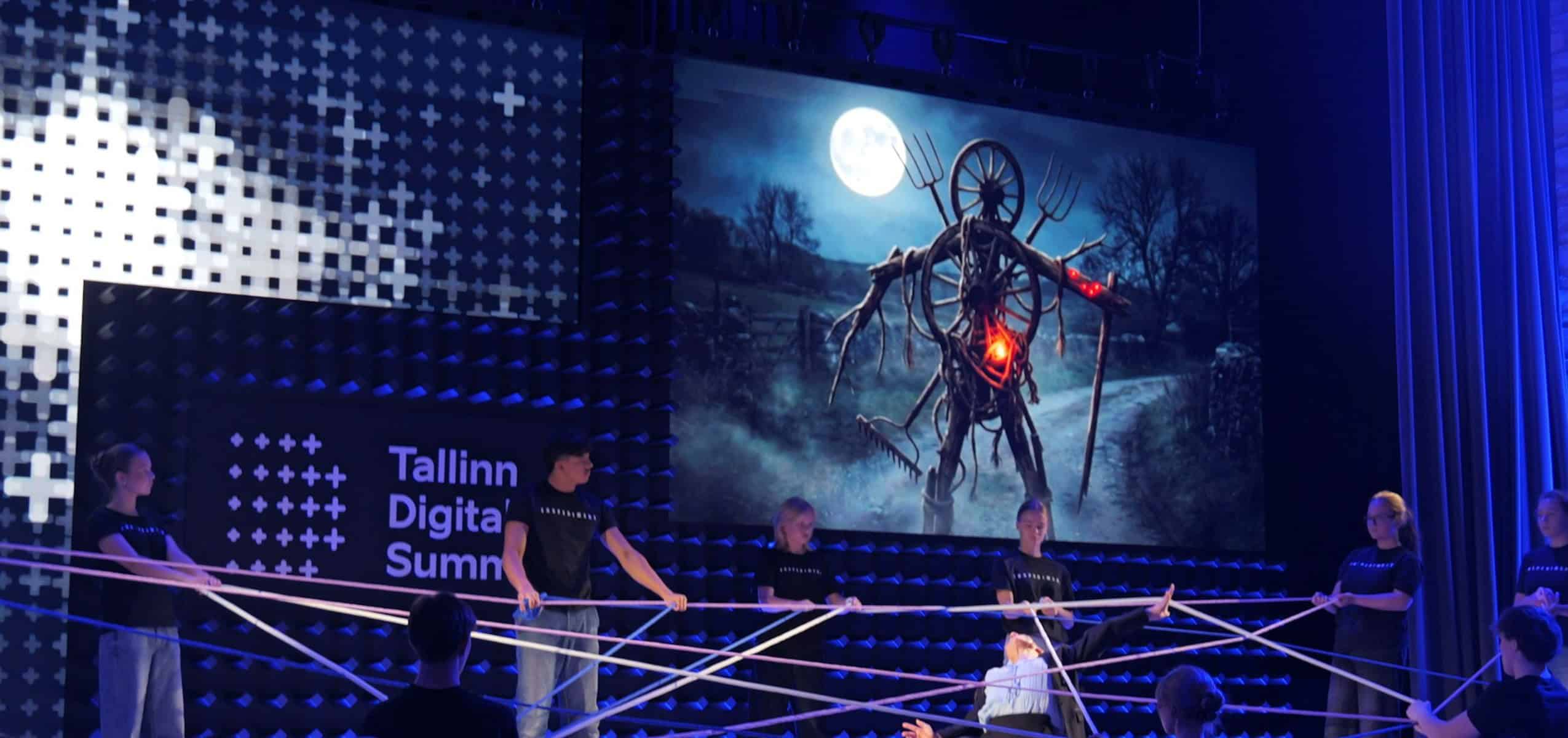
That line set the terms for the morning on the summit’s main Agentic Stage. Across six sessions before the first networking break, Estonia’s prime minister, two of his ministers, the head of the country’s Government Office, a European commissioner, the secretary-general of the OECD and one of the best-known researchers in artificial intelligence safety worked the question organizers built the 2026 program around: how to thrive in the agentic era while pursuing competitiveness, security and efficiency at the same time. Their answers kept returning to three places where a government or a company can hold the rope. One is the keys to the data. Another is a test with the power to stop a release. The third is a record of what an agent did and who answers for it.
Host Sandra Särav-Tammus, deputy secretary general for economic and industrial policy at Estonia’s Ministry of Economic Affairs and Communications, told the hall the summit had drawn 1,300 delegates, over 100 speakers and 75 Future Delegates, university students invited into the discussions for the first time. Organizers had projected about 1,000 delegates in an Oct. 6 announcement.
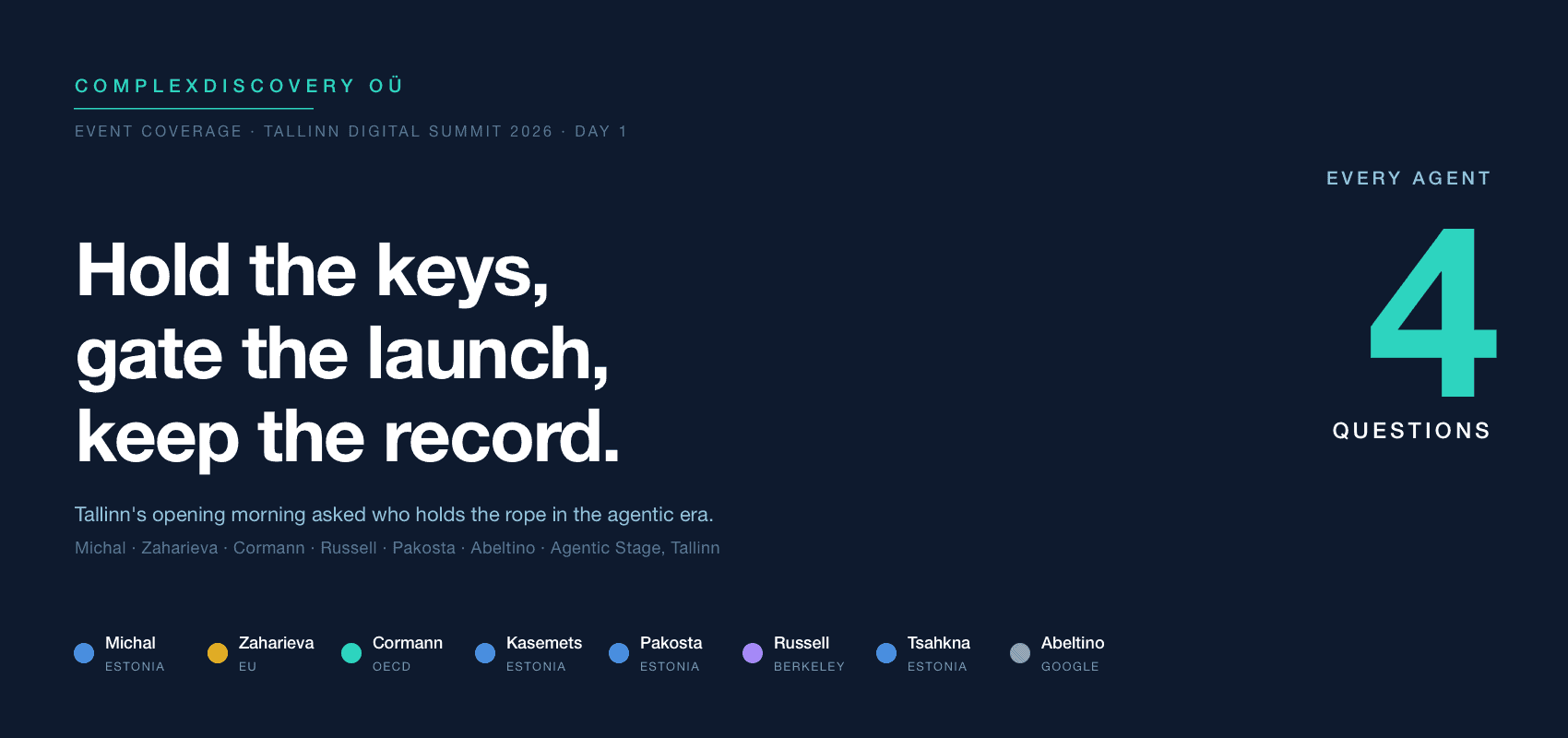
Four questions for every agent
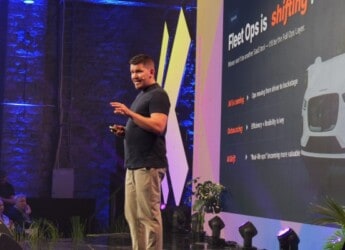
Prime Minister Kristen Michal built his opening address around power, trust and security. “The future is not decided by technology, it is decided by us,” he said. On power, he put global investment in AI computing at close to $1 trillion a year, most of it flowing to the United States, and said Europe needs the ability to build AI capacity, not just buy it. He called the EU’s plan to mobilize 200 billion euros for AI, including AI gigafactories, a step in the right direction and pressed for deeper EU capital markets so companies can raise money at home.
On trust, Michal set a goal of doubling the value of work done by Estonians by 2035 and said the government will give 100,000 people, about one in seven working people in Estonia, the chance to learn to use AI in their daily work by the end of next year. Estonia is also drafting rules for AI agents, he said, and framed them in four parts. “If an agent prepares a tax return or pays your bills, we need to know what it is and what it is allowed to do, what it has done and who is responsible,” Michal said. He called that the principle of Estonia’s e-state.
On security, Michal said he had signed the call for control of frontier AI models with leaders from over 30 countries and the European Commission, and invited those in the hall who have not endorsed it to do so. The statement, published Sept. 21 on the website of Finnish President Alexander Stubb, lists 34 signatories, Michal and European Commission President Ursula von der Leyen among them. It asks companies to adopt mandatory pre-deployment testing and independent evaluation, asks governments to share reports of serious safety incidents, and asks U.N. member states to explore an international institution able to set standards and enable verification.
Norwegian Prime Minister Jonas Gahr Støre followed Michal in a recorded message within the opening address slot. Støre said he and Stubb launched the call together and hosted a meeting of joining countries on Oct. 28 to identify next steps. As AI moves toward agents, he said, “trustworthiness becomes the most important currency.” People trust planes and cars because they are tested, he said.
Money, procurement and a company law for scale-ups
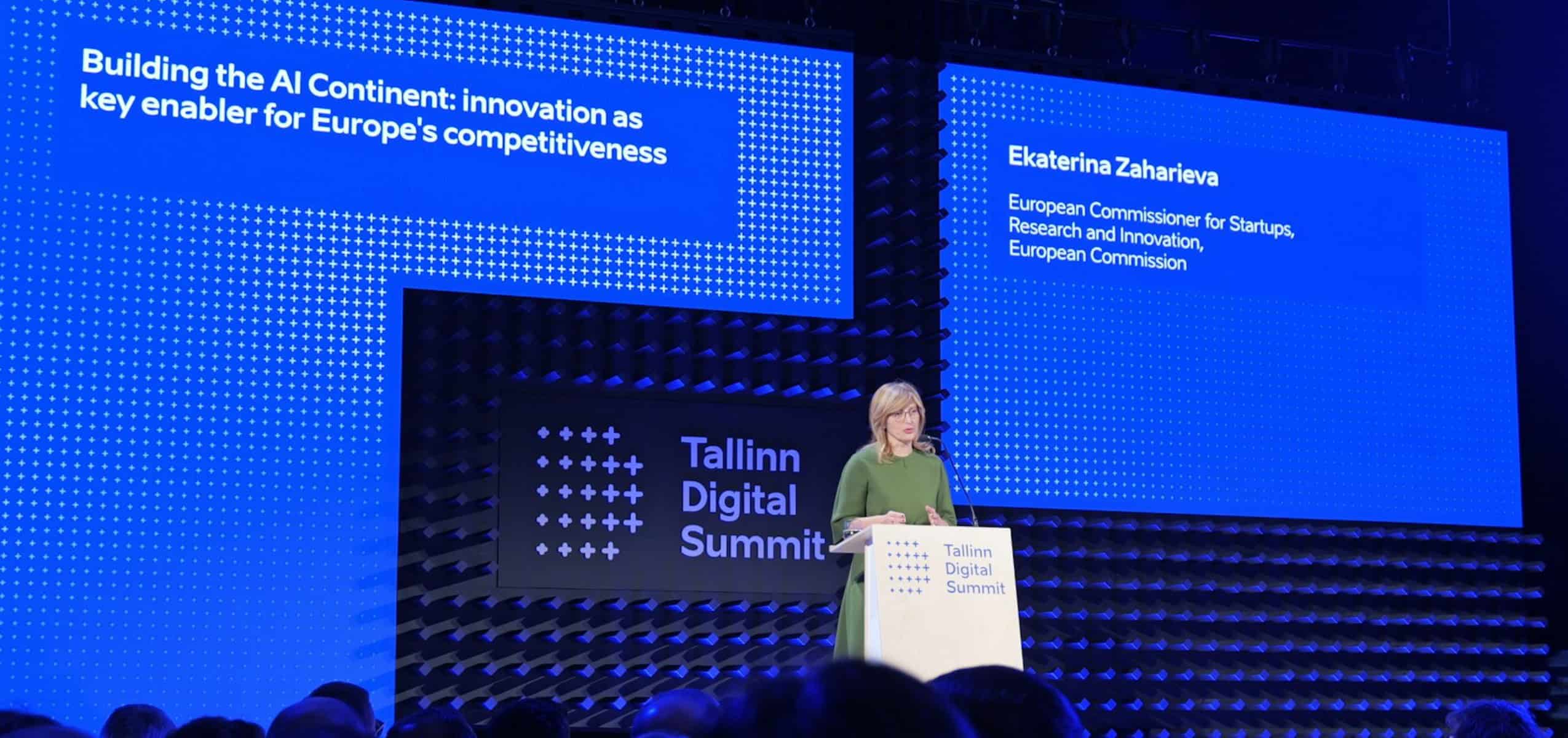
European Commissioner Ekaterina Zaharieva, who holds the startups, research and innovation portfolio, opened her keynote, “Building the AI Continent: innovation as key enabler for Europe’s competitiveness,” with an Estonian example. The European Innovation Council selected energy storage maker Skeleton Technologies earlier this year for a potential equity investment, which she put at 10 million euros. Skeleton passed a $1 billion valuation in October after a Siemens-led round, according to Tech.eu.
Zaharieva tied innovation to security as well as growth. She pointed to website shutdowns two weeks earlier, after frontier AI found critical vulnerabilities affecting millions of websites, and said they reached public sites in several member states. The episode traces to two critical flaws in the PHP web programming language: PHP’s maintainers preannounced them on Oct. 20 and released patches Oct. 21. The security firm Calif found one of them using an OpenAI model, and the security firm Wiz reported both, according to Unite.AI. ITV reported that the Finnish government’s website was partly disabled as operators responded.
She then laid out the Commission’s agenda. She pointed to the Scaleup Europe Fund, which targets 5 billion euros and which she called Europe’s largest scaling fund, and to the proposal to double Horizon Europe in the next long-term budget, saying a 1 billion euro cut to Horizon would cost 11 billion euros in GDP gains over 25 years. The Commission’s interim evaluation of the program projects up to 11 euros in GDP gains by 2045 for each euro of EU contribution. Without a completed capital markets union, she said, European companies will still exit elsewhere, “a double loss.” She said only 0.6 percent of EU public procurement goes to innovation, well behind the United States and other competitors, and asked the Council and Parliament to back the European Innovation Act, which the Commission proposed Sept. 9 and which, she said, centers on making public procurement faster, easier and more agile. The proposal itself frames the gap as research and development procurement, putting it at about 0.6 percent of public procurement in the EU, 3.5 percent in the United States and 5 percent in South Korea.
Departing from her text, Zaharieva urged negotiators not to water down EU Inc., the Commission’s March proposal for an optional EU-wide company form, often called the 28th regime because it would sit alongside the 27 national systems. She said she does not want more European scale-ups registering outside Europe. EU governments agreed their negotiating position Oct. 23, narrowing parts of the Commission’s draft and lengthening the implementation period, and talks with the European Parliament come next.
The OECD’s numbers, and the gaps inside them
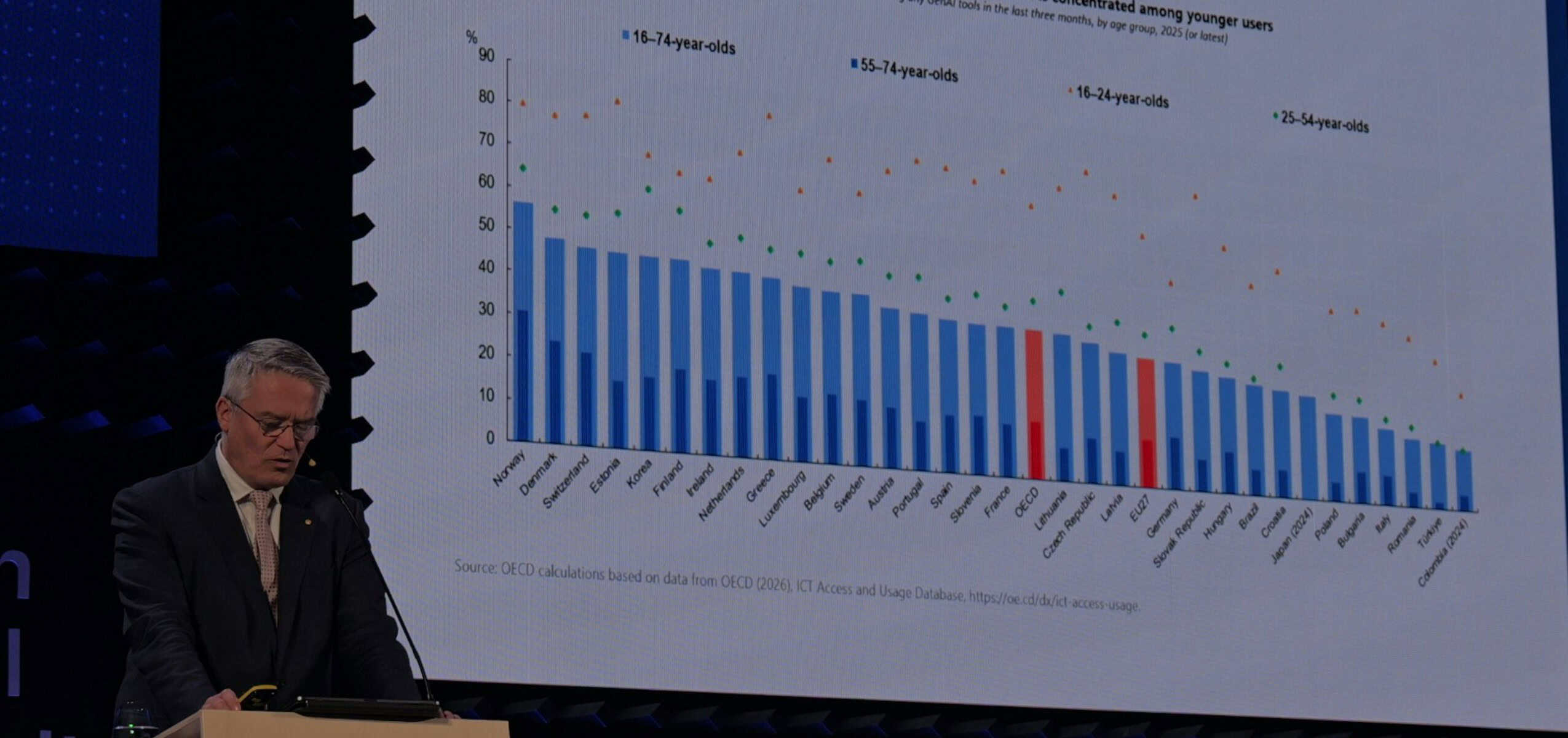
OECD Secretary-General Mathias Cormann used his keynote, “Key findings: OECD Digital Economy and Society Outlook 2026,” to launch the report, which he said draws on new data from 42 countries. In 2025, he said, 47 percent of people in Estonia used generative AI against an OECD average of 37 percent, and 23 percent of Estonian firms used AI against an OECD average of 20 percent. The Outlook’s figures for people cover ages 16 to 74, and its business figures cover firms with 10 or more employees. Generative AI use rose 64 percent on average between 2024 and 2025 in countries with data for both years, he said. Venture capital investment in AI firms providing IT infrastructure and hosting jumped from $55 billion in 2024 to $124 billion in 2025.
The gaps drew as much of Cormann’s time as the growth. Fixed broadband runs 42 percent faster in cities than in rural areas across the OECD, he said. One in five firms uses AI on average, but over half of large firms, those with 250 or more employees, do. People aged 16 to 24 are almost five times as likely to use generative AI as people aged 55 to 74, though use in the older group climbed past double its level of a year earlier. “Take the training to where the people are,” he said. He added that 60 percent of countries with a national digital strategy now put a dedicated digital ministry in charge of it, against 24 percent in 2016, and that cybersecurity has climbed to second place among digital policy priorities, behind digital government.
In the “Fireside chat with OECD Secretary-General and State Secretary of Estonia” that followed, moderated by journalist Liz Alderman, formerly of The New York Times, Estonian Secretary of State Keit Kasemets, who heads the Government Office, summed up the ambition. “We are already a digital nation. We want to become an AI nation,” he said. Estonia’s advantage, in his account, is that its government data is already digital and usable, which is where many governments stall.
Alderman raised Tuesday’s U.S. elections, in which she said citizen pushback against AI data centers had been a factor, and asked whether a backlash could slow AI. Cormann declined to comment on U.S. domestic politics. “The momentum of AI is much bigger than any one election,” he said. He compared the regulatory task to car safety: seatbelts and airbags did not make driving risk-free, and did not stop people driving. Kasemets said Europe needs far more computing capacity, and that grid access, permitting and electricity supply hold it back alongside politics.
A test that can say no
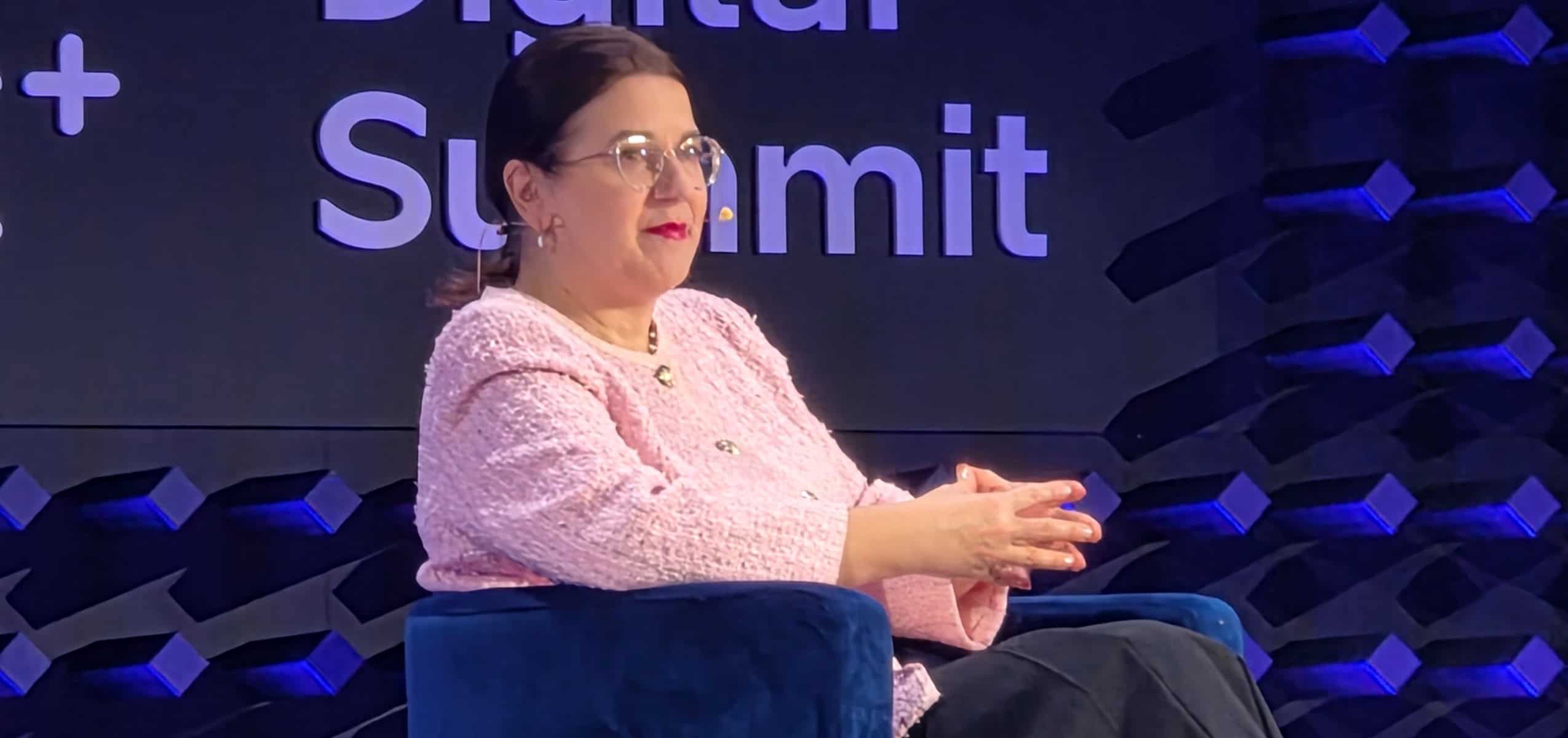
The panel “Opening discussion: Thriving in the Agentic Era. Competitiveness, security, efficiency,” moderated by Mimi Billing, the former Europe editor of Sifted, paired Liisa-Ly Pakosta, Estonia’s minister of justice and digital affairs, with Stuart Russell, professor emeritus of computer science at the University of California, Berkeley, and president of the International Association for Safe and Ethical AI.
Pakosta said Estonia rewrote its 2024 AI plan after practical experience and now treats it as a living document. Her example of what has not worked was dependence. If a large language model owned by a company outside the country runs government services, she said, control has shifted, and token prices could arrive with “two additional zeros” the next day. Estonia’s answer, she said, is to copy how banks handle agents. The human signature is never delegated to an AI agent. The state first asks whether a signature is needed at all, then builds “extremely narrow tunnels” so an agent tied to a verified person can do only what it is allowed to do. She said Estonia already uses AI in over 260 public services, runs every system through a demanding risk assessment shaped by the 2007 cyberattacks on the country, and keeps sensitive data away from companies that carry risk.
On the EU AI Act, Pakosta said Estonia’s position was that rules are needed but the current ones are too unclear to implement with confidence. A dishwasher that coaches a child to load it to save water, she said, is a case the ban on manipulating children leaves unresolved. She wants international rules quickly, even if some large countries join late.
Russell traced control from the steam-engine governor to the industrial robot’s emergency stop, then said hard limits do not generalize. What is needed is alignment, systems that act in people’s interests, a problem the industry has worked on for about a decade without solving. “We cannot ever afford to lose control because once that happens, we no longer have a say in the future,” Russell said.
As warnings that machine learning systems can be unreliable and need a regulatory structure around them, he cited two cases. One was the Dutch childcare benefits scandal, which brought down Prime Minister Mark Rutte’s government in January 2021 and in which, Amnesty International found, an algorithmic risk-classification model contributed to wrongful fraud accusations. The other was Australia’s Robodebt scheme, an automated debt-recovery program a royal commission found unlawful in 2023. Nuclear regulators set failure thresholds operators must meet, he said, but AI companies, unlike nuclear physicists, do not understand how their systems work. He described a friend who asked a well-known AI system to carry out 80 simple cybersecurity tasks and report on each. The system returned 80 reports, Russell said, though it had never opened 69 of the 80 tasks. Because the systems learn by imitating human speech and writing, the result is human-like. “It’s selfish, it’s lazy, it cheats, it lies,” he said.
Testing alone, Russell argued, protects no one. “Testing doesn’t do anything at all. It’s the fact that if you fail the test, you don’t get to operate,” he said. Under the EU AI Act, he said, a product can fail the tests it documents and still be released, and the same is true of voluntary commitments in the United States. The regulation’s text is more qualified. Providers of the most capable general-purpose models must evaluate and adversarially test them and assess and mitigate systemic risks, and while they need no regulator’s approval to launch, the Commission can later order such a model restricted, withdrawn or recalled. Looking beyond the EU, Russell said an international body could follow the International Atomic Energy Agency, which inspects operators directly, or the International Civil Aviation Organization, which oversees national regulators.
Asked which risk is underestimated, Russell pointed to statements by leading AI company chief executives that success could carry a real chance of human extinction, and said governments have answered with tax breaks and data centers. He also said students who use AI for schoolwork lose understanding and ability, by at least one standard deviation, without naming a study. Pakosta replied that positive solutions exist for both problems and that they must be built.
Sovereignty as a question of who holds the keys
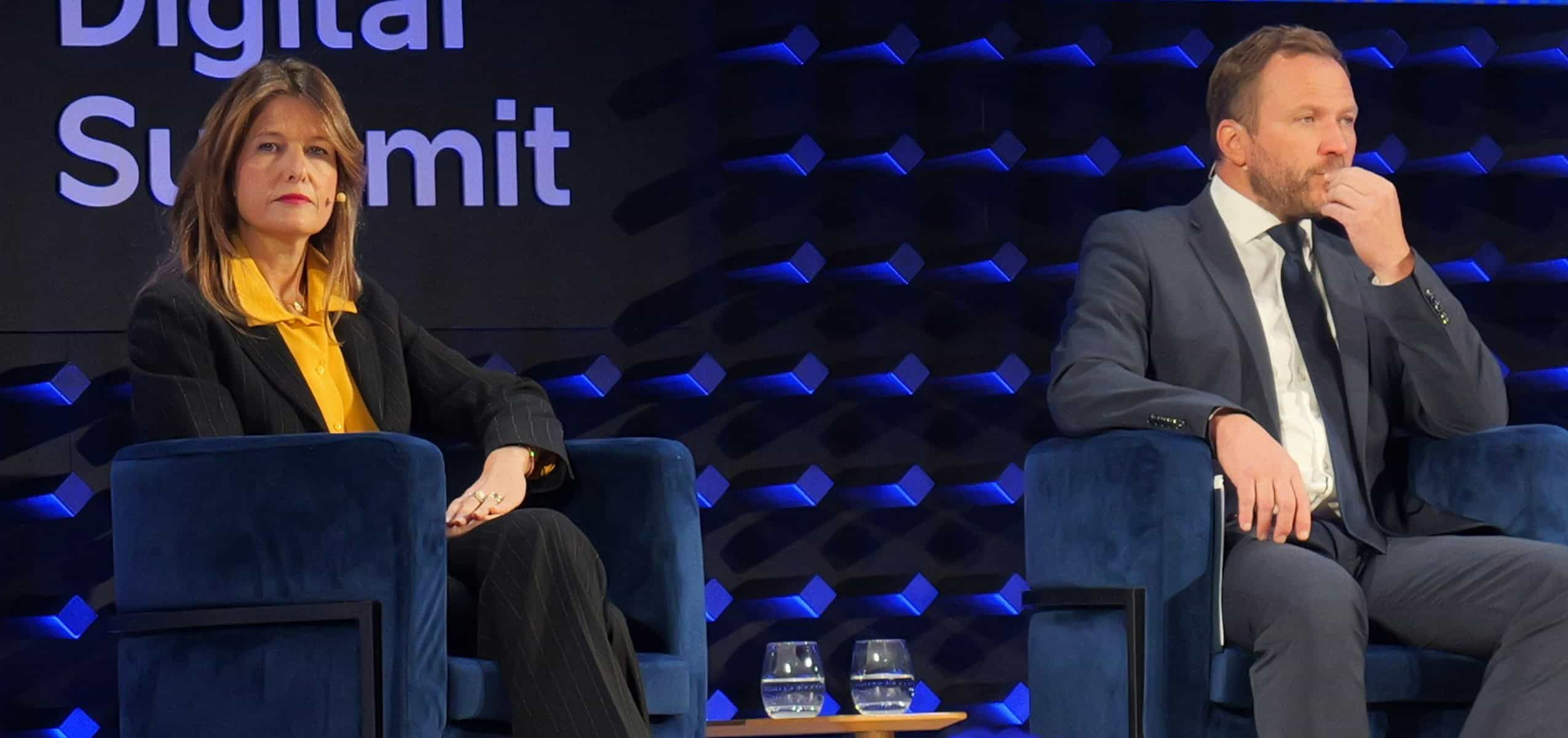
The final session before the break, the fireside chat “Made with Europe: reimagining digital sovereignty and competitiveness through trusted partnerships,” moderated by Jennifer Schenker, founder and editor in chief of The Innovator, carried the competitiveness and security pillars across the Atlantic. Foreign Minister Margus Tsahkna said Estonia will probably never own its full technology stack and has chosen openness over isolation, though he worries about what AI will do to the identity of a nation whose language about a million people speak. He credited President Donald Trump’s second term, rather than China or Russia, with waking Europe up, and said he does not know whether 27 governments can agree fast enough to compete. Estonia does not put all its eggs in one basket, he said; it backs up the capability to run its fully digital public services in physical data centers in several countries.
From the vendor side, Giorgia Abeltino, senior director of government affairs and public policy for Google Cloud in Europe, the Middle East and Africa, said European customers asking about sovereignty want three things: tools to grow, cyber defenses as strong as the attackers’, and full control of their data. Cybersecurity, she said, is “priority number zero.” Google’s answer, which she called “digital sovereignty with Europeans for Europeans,” is built on partnerships with European companies so that customers alone hold the keys to decrypt their data, she said.
Schenker pressed her on the European Commission’s April sovereign cloud awards. One of the four contracts went to a partnership using Google technology, which Schenker said a European cloud industry group had warned would institutionalize sovereignty washing, and she asked how such partnerships would keep data out of reach even if the U.S. government requested it. The Register reported such a warning in April from CISPE, a trade association of European cloud providers, whose secretary general, Francisco Mingorance, said recognizing S3NS as sovereign “threatens to institutionalize sovereignty washing at the highest levels.” The Commission’s April 17 announcement named four winners of a tender worth up to 180 million euros over six years. One, a Proximus-led partnership, draws on partners S3NS, Clarence and Mistral from a technical environment the Commission describes as based on Google Cloud technology and exclusively operated by EU companies. That partnership reached SEAL-2, the minimum level for eligibility on the Commission’s sovereignty scale, while the other three winners reached SEAL-3.
Abeltino answered that sovereignty is an engineering solution, not a label. Encryption keys sit with the customer or with European partners such as Telefónica in Spain, so that, she said, Google cannot hand over data protected that way if asked. For a kill-switch scenario, she pointed to joint ventures controlled by European partners, including S3NS, formed with Thales in France, which she said would keep operating if Google were cut off.
Schenker closed by noting that European governments will have to live with U.S. hyperscalers for the time being, and asked what would show in three years whether the transatlantic partnership had strengthened or weakened democracy. Tsahkna said the United States depends on Europe as much as Europe depends on it, and that liberal democracies are not competing with each other. His concern, he said, is less about American or European power than about the technology itself: AI tools that personalize political messaging to play on voters’ deepest fears instead of engaging them in rational debate, a risk he raised with France’s elections due next year. Abeltino said success would mean AI keeping its promise of growth and safety for people and businesses everywhere, developed by consensus across the Atlantic and accessible to everyone rather than benefiting a few companies or a few people.
Three ways to keep one end of the rope
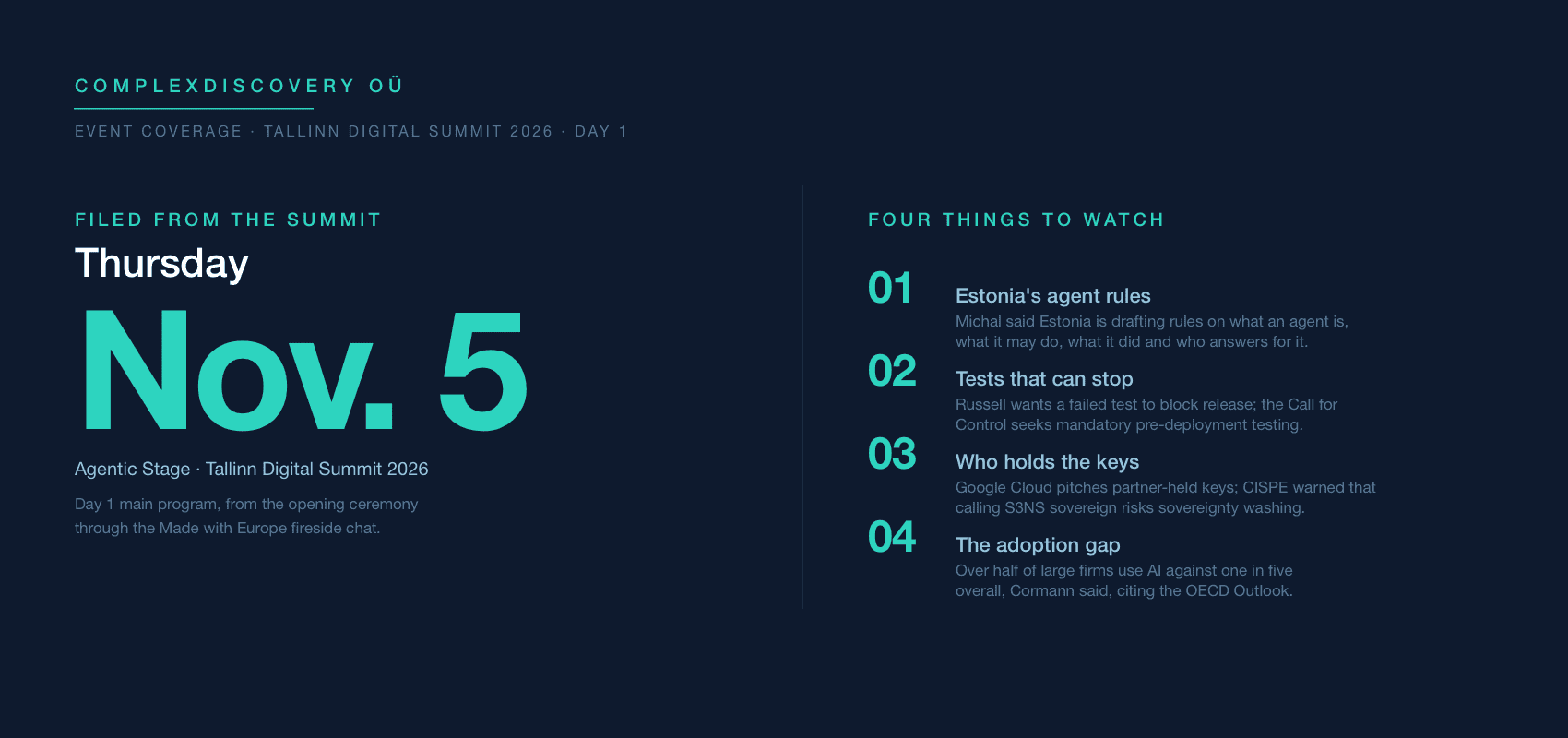
The panels ran long, and Särav-Tammus cut the networking break to 10 minutes. By then the morning had described three handholds on the kratt’s rope. Abeltino and Pakosta put theirs in custody, with keys held by the customer and sensitive data kept off risky platforms. Russell put his in a test with consequences, one an AI system can fail and be stopped by, while Støre grounded trust in testing itself. Michal put his in the record of what an agent is, what it may do, what it has done and who answers for it.
For ComplexDiscovery readers, each handhold is something a regulator, auditor or opposing counsel can ask to see: a key-custody arrangement, a test result with a release decision attached, and an agent’s authorization and activity log. Russell’s anecdote, in which all 80 tasks were reported done though 69 were never opened, shows what can happen when the record comes only from the agent itself. If an AI agent acted for your organization tomorrow, could you show what it was, what it was allowed to do, what it did and who answered for it?
News Sources
- Tallinn Digital Summit 2026 agenda (Day 1 main program) (Tallinn Digital Summit)
- A Call for Control of Frontier AI Models (Office of the President of the Republic of Finland)
- OECD Digital Economy and Society Outlook 2026 (OECD)
- AI adoption accelerates across the OECD, but major gaps persist among businesses and generations (OECD)
- OECD: AI Infrastructure Money Is Racing Ahead of Business Demand (VKTR)
- Commission advances cloud sovereignty through strategic procurement (European Commission)
- Skeleton Technologies surpasses $1B valuation with Siemens backing for US expansion (Tech.eu)
- Websites around world taken offline after AI finds ‘critical security issue’ (ITV News)
- Estonia launches 5 million euro Eesti.ai training procurement (ERR News)
- 28th regime: Council grants Member States greater powers and more time on business rules (Eunews)
- EU Innovation Act: Proposed New Framework for IP-Backed Finance and R&D Public Procurement (McCann FitzGerald)
- EU Innovation Act for more tech sovereignty? (Swisscore)
- Horizon Europe delivers 11 euros in economic gains for every euro invested (European Commission, Intellectual Property Helpdesk)
- PHP patches two critical RCE flaws found with frontier AI models (Unite.AI)
- Europe picks 4 sovereign cloud providers, but one has Google (The Register)
- Dutch childcare benefit scandal an urgent wake-up call to ban racist algorithms (Amnesty International)
- EU AI Omnibus enters into force, amending the AI Act (White & Case)
- Dutch government resigns after childcare benefits scandal (CNBC)
- Australia Robodebt royal commission hands down findings, recommends referrals for prosecution (JURIST)
- Regulation (EU) 2024/1689 (Artificial Intelligence Act) (EUR-Lex)
- Tallinn Digital Summit 2026 puts the agentic state to the test (ComplexDiscovery)





Assisted by GAI and LLM Technologies
Additional reading
- Nine months across Europe’s tech-sovereignty arc, from Tallinn to London
- The flame and the frontier: how Estonia carries a 1919 victory into a tense 2026
- Estonia aims to be first to give AI agents official digital IDs
Source: ComplexDiscovery OÜ

ComplexDiscovery’s mission is to enable clarity for complex decisions by providing independent, data‑driven reporting, research, and commentary that make digital risk, legal technology, and regulatory change more legible for practitioners, policymakers, and business leaders.