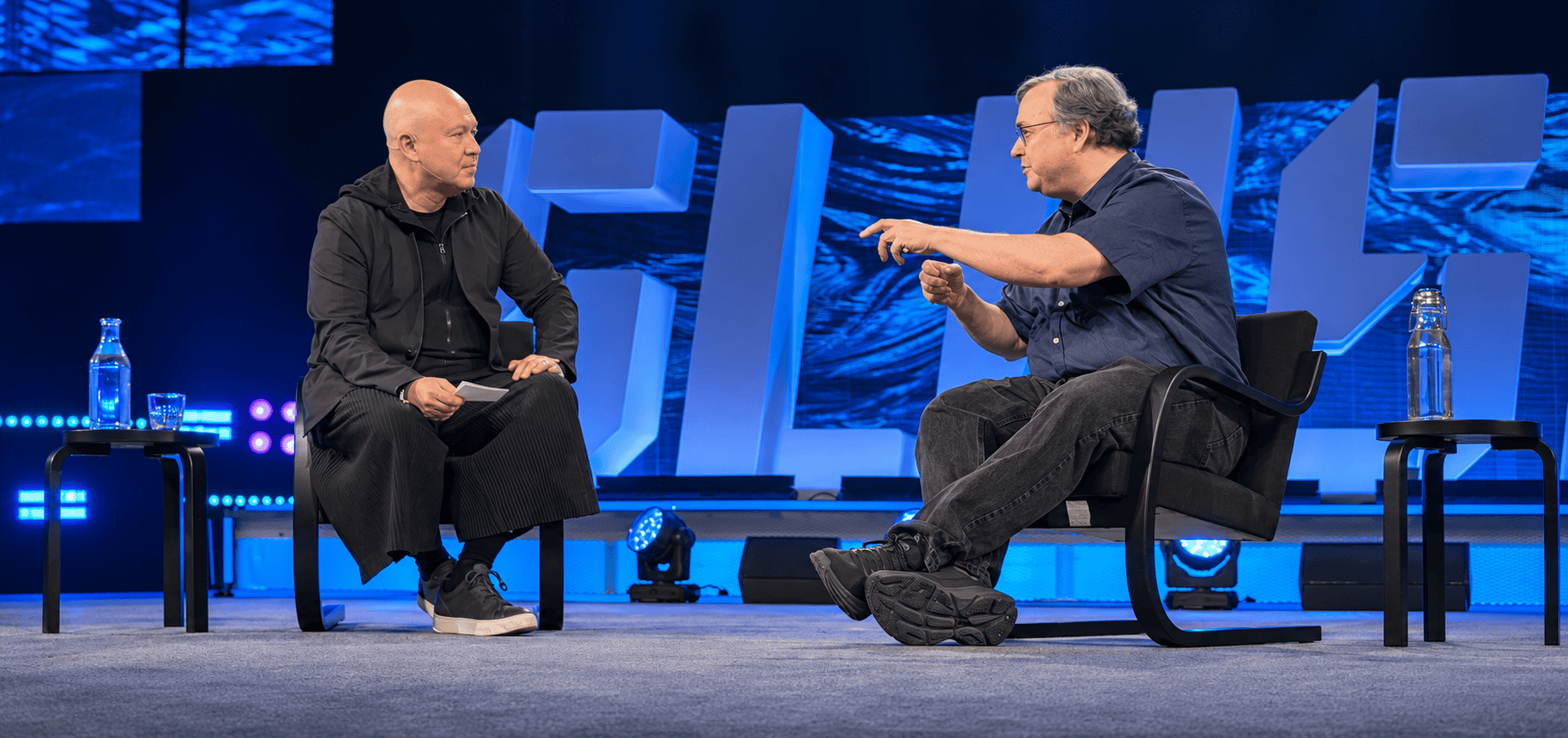
Editor’s Note: LinkedIn co-founder Reid Hoffman told Slush 2026 in Helsinki on Nov. 18 that optimism about artificial intelligence should work like steering rather than cheerleading, while conceding that an AI-driven venture fund built today would lose money. Speaking with Marko Ahtisaari, chief marketing officer of Finnish satellite company ICEYE, Hoffman said recursive self-improvement, meaning AI systems improving their own capabilities, is already transforming coding and will end the old way of building software-as-a-service products, though he still sees a large role for software that companies buy. He described Manas AI, the drug discovery company he co-founded, as using AI to find far more promising molecules at the start, while regulatory review and clinical trials still have to happen. Hoffman, an early OpenAI investor, remains a Microsoft director until its Dec. 8 annual meeting.
For cybersecurity, information governance and eDiscovery professionals, his advice to keep testing AI where it fails resembles validation. The American Bar Association’s advisory Formal Opinion 512 asks lawyers to understand the capabilities and limitations of the AI tools they use. Watch how organizations register, retain and secure AI tools their own staff build.
Content Assessment: Reid Hoffman tells Slush that strategic optimism means steering AI, including where it still fails
Information - 93%
Insight - 92%
Relevance - 92%
Objectivity - 93%
Authority - 94%
93%
Excellent
A short percentage-based assessment of the qualitative benefit expressed as a percentage of positive reception of the recent article from ComplexDiscovery OÜ titled, "Reid Hoffman tells Slush that strategic optimism means steering AI, including where it still fails."
News Analysis – Artificial Intelligence Beat
Reid Hoffman tells Slush that strategic optimism means steering AI, including where it still fails
ComplexDiscovery Staff
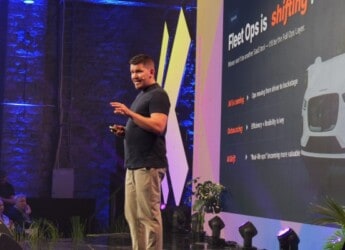
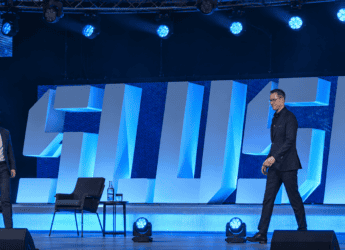
Reid Hoffman, the LinkedIn co-founder whose latest book argues that artificial intelligence can expand human agency, told a Slush 2026 audience in Helsinki on Nov. 18 that an AI-driven venture fund built today “would lose money.”
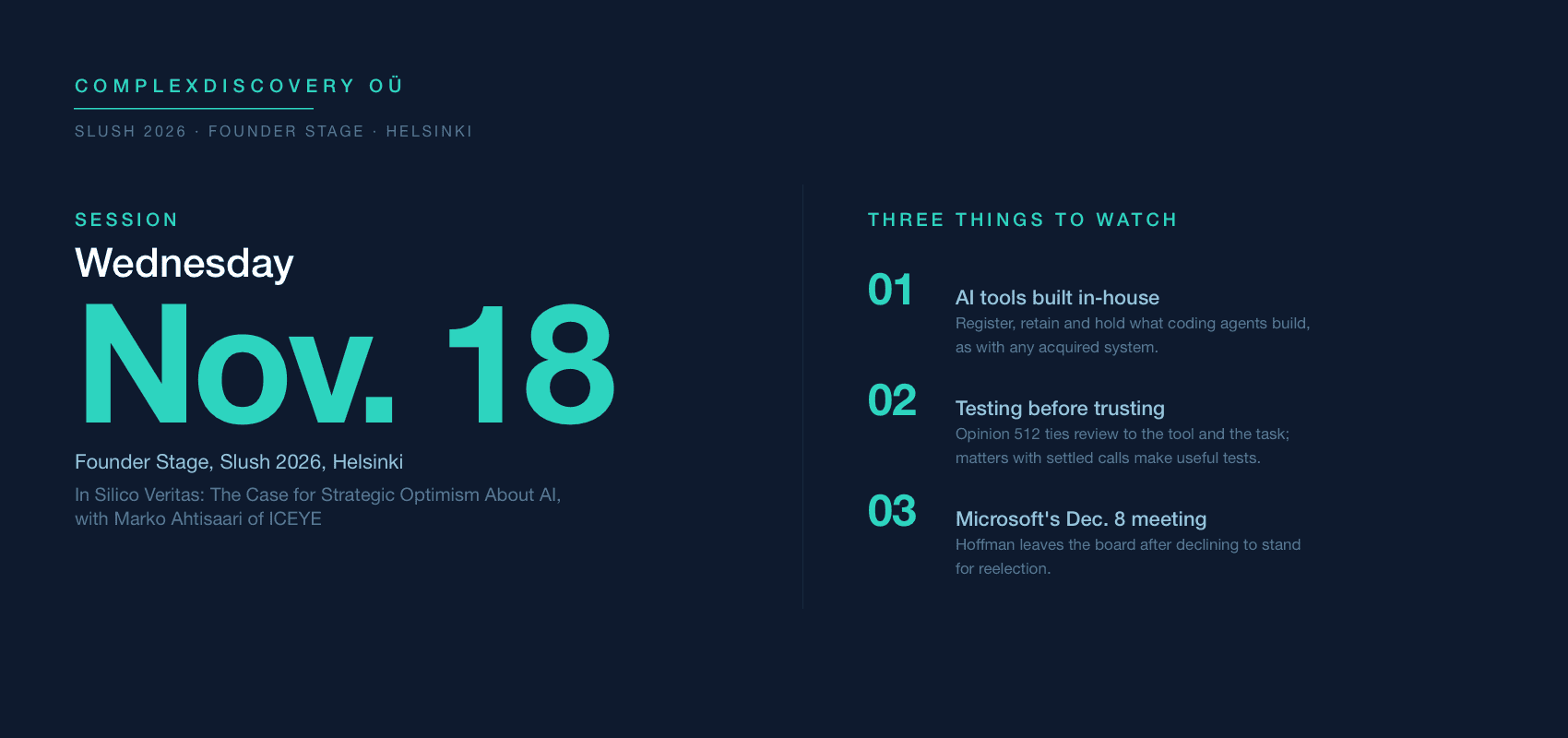
He keeps testing AI on his investment decisions anyway, and that habit was the practical core of his conversation with Marko Ahtisaari, chief marketing officer of Finnish satellite company ICEYE. The program gave the session a 25-minute slot and billed it as “In Silico Veritas: The Case for Strategic Optimism About AI.” Hoffman used it to describe optimism as a method rather than a mood: pick the future worth building, steer toward it and probe the technology where it is weakest. For founders, that is a product strategy. For cybersecurity, information governance and eDiscovery professionals, whose work depends on knowing exactly what a tool can be trusted to do, it reads closer to a validation protocol.
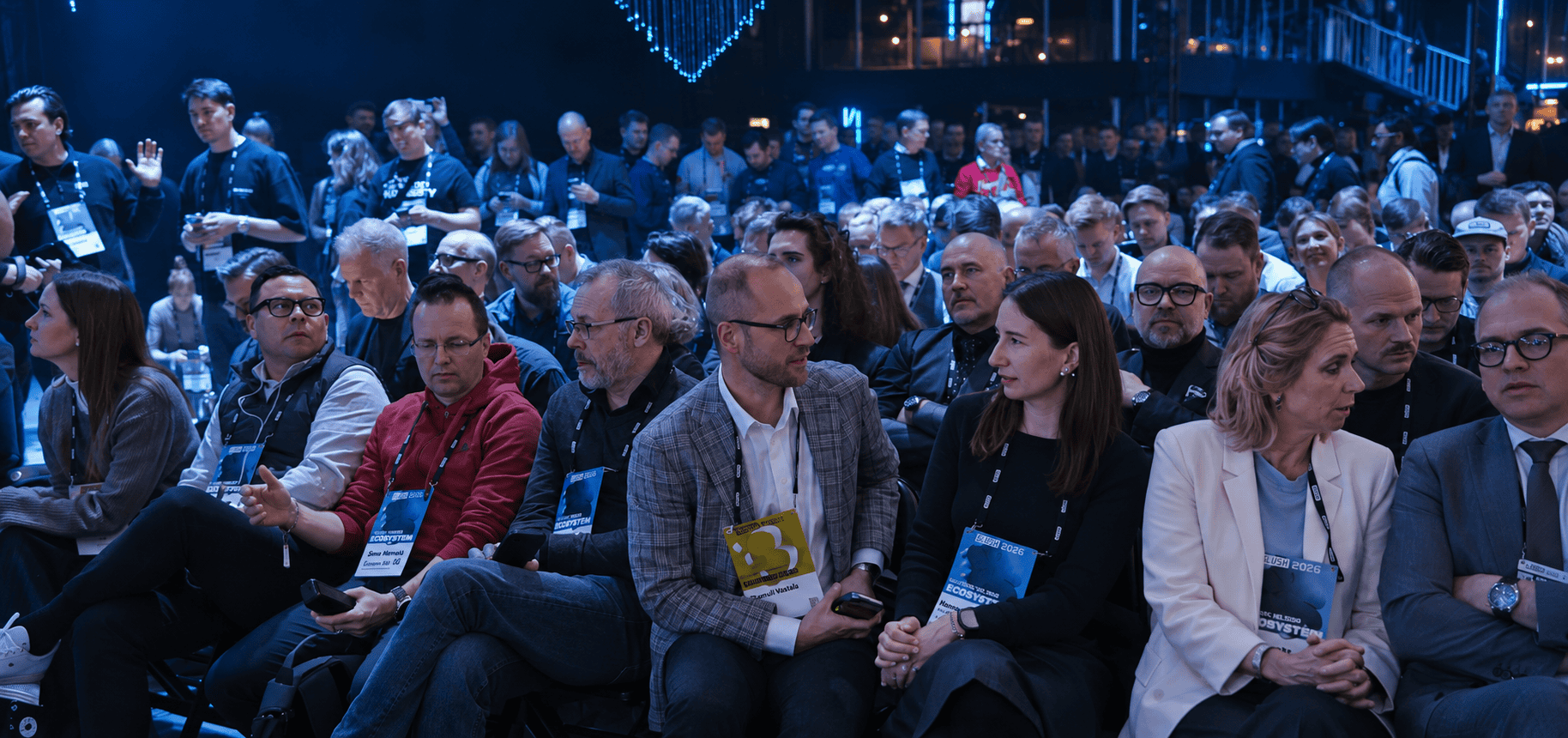
Slush, the not-for-profit startup event, filled Helsinki’s Messukeskus convention center on Nov. 18 and 19. Hoffman’s slot came after an opening session in which Finnish President Alexander Stubb framed AI as a national, economic and social security problem. Hoffman referred to an industrial revolution “the president was just talking about,” an apparent reference to Stubb. The two sessions are best read as a pair, with a head of state cataloging the risks and an investor explaining why he thinks they can be steered.
Why optimism needs a steering wheel
Asked to explain strategic optimism, Hoffman rejected the idea that it is cheerleading. “You don’t get the future you want by avoiding the futures you don’t want,” he said, adding that the futures people want come from having a vision and steering toward it. Strategic optimism, in his account, is not pressing the accelerator because no risks are visible. It accepts that an industrial transition brings pain, including to jobs, and asks how AI can be part of the answer, for example by helping people find and do new work. He tied the idea to his January 2025 book “Superagency: What Could Possibly Go Right With Our AI Future,” written with Greg Beato, and summed it up as “let’s take agency in what we’re doing.”
Asked whether he stands alone in Silicon Valley, Hoffman said no, though he argued that pessimism wins more airtime. He described meeting people who put their P(doom), shorthand for the probability that AI ends in catastrophe for humanity, at 50 percent, and said he considers them wrong. He then anticipated the obvious objection. “Of course I see the risk,” he said, comparing AI to the drive to the airport, which he called more dangerous than the flight itself. People still make that drive, he said, and they steer carefully while they do it.
That answer did not settle the safety question, and the program around him showed as much. Stubb, speaking earlier in the day, promoted a nonbinding call for control of frontier AI models, according to ComplexDiscovery’s coverage of his session. Its published text asks AI companies for transparent safety protocols built around mandatory pre-deployment testing and independent evaluation, by qualified evaluators who have enough access to judge the risks. Hoffman did not mention that initiative during his session. He did treat alignment, the work of keeping AI systems pursuing human interests, as a legitimate worry, which is where the conversation turned next.
Recursive self-improvement and the old software playbook
Ahtisaari asked about recursive self-improvement, the prospect of AI systems improving their own capabilities, and about red lines associated with it. Hoffman called it the central discussion and credited partial self-improvement with the progress of coding agents, which he said are unrecognizable from what they were a year ago. By his rough characterization, current systems sit at about 30 percent recursive self-improvement while developers push toward 100 percent, and that ambition is what makes people ask whether self-improving systems will stay aligned with human interests. He called the concern a good thing. “And no one has a decisive answer,” he said, likening the effort to setting out across an ocean in a sailboat and discovering the route along the way.
His prediction for software followed from that. Hoffman expects the self-improvement loops now visible in coding to spread into legal, financial and analytical work, and he said people in every field, himself included, will end up writing code as part of their work. For software founders, he said the old model of spending a year or two building a platform, signing up users and integrating it is over, though he still sees a large role for software that companies buy. He expects AI-native software-as-a-service (SaaS) companies to emerge. He defined them as companies that build for where AI will be in three, six or 12 months rather than where it is today, offering a deep platform with security and individual configuration on top.
He cited Klarna, the Swedish payments company, as a business that set out to get rid of its SaaS tools. Klarna’s own account comes from a March 2025 post on X by Chief Executive Sebastian Siemiatkowski. He wrote that Klarna had shut down Salesforce a year earlier, along with many other SaaS providers, about 1,200 in all by an internal estimate. He called the shutdowns a side effect of consolidating the company’s data onto an internally developed stack, and he wrote that Klarna did not replace those tools with a large language model. He also predicted that fewer SaaS vendors would consolidate the market. Public investors took a harsher view of the same question earlier this year. TechCrunch reported that software and services stocks lost nearly $1 trillion of market value in an early February sell-off. The slide came to be called the SaaSpocalypse, a label Hoffman used on stage.
For the European founders in the room, that market pressure arrives alongside a capital problem. The same day, on the same Founder Stage, venture firm Atomico presented its State of European Tech 2026 report. Using data through Sept. 30, the report puts Europe’s share of global venture investment at 9.4 percent this year, according to ComplexDiscovery’s coverage, down from a peak of 20 percent in 2022. Its capital figures exclude pharma, debt, lending capital and grants.
For information governance teams, Hoffman’s forecast has a records consequence that the stage conversation did not reach. If business units can build individually configured tools with coding agents, the number of systems creating business records can grow faster than a software inventory keeps up. Klarna’s account shows that the controls do not leave with the vendor. Siemiatkowski wrote that enterprise software carries standard features such as audit, versioning, and access and edit management, and that Klarna needs them as well. In ComplexDiscovery’s analysis, the practical response is to treat an internally built AI tool like any acquired system: register it, map what it stores, assign a retention schedule and confirm that legal hold instructions reach it. Security teams face the parallel question of who reviews code that an agent wrote and who controls access to the data it touches.
A search engine for molecules, not a shortcut through trials
Ahtisaari then turned to Manas AI, the drug discovery company Hoffman co-founded with oncologist and author Siddhartha Mukherjee. Manas launched in January 2025 with $24.6 million in seed funding and an initial focus on aggressive cancers such as triple-negative breast cancer, prostate cancer and lymphoma. A $26 million seed extension in September 2025 brought its seed funding to $50.6 million, the company said, and Manas named technology executive Ujjwal Singh a co-founder and chief technology officer. Its leadership page now lists Singh as chief executive and Mukherjee as executive chairman, and Hoffman sits on its board.
Manas is one of several AI ventures in Hoffman’s career, and his account of his own path, which opened the session, shows how closely that career is tied to AI. He said he studied artificial intelligence through Stanford’s symbolic systems major, became a founding philanthropic donor to OpenAI and led its first commercial round, and he sat on OpenAI’s board until stepping down in 2023 over potential conflicts of interest. His Slush biography also lists Inflection AI, Manas and the venture firm Greylock. He remains a Microsoft director until the company’s Dec. 8 annual meeting, the date set in its 2026 proxy statement. A June 5 Microsoft securities filing says he will not stand for reelection and that his decision did not stem from any disagreement with management. TNW reported that Hoffman described the move as a return to founder mode at Manas. Those interests do not make his argument wrong, but they are part of the context in which he makes it.
Hoffman explained the Manas bet through the game of Go. A Go-playing system does not calculate every move, he said; it searches a vast space for one very good move. Drug discovery, in his telling, has the same shape. The goal is not to understand all of biology but to find the one molecule that works against a disease such as leukemia, then to check its side effects and how broadly it works. He was explicit about the limit. Regulatory review, biological testing and clinical trials still have to happen, he said, so AI’s contribution comes at the start, by generating far more candidate possibilities before the slow steps begin.
That distinction carries over to legal technology. An AI system can widen the set of candidates, whether molecules or potentially responsive documents, but it does not remove the steps that make a result defensible to a court or a regulator. In document review, those steps are sampling, quality control and attorney judgment, and a faster front end does not excuse skipping them.
Tutors, universities and the personal syllabus
Ahtisaari’s next topic, education, which he called dear to Finland and to the room, drew Hoffman’s most personal answers. “Obviously AI is the best learning and teaching tool that we have made in human history,” he said, arguing that it builds on the books that came before it. Curious students already gain more from schooling than disengaged ones, he said, and AI can help find what sparks a particular learner, offering the example of a child who gets interested in math through Pokémon. From there he predicted a rebuilt system in which everyone should have a private tutor, alongside a continuing place for seminars and classrooms.
He described how he does it himself. To understand quantum computing well enough for his work as an investor and a Microsoft board member, he said, he asked ChatGPT to question him first, assessing what he knew before building a set of lessons. “And it was just magically good,” he said, adding that he planned to repeat the exercise on probabilistic computing and Bayesian mathematics, because probabilistic methods underpin today’s large-scale AI systems. He recommended the method to everyone, student or not.
For universities, Hoffman proposed a thought experiment, mentioning Finland’s Aalto University and the University of Oulu: imagine founding the institution from scratch for the AI era, then chart an iterative path toward that design. Within two to three years, he suggested, anyone generating, analyzing or communicating knowledge without AI will resemble someone who refuses to use a computer. He argued that learning, teaching, assessment and certification all need reinventing. He also urged learning across domains, describing how his Oxford philosophy training sends him to ask how Ludwig Wittgenstein applies to large language models. Hoffman summarized the philosopher as holding that what he can know is bounded by the limits of his language.
For graduates, he returned to a theme he traced to his first book, “The Startup of You”: not everyone needs to found a company, but everyone should approach a career in an entrepreneurial way. Young people pitching for jobs should show their AI skills, he said, because what matters to an employer is whether a candidate can help reinvent the future, not whether the degree is in history or electrical engineering. Ahtisaari summed it up as people being agents of the future rather than having it happen to them. Hoffman agreed, comparing the choice to two ways of living with a smartphone: being ruled by its notifications or deciding which parts to use and gently pushing the rest aside.

What practitioners can borrow from the method
Asked for advice to people leaving high school, Hoffman gave the line that ties the session together. “If you’re not trying to do things with AI that currently don’t work, you’re not trying a broad enough scope of what things to do,” he said. He described using AI to mirror or second-guess his own investment decisions. It currently does that poorly, he said, because it tends to reflect what a business school faculty would conclude, and he said that is not how venture investing works. Yet the testing shows him where the tool is strong: “It’s really good at due diligence,” he said, along with parts of market research.
That is a description of capability mapping, and legal practice already asks for it. The American Bar Association’s Formal Opinion 512, issued in July 2024, says lawyers using generative AI need not become experts. They must either reasonably understand the capabilities and limitations of the specific tools they use or rely on others with the expertise to advise them. How much independent review a tool’s output needs depends on the tool and the task. A tool designed for legal practice or for a discrete legal task may need less, the opinion says, particularly where the lawyer’s own experience with it reasonably supports relying on its output. It also warns that relying on output without an appropriate degree of review could breach the duty of competence. The opinion is advisory: it interprets the ABA’s Model Rules of Professional Conduct, while lawyer discipline runs through the rules each jurisdiction adopts. Hoffman’s habit of setting a tool against his own judgment shows him where it is weak. In ComplexDiscovery’s analysis, review teams can go a step further and test new tools against matters whose privilege and relevance calls are already settled. Recording where results diverge, and keeping those records, shows what the team knew about the tool before relying on it.
The same discipline answers the risk side of strategic optimism. Hoffman’s steering metaphor assumes someone knows where the road narrows. For security leaders evaluating AI-built code, records managers inheriting AI-native systems and litigators defending AI-assisted review, the map comes from tests run before the tool is trusted, not from the vendor’s roadmap or a founder’s enthusiasm.
Hoffman said the advice applies to every job, marketing or technical, and Ahtisaari called it a fitting thought to end on. AI would lose money running his fund today, Hoffman said, and he keeps testing it on those decisions anyway, because the trying shows him what the tool can already do. Which test is your team running on the AI tools it plans to trust next year, and who keeps the record of what it found?

News sources
- Slush 2026 Livestream | Founder Stage | Day 1 (Slush via YouTube)
- Reid Hoffman (Slush)
- Marko Ahtisaari (Slush)
- Form 8-K, Item 5.02: Departure of Directors (Microsoft Corporation via SEC EDGAR)
- Notice of Annual Shareholders Meeting and Proxy Statement 2026 (Microsoft Corporation via SEC EDGAR)
- A Call for Control of Frontier AI Models (Office of the President of the Republic of Finland)
- Manas AI Launches to Transform Discovery of Novel Cancer Medicines (Manas AI)
- Manas AI Announces $26M Seed Extension and the Appointment of Ujjwal Singh as Co-Founder and Chief Technology Officer (Manas AI)
- Leadership (Manas AI)
- Formal Opinion 512: Generative Artificial Intelligence Tools (American Bar Association)
- Thread by @klarnaseb (Sebastian Siemiatkowski via Thread Reader App)
- State of European Tech 2026 (Atomico)
- Klarna CEO doubts that other companies will replace Salesforce with AI (TechCrunch)
- SaaS in, SaaS out: Here’s what’s driving the SaaSpocalypse (TechCrunch)
- Reid Hoffman leaves Microsoft’s board to go ‘founder mode’ with AI drug startup Manas AI (TNW)
- Why Reid Hoffman feels optimistic about our AI future (TechCrunch)
- OpenAI’s long-time backer Reid Hoffman leaves board (Reuters via Investing.com)
- In First Ethics Ruling on Gen AI, ABA Says Lawyers Must Have Reasonable Understanding of the Technology, But Need Not Become Experts (LawSites)
- Stubb tells Slush that Finland’s AI bet runs through data centers, quantum and clean power (ComplexDiscovery)
- Atomico report projects a decade high in European founders and a halved share of global capital (ComplexDiscovery)
- Slush 2026 brings a smaller, sharper bet on European startups to Helsinki (ComplexDiscovery)

Assisted by GAI and LLM Technologies
Additional reading
- Mistral’s CFO tells Slush companies need to own and control their AI as Anthropic heads to Nasdaq
- Välimäki and Donahue tell DECOI x Borderland founders to test in Ukraine and plug into NATO’s data layer
- Days before Slush, an attack on Estonian drone maker Threod raises the stakes for defense tech
- Before the Abu Dhabi talks, a claimed Rosstat leak and hacked alert apps test what can be confirmed
- Spoofed nuclear alert caps four days of Ukraine war assessments that separate claims from evidence
- Kyiv says Starshield speeds are back, but who capped them is still disputed
- Diesel license, Starshield cap and intelligence warnings strain US support for Ukraine
- Drones hit two Yandex data centers, and a Kremlin decree sets terms for state management
- A cell tower near Lyman and Russia’s fight over its own war record
- How a general’s walk across a bridge tested Putin’s claim to Svyatohirsk
- Germany names Russia for the Leipzig drone, and keeps most of its evidence out of view
- Estonia scrambled jets over a drone no official has identified
- Russia leans on drones and dissent-proofing as fuel crisis bites
- Senate passes Graham sanctions act, shifting Russia pressure from policy to statute
Source: ComplexDiscovery OÜ
ComplexDiscovery’s mission is to enable clarity for complex decisions by providing independent, data‑driven reporting, research, and commentary that make digital risk, legal technology, and regulatory change more legible for practitioners, policymakers, and business leaders.