Editor’s Note: Europe’s case for owning its own AI stack moved from policy paper to investor pitch on Friday morning at Latitude59. Across the first five back-to-back morning sessions on the Bold Stage in Tallinn, followed by a 450,000-euro pitch-competition awards ceremony that same afternoon, speakers from Nokia, Skeleton Technologies, Bliq, the Cambridge entrepreneur David Cleevely and an Estonian neurodiversity panel drew a single line connecting compute sovereignty, regulated autonomy, and the people building the supervision layer.
For cybersecurity, information governance and eDiscovery professionals, the morning matters because every theme on stage maps directly to a regulated-data workflow. AI infrastructure choices shape data-residency exposure and GDPR enforcement risk. The Bliq driverless permit creates the kind of event-log records that show up in litigation. The cancer-care discussion exposes procurement and consent gaps in health-data systems that information governance officers already manage.
Watch which European permits get issued next, which national payers move first on outcomes-based procurement, and which founders move first through the regulatory door.
Content Assessment: Latitude59 final day in Tallinn: AI sovereignty, a driverless permit and €450,000 to three startups
Information - 93%
Insight - 92%
Relevance - 92%
Objectivity - 94%
Authority - 93%
93%
Excellent
A short percentage-based assessment of the qualitative benefit expressed as a percentage of positive reception of the recent article from ComplexDiscovery OÜ titled, "Latitude59 final day in Tallinn: AI sovereignty, a driverless permit and €450,000 to three startups."
Industry News – Investment Beat
Latitude59 final day in Tallinn: AI sovereignty, a driverless permit and €450,000 to three startups
ComplexDiscovery Staff
Latitude59’s final day opened on the Bold Stage with a question Europe keeps deferring. Could the continent build the compute, the energy, the rules and the people to host its own artificial intelligence, or would it rent the future from someone else? Hours later, the same room would award 450,000 euros to three startups from Estonia, Finland and Lithuania. The morning sessions explained why.
Margaux Miller of MAM Media, the morning master of ceremonies, opened the day before a crowd that had partied through Thursday night’s afterparty and arrived early anyway. She moved quickly into the opening panel, framed as a working test of the conference’s 2026 theme, The Global Village Experiment, and turning quickly to the question of who, exactly, would supply the picks and shovels for European AI.
Europe’s AI infrastructure has a power problem
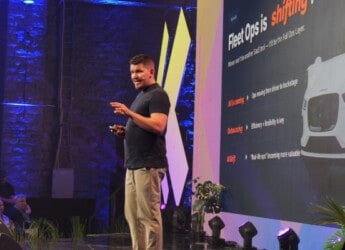
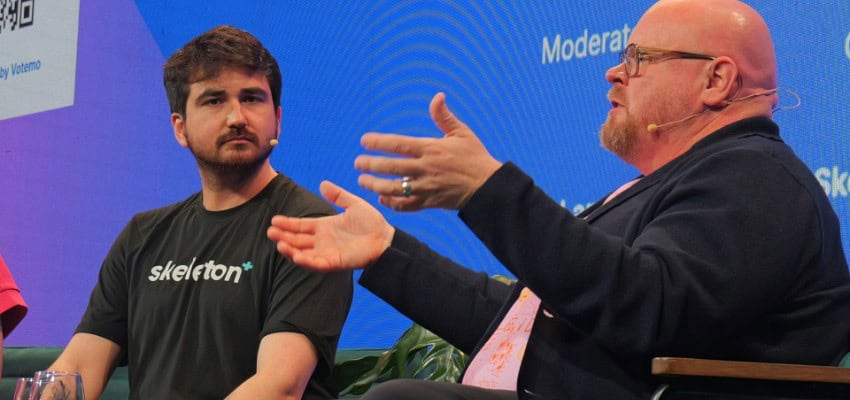
Pasi Toivanen, senior vice president for strategic government and industry initiatives at Nokia, and Arnaud Castaignet, senior vice president at Skeleton Technologies, opened the morning with a fireside conversation about Europe’s place on the AI infrastructure map.
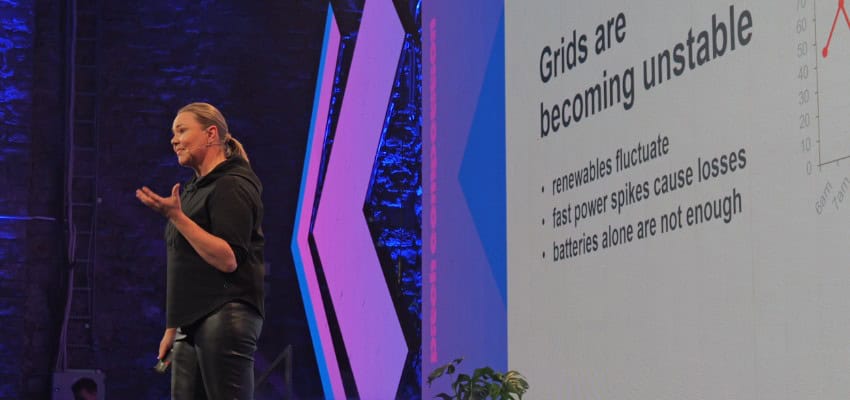
The premise from Castaignet was direct. “AI economics is fundamentally about energy and power,” he said. Castaignet argued that building AI without owning the power, storage, and connectivity layers leaves Europe with no bargaining power in the value chain. He pointed to U.S. data center sites in Tennessee and Mississippi where gas-fired plants are being built to meet AI demand, and to estimates that 40 percent of energy in U.S. data centers is wasted. The Nordic answer, he said, runs through energy efficiency by design and through the low-carbon electricity that the region already has.
Toivanen pressed the European Union to write rules that open doors rather than close them. “Enabling regulation,” he said. The phrase came back through the conversation as a counter to overregulation that benefits only the largest incumbents. He also urged Brussels to raise the targets in the Critical Raw Materials Act, which calls for the European Union to extract 10 percent and process 40 percent of strategic raw materials domestically by 2030. Castaignet added that Skeleton’s supercapacitor chemistry uses no rare earth elements, which he framed as a reason European industrial buyers had begun looking past price toward supply-chain independence.
Cancer care, where global tech meets local trust
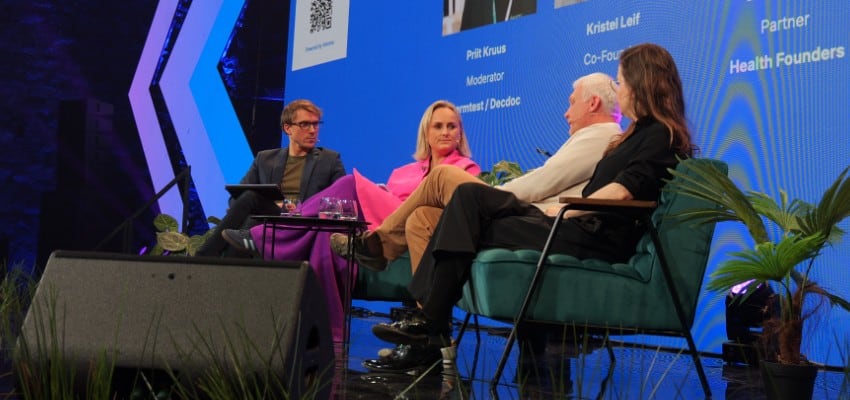
The next session traded servers for hospitals. A moderator opened by asking whether cancer care is a local problem or a scalable technology opportunity, then handed the floor to three voices that answered differently.
Kristel Leif, an Estonian entrepreneur who returned to Latitude59 a year after her own cancer diagnosis, said the gap is not pharmaceutical. “Feeling so alone, so isolated, so lost.” Those, she said, are the failures technology can address through patient navigation and community. Dr. Rille Pihlak, the panel’s clinical lead and an oncologist with UK clinical experience, said that 20 years of drug development has changed oncology completely, but that the human side has not kept pace. Patients with access to clinical-team support live six months longer than those without, she said, without naming the underlying study from the stage, and yet support systems still lag access to new drugs because they sit in different budget pots.
Erki Mölder, partner at Health Founders and a healthcare investor, pushed the conversation toward financing. Healthcare is not a market, he said. It is a political system, and the demand is limitless. The unsolved problem is procurement. National payers, he said, do not yet know how to buy outcomes-based digital tools that did not exist when the budgeting machinery was built.
Bliq makes the case for driverless without the war chest
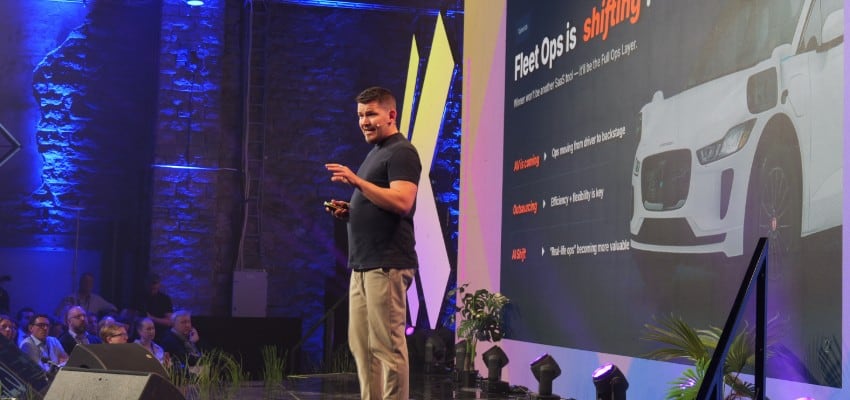
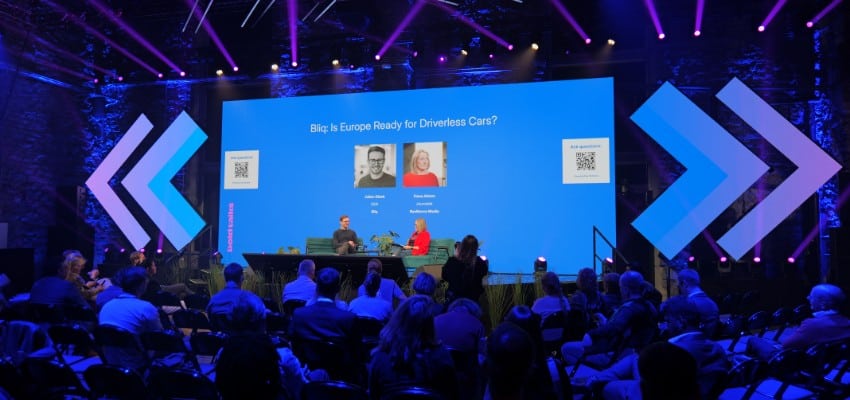
Then came the morning’s most concrete commercial story. Julian Glaab, chief executive and co-founder of Bliq, told moderator Fiona Alston of Resilience Media that the German-rooted startup received approval the previous week to operate driverless cars on Estonian public roads with no one at the wheel. Glaab said it is the only permit of its kind in Europe, to his knowledge; Tech.eu, in same-day reporting, described the authorization as a first-of-its-kind approval in the European Union.
The model is what made the session notable for investors. Glaab said his company will not run a robotaxi service. It will sell access to driverless vehicles for private use: the parent picking up a child from school, the small business owner picking up a guest from the airport. A remote supervision center watches every vehicle, with trained operators authorized by the government. A black box in each car records every decision the system makes. When something goes wrong, Glaab said, Bliq accepts liability because the company built and deployed the vehicle.
Audience questions probed traffic, insurance, jobs, and whether the car would do the school run. The session captured one version of what European mobility has been moving toward: a regulated, supervised, accountable driverless service launching in Tallinn.
David Cleevely on the prepared network
A different kind of session followed. David Cleevely, the Cambridge entrepreneur, telecoms expert, and Royal Academy of Engineering fellow, took the stage alone for a keynote on networks. Cleevely’s biography earns the audience attention. He co-founded Abcam in 1998 with Jonathan Milner, which Danaher acquired for about $5.7 billion in late 2023, and he served as chairman of the Raspberry Pi Foundation. He is also chairman of Chemify, a Glasgow spinout from Professor Lee Cronin’s lab.
Cleevely’s argument was simple. Breakthroughs read like luck but rarely are. They follow what he called the prepared network: connections built before they are needed, animated by curiosity and generosity rather than transactional calculus. He pointed to Mark Granovetter’s 1970s paper on the strength of weak ties, the Christakis-Fowler three-degree rule on behavioral spillover, and his own PhD research in rural Kenya, where messages traveled through informal connection networks because no telephones existed. The point landed for an investor audience that had just spent two days assembling the same kind of network at Kultuurikatel.

Neurodivergence as competitive advantage
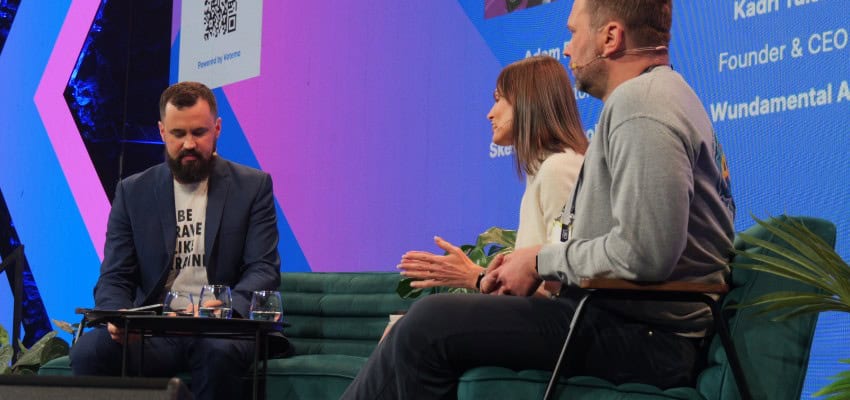
The final morning session, moderated by Adam Rang, framed neurodiversity as infrastructure for the AI era. Rang, an Estonian communicator who has spoken publicly about his own attention deficit hyperactivity disorder, opened with research from New Scientist that listed neurodiversity and AI as two of the most important scientific ideas of the 21st century, both rooted in neuroscience.
Two Estonian founders joined him. Kadri Tuisk, founder and CEO of Wundamental.ai, described an AI system that ingests business-coaching conversations and external context to find the fastest path past inner and external obstacles for senior leaders. Kristjan Pihus, CEO of Slycora, presented an app built around how the ADHD brain actually works, designed to minimize friction on daily tasks. Both panelists noted that pattern recognition, non-linear association, and tolerance for uncertainty (traits common among neurodivergent founders) are the same traits that make founders effective in the kind of structural ambiguity AI introduces into every job.
The pitch competition closed the loop
At 2 p.m., the same Bold Stage hosted the Latitude59 Pitch Competition Finals. Seven teams, drawn from 465 applications across 53 countries, pitched a jury that included angel-investor leads Jana Budkovskaja, David Clark and Emīls Kraģis from EstBAN, FiBAN and LatBAN, and General Partner Andra Bagdonaitė from Lithuanian venture fund FIRSTPICK. The result, announced by Liisi Org, chief executive of Latitude59, was a 450,000-euro investment package split among three winners.
Finnish deep-tech startup Granarium Technologies received up to 200,000 euros for renewable supercapacitors made from nanocellulose and activated carbon, a product profile that connected directly to the morning’s discussion of European energy independence. Estonian artificial intelligence startup DogBase received up to 100,000 euros for a working-dogs training platform now used by service-dog, therapy-dog and rescue-dog organizations. Lithuanian workforce-management startup Backoffice received up to 150,000 euros from FIRSTPICK to expand its hospitality operating system across the Baltics.
The pitch jury’s choices reinforced the morning’s themes. Energy infrastructure that does not depend on critical minerals. Data systems that replace paper logs in high-stakes operations. Workforce platforms that consolidate the five-plus tools small hospitality operators were already paying for. The capital allocation matched the conversation.
What this means for cybersecurity, information governance and eDiscovery
Friday morning at Latitude59 was less a series of separate sessions than one continuous argument about supervision, sovereignty and provenance: three concepts that travel directly into European data-protection, eDiscovery and regulated-industry practice.
The AI infrastructure conversation has clear implications for data residency, regulated workloads, and the General Data Protection Regulation enforcement risk that follows when sensitive data crosses borders to access compute. If European AI factories are built on Nordic clean power and Skeleton-style domestic supercapacitor supply, the cost-and-jurisdiction calculus tilts toward keeping legal-hold infrastructure, eDiscovery review platforms, and cross-border investigation workloads in-region, away from default deployment in U.S. hyperscaler regions where data sovereignty and regulatory exposure cut the other way.
The cancer-care panel is the patient-data analog of the same problem. National payer systems were not built to procure outcomes-based digital tools, and information governance officers in regulated health systems should expect patient-navigation tooling, consent flows, and procurement frameworks to move ahead of the policy that governs them.
The Bliq launch is the most direct cybersecurity story. A supervised autonomous vehicle is a fleet of mobile data centers, each generating event logs that will eventually appear in litigation. The black-box-on-every-car model that Glaab described is the same defensible record-keeping standard that document-retention policies have been trying to operationalize for two decades. Insurers, regulators and plaintiffs’ counsel will all want access to those logs.
The Cleevely keynote and the neurodiversity panel land further from the regulated-data workflow but still inform it. Prepared networks and weak-ties dynamics are the same structural argument that underwrites threat-intelligence sharing communities. Cognitive diversity as competitive advantage in AI-augmented work is the same argument cybersecurity and eDiscovery hiring communities have been making in their own contexts for years.
The day closed with one practical message. Europe is building the supervision layer for the AI era. The regulators, the audit trails, the operator-licensing schemes are all being built in public, on stage, in front of investors who are deciding right now where to deploy capital. Practitioners in cyber, information governance and eDiscovery should watch which permits get issued, which procurement frameworks get rewritten, and which founders move fastest through the regulatory door.
Which European supervision model will set the global standard for AI-era accountability, and which procurement, retention, or investigation workflows will need to change to meet it?
News sources
- Latitude59 pitch competition awards €450,000 to startups from Estonia, Finland and Lithuania (Latitude59)
- Latitude59 2026: 14 Sessions To Bookmark (Black Unicorn PR)
- Bliq.ai wins approval for fully driverless road operations in Estonia (Tech.eu)
- Why Bliq Chose Estonia to Build Driverless Mobility (Latitude59)
- Honorary doctorate citation for Dr David Cleevely FREng CBE (Anglia Ruskin University)
- Latitude59 casts Estonia as a testbed for the New Nordics (Estonian World)
- Latitude59 2026 program (Latitude59)





Assisted by GAI and LLM Technologies
Additional Reading
- Bold Stage opens Latitude59 2026 with AI, missiles and the New Nordics bet
- Estonia opens Latitude59 with sandbox framework for legal exemptions
- Seven startups from four nations compete for Latitude59’s nearly half-million-euro investment prize
- Big tech, defense and climate to share the main stage at Latitude59 2026
- Latitude59 pitch competition draws 465 startups from 53 countries as prize pool grows to €400,000
- Baltic and Nordic Angel Networks Pool €300,000 for Latitude59 Pitch Competition as Cross-Border Startup Investing Deepens
- Latitude59 Opens Pitch Applications as Investors Raise the Bar on Operational Readiness
Source: ComplexDiscovery OÜ

ComplexDiscovery’s mission is to enable clarity for complex decisions by providing independent, data‑driven reporting, research, and commentary that make digital risk, legal technology, and regulatory change more legible for practitioners, policymakers, and business leaders.