Editor’s Note: This situational assessment, derived from the Institute for the Study of War’s update dated September 6, 2025, is presented to inform ComplexDiscovery’s readers—professionals across legal, cybersecurity, information governance, and intelligence sectors—of the shifting strategic landscape in eastern and southern Ukraine. Of particular note is the Russian military’s renewed concentration of combat power along the Donetsk axis, a development that may signal the onset of a high-intensity operational phase with potential implications for regional stability, international security frameworks, and the risk landscape surrounding hybrid warfare.
The reported redeployment of elite Russian units and the accumulation of over 100,000 troops in the Pokrovsk sector suggest a deliberate escalation aimed at breaching Ukraine’s defensive “fortress belt.” Concurrently, the IAEA’s warning of deteriorating nuclear safety at the Zaporizhzhia Nuclear Power Plant raises transnational concerns about the resilience of critical infrastructure in conflict zones. These developments carry implications not only for military analysts and policymakers but also for cyber threat monitoring, incident response planning, and cross-border legal preparedness. This report is offered in support of informed analysis and structured decision-making within these domains.
Content Assessment: Russia Concentrates Forces for Renewed Donetsk Offensive Amid Shifting Frontlines
Information - 94%
Insight - 93%
Relevance - 92%
Objectivity - 94%
Authority - 95%
94%
Excellent
A short percentage-based assessment of the qualitative benefit expressed as a percentage of positive reception of the recent article based on Institute for the Study of War reporting from ComplexDiscovery OÜ titled, "Russia Concentrates Forces for Renewed Donetsk Offensive Amid Shifting Frontlines."
Background Note: ComplexDiscovery’s staff offers distinctive perspectives on the Russo-Ukrainian war and Middle Eastern conflicts, informed by their military experience on the West German, East German, and Czechoslovakian borders during the Cold War, as well as in Sinai as part of Camp David Accord compliance activities, during the timeframe of the Persian Gulf War. This firsthand regional knowledge has been further enhanced by recent staff travels to Eastern European countries, including Estonia, Finland, Latvia, Lithuania, and Poland. These visits have provided up-to-date, on-the-ground insights into the current geopolitical climate in regions directly impacted by the ongoing conflict.
Combined with cybersecurity, information governance, and eDiscovery proficiency, this multifaceted experience enables comprehensive analysis of these conflicts, including the critical impact of cyber warfare, disinformation, and digital forensics on modern military engagements. This unique background positions ComplexDiscovery to provide valuable insights for conflict-related investigations and litigation, where understanding the interplay of technology, data, and geopolitical factors is crucial.
Russo-Ukrainian Conflict Update*
Russia Concentrates Forces for Renewed Donetsk Offensive Amid Shifting Frontlines
ComplexDiscovery Staff
As the protracted Russo-Ukrainian War enters the autumn campaign phase of 2025, recent battlefield dynamics underscore a significant shift in operational tempo and force allocation by the Russian military. On September 6, Ukrainian forces seized a strategic opening in the southern Kharkiv sector, launching a localized counterattack amid evidence of a carefully coordinated Russian withdrawal from positions around Bayrak and Nova Husarivka. The partial demolition of a bridge across the Seversky Donets River suggests not a rout, but a tactical repositioning by Russian units now being redirected to critical areas of the southern front, particularly Kherson and Donetsk Oblasts.
This realignment includes elements of the elite 147th Artillery Regiment of the 1st Guards Tank Army—marking their first recorded deployment to southern Ukraine. The redeployment signals the increasing priority Moscow is placing on the southern axis, particularly in reinforcing its operations along the eastern bank of the Dnipro River and countering potential Ukrainian advances toward occupied Kherson.
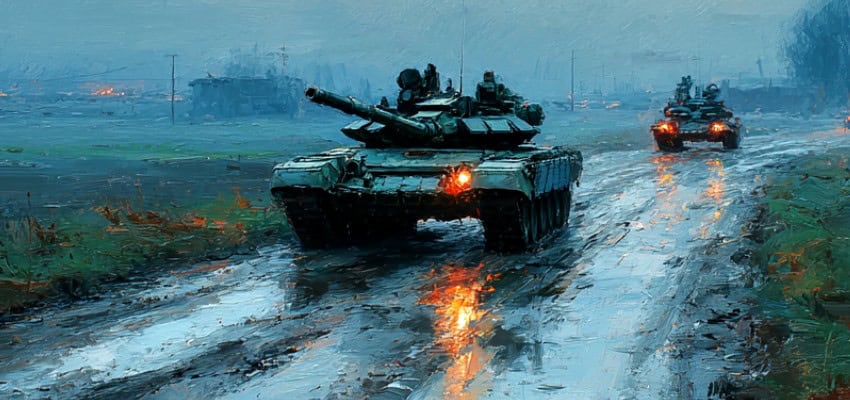
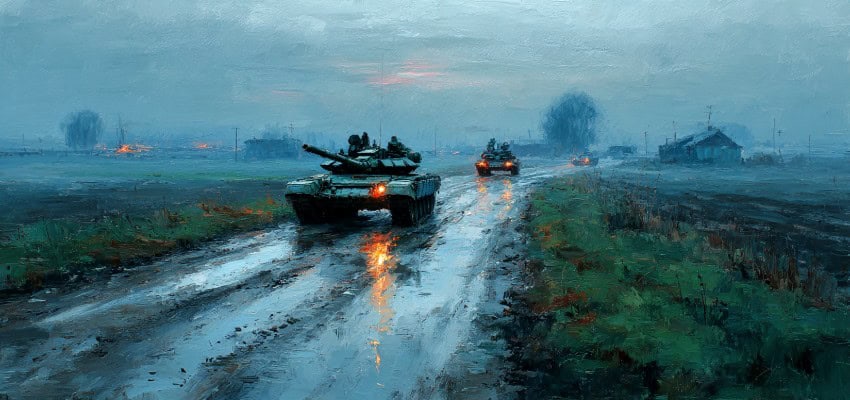
While Russian withdrawals create vulnerabilities in the north, they are simultaneously enabling a dangerous concentration of forces further south. In Donetsk Oblast, Russian commanders are reportedly massing heavy armored units, drones, and experienced naval infantry brigades along the Pokrovsk axis—one of the main vectors in their effort to break through the Ukrainian fortress belt anchored on the Slovyansk-Kramatorsk-Druzhkivka-Kostyantynivka line. Ukrainian sources report that Russia has shifted over 100,000 troops into positions south of Pokrovsk in anticipation of a major offensive thrust aimed at reaching Dnipropetrovsk Oblast.
This re-concentration of combat power is further reflected in Russia’s extensive redeployment of VDV (airborne) and naval infantry elements. Units from the 76th VDV Division, the 155th and 40th Naval Infantry Brigades, and elements of the 70th Motorized Rifle Division have been repositioned from Sumy, Kursk, and Kherson to reinforce efforts in Donetsk, particularly around Dobropillya and Kostyantynivka. Ukrainian and Russian sources confirm that both sides are now engaged in attritional combat to control key ground lines of communication (GLOCs), particularly along the E-40 Izyum-Slovyansk corridor—a lifeline for Ukrainian logistics in the east.
Russian drone activity has significantly intensified, with both first-person view (FPV) drones and Lancet loitering munitions targeting Ukrainian transport vehicles and defensive infrastructure along primary highways. This interdiction effort is intended to fragment Ukrainian supply lines and isolate forward positions before larger mechanized thrusts are launched. In Pokrovsk, Ukrainian units report increased Russian use of armored assaults on the flanks, supported by infiltration teams attempting to overextend Ukrainian defenses and expand control within the contested “gray zone.”
Despite these pressures, the Ukrainian defense continues to hold firm across key axes. Notably, Ukrainian forces have achieved marginal but meaningful advances near Lyman and recently conducted successful counterattacks near Dobropillya, reportedly retaking up to 2.5 kilometers of territory deemed operationally sensitive by Russian forces.
Concurrently, the international spotlight has returned to the Zaporizhzhia Nuclear Power Plant, where the International Atomic Energy Agency (IAEA) has issued grave warnings regarding heightened risks of a nuclear accident. Staff disruptions and battlefield proximity continue to impair the plant’s safety systems, with IAEA officials emphasizing the growing inability of Ukrainian staff to adequately respond to emergent incidents. This development, though not new, underscores the escalating consequences of sustained conflict around critical infrastructure zones.
Russia’s campaign also persists in the Kherson and Zaporizhzhia directions, though without significant ground gains. Ukrainian forces are actively resisting in these areas, and intelligence reports indicate that Russia has redeployed the 7th Airborne Division alongside four newly organized VDV regiments to bolster efforts to reach within strike range of Zaporizhzhia City. Russian drone activity near the city suggests an intent to bring Ukrainian rear-area GLOCs under sustained pressure and possibly establish fire control in future operations.
Notably, Russia continues limited offensive actions on the northern axis in Sumy and Kursk oblasts, including attempts to create buffer zones along the international border. However, these appear more as diversions or shaping operations rather than a decisive vector of advance, especially as significant forces are withdrawn from these sectors.
The cumulative pattern of Russian movements—strategic withdrawals in the north, intensified assaults and troop concentrations in Donetsk, and persistent pressure in the south—signals a renewed effort to compel Ukrainian capitulation through gradual territorial erosion, disruption of logistics, and psychological attrition. However, the failure to achieve decisive gains during the summer campaign has left Russian forces with the burden of proving that their autumn offensive can alter the strategic balance.
The question now confronting observers is whether Russia’s intensifying efforts in Donetsk, coupled with growing logistical strain on Ukrainian defenders, will suffice to break the Ukrainian fortress belt—or if the shifting battlefield calculus will instead expose new vulnerabilities within Russia’s overextended and redeployed formations. Will Ukraine’s adaptive defense and targeted counterattacks be enough to offset Russia’s escalating pressure, or is a broader shift in the war’s momentum on the horizon?
Assessed Control of Terrain Map for September 6, 2025
Russo-Ukrainian-War-September-06-2025About the Institute for the Study of War Research Methodology
ISW’s research methodology relies on both primary and secondary sources, enabling researchers to develop a comprehensive understanding of the situation on the ground. In order to analyze military and political developments in any given area, ISW’s research analysts must wholly understand the systems of enemy and friendly forces. They must also understand the population demographics, physical terrain, politics, and history of that area. This lays the analytical foundation for understanding the reasons for particular developments and fulfilling their assigned research objectives. ISW analysts also spend time in places like Iraq, Afghanistan, and elsewhere in order to gain a better understanding of the security and political situation and to evaluate the implementation of current strategies and policies. Their researchers compile data and analyze trends, producing a granular analysis of developments in areas of research, producing an accurate, high-resolution, timely, and thorough picture of the situation. ISW’s research methodology guarantees its success and commitment to improving the nation’s ability to execute military operations, achieve strategic objectives, and respond to emerging problems that may require the use of American military power.
About the Institute for the Study of War
The Institute for the Study of War advances an informed understanding of military affairs through reliable research, trusted analysis, and innovative education. They are committed to improving the nation’s ability to execute military operations and respond to emerging threats in order to achieve U.S. strategic objectives. ISW is a non-partisan, non-profit, public policy research organization.
Learn more, get involved, and contribute today.
Assisted by GAI and LLM Technologies
* Sourced and shared with permission from the Institute for the Study of War (ISW).
Additional Reading
- From Dissent to OSINT? Understanding, Influencing, and Protecting Roles, Reputation, and Revenue
- Data Embassies: Sovereignty, Security, and Continuity for Nation-States
Source: ComplexDiscovery OÜ