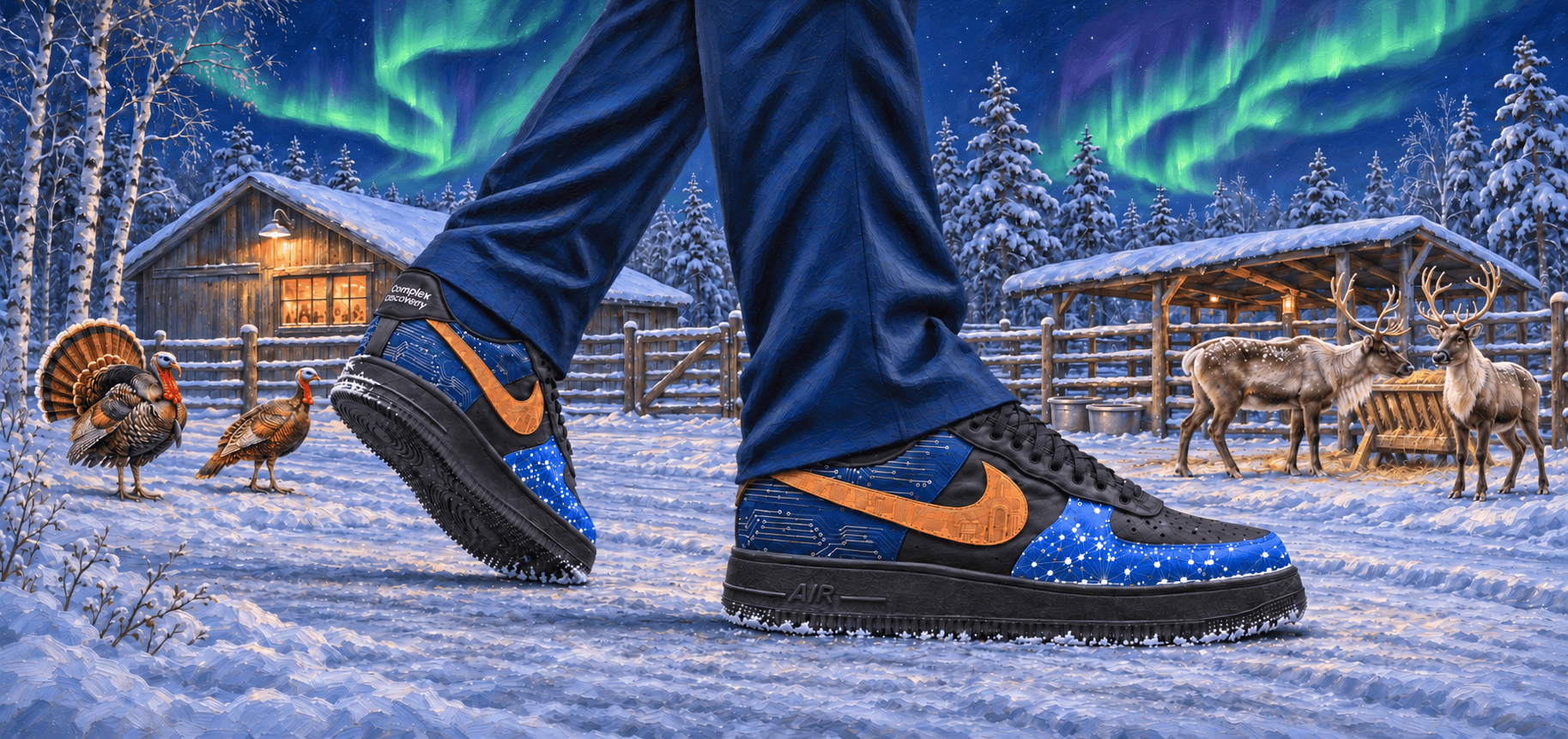
Editor’s Note: ComplexDiscovery OÜ marks Thanksgiving 2026 with thanks for a year of travel and reporting on cybersecurity, information governance and eDiscovery, from Legalweek in New York to Slush in Helsinki, with a September walk on the Camino Portugués between. Two animals of the season frame that gratitude. In Finnish Lapland, where a reporting trip visited a working reindeer farm outside Rovaniemi this month, herded reindeer generally carry their owner’s earmark, and the Reindeer Herders’ Association keeps a register of close to 12,000 marks checked against the herds at annual roundups. In Washington on Nov. 24, President Donald Trump granted ceremonial pardons to two West Virginia turkeys, Freedom and Feathers, at the 79th annual National Thanksgiving Turkey Presentation. For professionals, the reindeer system is a working model of ownership records: a mark tied to an owner, a register, a scheduled count and a rule for marks that cannot be read. The pardon stands for grace, including the encouragement and corrections readers send. The commentary thanks HaystackID’s leadership, partners such as EDRM, event organizers, sources and readers, and asks which records a stranger could read at a glance to know whom they belong to.
Disclosure: Rob Robinson, founder of ComplexDiscovery OÜ, is chief marketing officer of HaystackID, whose leadership supported the business travel described in this commentary as part of event coverage for Newsline, HaystackID’s industry news service. ComplexDiscovery OÜ is also an EDRM Guardian Partner.
Content Assessment: Thanksgiving, turkeys and reindeer: An earmark, a pardon and a year of thanks
Information - 95%
Insight - 95%
Relevance - 92%
Objectivity - 95%
Authority - 96%
95%
Excellent
A short percentage-based assessment of the qualitative benefit expressed as a percentage of positive reception of the recent article from ComplexDiscovery OÜ titled, "Thanksgiving, turkeys and reindeer: An earmark, a pardon and a year of thanks."
Commentary – Leadership Beat
Thanksgiving, turkeys and reindeer: An earmark, a pardon and a year of thanks
ComplexDiscovery Staff
Thanksgiving is a day for counting blessings and giving thanks for them, and ComplexDiscovery has many to count this year. Chief among them is a year spent traveling, studying and reporting on cybersecurity, information governance and legal discovery, made possible by the organizers, sources, readers and supporters who opened doors along the way.
Two animals, each a legend in its own right, belong to this holiday season: the reindeer of Christmas lore and the turkey of Thanksgiving. Earlier this month, a ComplexDiscovery reporting trip reached a working reindeer farm outside Rovaniemi, in Finnish Lapland, where every herded reindeer belongs to someone and the proof is cut into its ear. Two days before Thanksgiving and an ocean away, President Donald Trump granted ceremonial pardons to two West Virginia turkeys named Freedom and Feathers. The reindeer carries a record of whom it belongs to, and the turkey has become the center of a yearly ritual of mercy.

A city drawn in antlers
The road to the reindeer ran north from a busy reporting calendar. Over a weekend between the Tallinn Digital Summit and Slush, ComplexDiscovery took the ferry from Tallinn across the Gulf of Finland to Helsinki, then an overnight train into Lapland and the Arctic Circle. Rovaniemi itself is a story of recovery. Retreating German troops burned the town in 1944 during the Lapland War, destroying about 90 percent of its buildings. In 1945, the Finnish Association of Architects’ reconstruction office, led by Alvar Aalto, drew up a new town plan that laid out its main roads in the shape of a reindeer’s antlers.
The last stop of the visit was the reindeer farm, and it turned out to be a lesson in data management. Finnish law generally requires a herded reindeer to carry its owner’s earmark, and Finland’s Reindeer Herders’ Association, based in Rovaniemi, keeps the register of those marks and says close to 12,000 are currently in use. The association also approves each new mark.
The association’s English booklet on herding explains how the system works. Not just anyone can hold an earmark: reindeer may generally be owned only by citizens of European Economic Area countries who live permanently in the herding area, along with the herding cooperatives and the association itself. Reindeer husbandry is also the livelihood that does the most to sustain Sámi language and culture, so for many herders an earmark records heritage as surely as it records property.
Marked as calves, counted every year
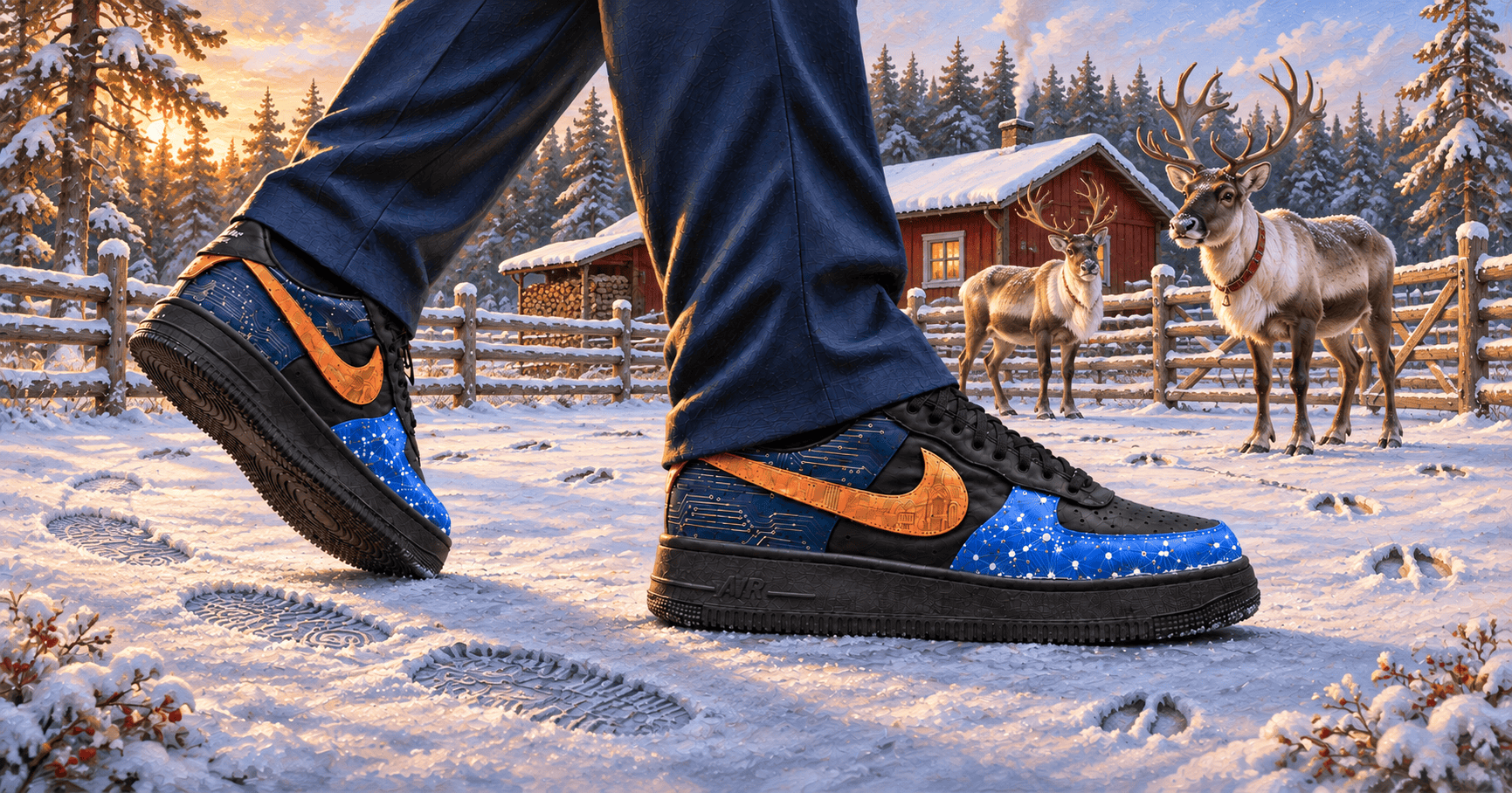
Provenance begins early, as the booklet tells it. Around midsummer, herders gather the reindeer, catch the calves in a corral, watch which female each one trails and then cut the mother’s earmark into the calf’s ears with a sharp knife. Herders combine 21 different cuts, called deeds, into the patterns, and a practiced eye reads a mark from behind, starting at the tip of the right ear.
Then the herds roam, and the marks travel with them. Each year the record is checked against the animals themselves, at roundups that run from late September into January. There the livestock are “read,” which means counting the reindeer and entering them in each cooperative’s reindeer register, a step the association describes as a legal requirement. Each earmark is identified and passed to a reader who logs the animal and its owner, a herder nicks the fur over the ribs to show the reindeer has been read, and strays from other cooperatives are sent home.
Finland’s reindeer law also plans for the day a record fails: a marked reindeer whose earmark is illegible, or whose owner cannot be identified from it, is sold by the cooperative’s chairman. The money goes to the owner or, if no owner is found within a reasonable time, to the cooperative.
Anyone who works in eDiscovery or information governance will hear the echo. Information can roam where the work requires, so long as its ownership travels with it: decide who may own it, mark it at creation, round it up on a schedule, count it once and return what belongs elsewhere. An earmark behaves like a custodian field that cannot be edited without a blade, and the rule for unreadable marks is a disposition policy for orphaned assets. It pays to ask whether ownership metadata survives every move between systems, and when anyone last checked the register against the data it describes.
ComplexDiscovery is grateful for that lesson and for the journey that delivered it, by ferry and overnight train to the Arctic Circle and on to a farm where provenance is still cut by hand. Few classrooms teach information governance as plainly as a reindeer corral.
A pardon on the South Lawn
If the reindeer stand for a record kept faithfully, the turkeys stand for something gentler. Freedom and Feathers were raised by Scott and Becky Rightsell at Deans Gap Farm in Fort Seybert, West Virginia, and spent the night before the ceremony at the Willard InterContinental hotel in Washington. The National Turkey Federation, the industry’s trade group, presented the pair for the 79th annual National Thanksgiving Turkey Presentation on Nov. 24. Freedom took the stage on the South Lawn while Feathers rested inside the White House, and both birds were pardoned. The pair will now retire to Texas A&M University, according to Axios.
The tradition took a long time to find its form. NPR reports that the federation’s first presidential turkey went to Harry S. Truman in 1947, that John F. Kennedy spared a bird in 1963 without calling it a pardon, and that Ronald Reagan used the word in 1987 as a joke. George H.W. Bush held the first official pardoning ceremony in the Rose Garden in 1989, according to the White House Historical Association. The association notes that the tradition has been traced to an 1863 reprieve by Abraham Lincoln for a turkey his son Tad pleaded to save, though it calls that story likely apocryphal.
The ritual has its critics, including People for the Ethical Treatment of Animals, which has long objected to the conditions some pardoned birds have lived in. Still, the moment endures because of what it symbolizes: an exact record of what is owed, set aside for a decision to let it go.
ComplexDiscovery is grateful for that lesson, too. Freedom and Feathers traveled from a West Virginia farm to a Washington hotel, the White House and, soon, retirement in Texas. Their short journey, repeated with new birds every November, is a yearly reminder that a careful record and a measure of grace can share the same stage.
The road behind a year of reporting
That pairing of record and grace is also what an independent publication depends on most, and 2026 offered plenty of both. The conference year opened in earnest in March at Legalweek, ALM’s annual legal industry conference in New York, held this year in its new home at the Javits Center. In May, ComplexDiscovery headed to Tallinn for FutureLaw, the legal innovation conference held at the Port of Tallinn, and for Latitude59, including the demo day of NATO’s Defence Innovation Accelerator for the North Atlantic, known as DIANA. Late spring and summer then brought the Dublin Tech Summit, RelFest London and LegalTechTalk.
September brought a different kind of travel. Three ComplexDiscovery walkers took the Camino Portugués Coastal Route, about 167 miles from Matosinhos, just north of Porto, to Santiago de Compostela. The route ran up the Portuguese shore and across the Minho River by boat into Galicia. For the final stages it followed the Variante Espiritual, which reaches Pontecesures, near Padrón, by boat across the Ría de Arousa and up the Ulla River. Reporting from the trail, the walkers asked one question at every stop: how does anyone know that? The answers became a field guide to provenance, from replica Roman tanks labeled as replicas to a monastery that publishes its founding legend and calls it a legend. Even the trip home carried a lesson, when a canceled flight turned into an unscheduled extra day in Porto.
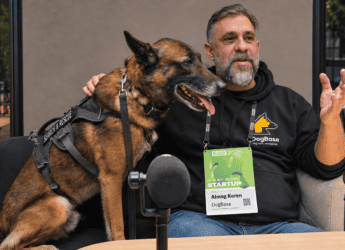
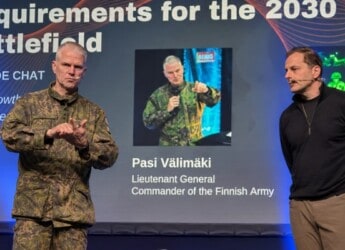
The autumn circuit then returned to the Baltic and the Nordics. The Tallinn Digital Summit marked ComplexDiscovery’s third consecutive year at that gathering, followed by the northern detour to Rovaniemi. Helsinki closed the travel calendar with DECOI x Borderland, a summit for defense startups held the day before Slush. Slush itself, which ComplexDiscovery covered for a second straight year, ran from Finnish President Alexander Stubb’s opening conversation to an interview with a startup founder who arrived with his search-and-rescue dog.
Between the trips, the desk spent its days with other people’s records. The year’s coverage ran from court and tribunal rulings on fabricated citations to the European Union’s Cyber Resilience Act reporting duty. It also took in the Electronic Discovery Reference Model’s final version of EDRM 2.0, monthly premerger notification data and breach notices filed on California’s public register. Every one of those stories rested on a docket, a regulator’s release, a researcher’s methodology or a speaker willing to share what they knew on the record.

Thanks, and a little grace
ComplexDiscovery’s thanks begin with the leadership of HaystackID, which made it possible to travel and cover industry events in support of Newsline, HaystackID’s industry news service. They extend to partners such as EDRM, to the event organizers who opened their doors and granted press credentials, and to the courts, agencies and researchers who publish their documents and data for anyone to read. Thanks also go to the speakers, founders and practitioners who gave their time. Special thanks go to the readers who write to ComplexDiscovery staff, offering encouragement when it is warranted and correction when it is needed. A correction is a small pardon of its own, an error acknowledged, fixed and recorded rather than held against the work, and the readers who send one extend that grace first.
A reindeer earmark tells a herder, at a glance and years later, whose animal stands in the corral, while a turkey pardon tells a bird it will see December. This year’s reporting needed both: a record precise enough to trust, and readers generous enough to forgive what the record missed.
As professionals close out their own year, which record in their organization could a stranger read at a glance and know, as surely as a Lapland herder reads an ear, whom it belongs to?
From all of ComplexDiscovery, best wishes to readers, sources and friends for a joyful Thanksgiving and a peaceful, restful holiday season.

News sources
- Reindeer Husbandry Act (848/1990), unofficial translation (Ministry of Agriculture and Forestry of Finland via Finlex)
- Reindeer (Reindeer Herders’ Association)
- Earmarks (Reindeer Herders’ Association)
- Thanksgiving at the White House (White House Historical Association)
- Alvar Aalto Architecture in Rovaniemi (Visit Rovaniemi)
- Reindeer antler city plan (Alvar Aalto Foundation)
- Senda Litoral (Camino Ninja)
- Variante Espiritual (Camino Ninja)
- FutureLaw 2026 (FutureLaw)
- Legalweek New York 2026 (ALM)
- Thanksgiving at the White House (The White House)
- Trump Grants Thanksgiving Pardons for Turkeys Freedom and Feathers at the White House (Associated Press via U.S. News & World Report)
- Trump Spares Turkeys Freedom and Feathers From Fowl Thanksgiving Fate (Reuters via U.S. News & World Report)
- Trump talks turkey, and his ballroom, at pardoning event (Axios)
- Trump to pardon Thanksgiving turkeys Freedom, Feathers (The Hill)
- ‘Complete and Total Pardon’: Trump Pardons Thanksgiving Turkeys Named Freedom and Feathers (Benzinga)
- Trump Pardons Thanksgiving Turkeys, Both Headed to Texas A&M (Texas Scorecard)
- A tradition for turkeys: Another presidential pardon (NPR)
- A Brief History of the Presidential Turkey Pardon (History)
- Where pardoned turkeys go to die (CNN via WTKR)
- Pardon Me? The Grim Fate of The White House Turkeys (People for the Ethical Treatment of Animals)

Assisted by GAI and LLM Technologies
Additional reading
- Reid Hoffman tells Slush that strategic optimism means steering AI, including where it still fails
- Mistral’s CFO tells Slush companies need to own and control their AI as Anthropic heads to Nasdaq
- Välimäki and Donahue tell DECOI x Borderland founders to test in Ukraine and plug into NATO’s data layer
- Days before Slush, an attack on Estonian drone maker Threod raises the stakes for defense tech
- Before the Abu Dhabi talks, a claimed Rosstat leak and hacked alert apps test what can be confirmed
- Spoofed nuclear alert caps four days of Ukraine war assessments that separate claims from evidence
- Kyiv says Starshield speeds are back, but who capped them is still disputed
- Diesel license, Starshield cap and intelligence warnings strain US support for Ukraine
- Drones hit two Yandex data centers, and a Kremlin decree sets terms for state management
- A cell tower near Lyman and Russia’s fight over its own war record
- How a general’s walk across a bridge tested Putin’s claim to Svyatohirsk
- Germany names Russia for the Leipzig drone, and keeps most of its evidence out of view
- Estonia scrambled jets over a drone no official has identified
- Russia leans on drones and dissent-proofing as fuel crisis bites
- Senate passes Graham sanctions act, shifting Russia pressure from policy to statute
Source: ComplexDiscovery OÜ

ComplexDiscovery’s mission is to enable clarity for complex decisions by providing independent, data‑driven reporting, research, and commentary that make digital risk, legal technology, and regulatory change more legible for practitioners, policymakers, and business leaders.