
Editor’s Note: May was the month the rulebooks caught up with the technology — and then bent under it. In Dublin, forensic examiners conceded that proving a recording is intact no longer proves it is real, as deepfake fraud turned authenticity into the question discovery has to answer. Across three jurisdictions in twelve days, regulators in Washington, London and Brussels hard-wired synthetic-image takedown duties into the operating environment, even as the European Union pushed its flagship high-risk AI obligations into 2027 and added a categorical ban on abusive AI content. The Justice Department signaled it is now using artificial intelligence to hunt antitrust violations, raising the methodological bar for everyone responding to a Second Request. And Anthropic quietly re-segmented the legal-software market in an afternoon by moving the customization layer inside the model. Taken together, the month showed governance and enforcement converging on a single demand: show your work — the provenance, the chain of custody, the audit trail — because the tools producing the evidence are now the tools scrutinizing it.
Beneath the headlines, the data and the field reporting fill in the shape of the shift. This month’s Industry Research takes the long view, tracing eighteen years of eDiscovery market growth from a $4.73 billion baseline in 2012 to a projected $28.08 billion in 2030 and the steady migration of spend from services into AI-assisted software. The Lagniappe carries the dispatches: Ireland’s bid to be the de facto regulator of global AI, Latitude59’s missile-defense-and-sovereignty opening in Tallinn, FutureLaw’s reckoning with the billable hour, a first global rulebook for digital embassies, and the monthly read on the Hart-Scott-Rodino merger pipeline. The thread that runs through all of it is the same one the Great Reads pull tight: when machines make and judge the record, the professionals who can prove what is real are the ones who will be trusted to govern it.
Content Assessment: Five great reads on cyber, data, and legal discovery for May 2026
Information - 94%
Insight - 93%
Relevance - 95%
Objectivity - 94%
Authority - 95%
94%
Excellent
A short percentage-based assessment of the qualitative benefit expressed as a percentage of positive reception of the recent article from ComplexDiscovery OÜ titled, "Five great reads on cyber, data, and legal discovery for May 2026."
Industry Newsletter
Five great reads on cyber, data, and legal discovery for May 2026
ComplexDiscovery Staff
Click on the links to read the complete article.
When authenticity replaces integrity
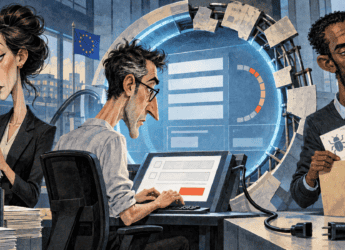
When you can’t trust the evidence: deepfakes force a forensic reckoning in Dublin examines how deepfake fraud is dismantling the forensic test that has governed digital evidence for three decades. Before a standing-room audience at the Dublin Tech Summit, HaystackID’s John Wilson and Jeff Shapiro walked through the 2024 Arup case — roughly $25.6 million lost after a video call staffed entirely by AI-generated executives — to make the point that a recording can be forensically genuine and still document a meeting that never happened. With the EU AI Act’s Article 50 transparency rules landing Aug. 2 and a proposed U.S. Federal Rule of Evidence 707 putting AI-generated evidence under Daubert-style scrutiny, the burden is shifting from proving integrity to proving authenticity. For cybersecurity, privacy, compliance and eDiscovery professionals, it is a preview of the only question that will matter when the evidence itself is suspect: can you prove what was real? Read more in When you can’t trust the evidence: deepfakes force a forensic reckoning in Dublin.
The transatlantic takedown clock
Three jurisdictions, two weeks: How the synthetic-image takedown clock just got faster connects three regulatory moves that closed a synthetic-image perimeter across two continents in twelve days. The U.S. Federal Trade Commission began enforcing the TAKE IT DOWN Act under a 48-hour removal clock, Britain’s Ofcom recommended hash-matching to detect non-consensual and AI-generated intimate imagery, and EU negotiators reached a provisional deal to ban abusive synthetic depictions — different mechanics, similar outcomes. The result is no longer a forecast but the operating environment platforms and their counsel will work inside for the rest of 2026. For information-governance and eDiscovery teams, the work starts the moment a takedown request lands and runs through preservation, vendor diligence, and the SLA renewals that will hard-code these duties into next year’s contracts. Read more in Three jurisdictions, two weeks: How the synthetic-image takedown clock just got faster.
Enforcement learns the algorithm
DOJ Antitrust Division’s reported AI use raises the eDiscovery bar for HSR responders reports that the Justice Department’s Antitrust Division is using artificial intelligence to detect and investigate anticompetitive conduct, according to a May 13 MLex account citing a division official. Landing alongside the proposed RealPage consent judgment in Tunney Act review and new algorithmic-pricing laws in California, New York and Connecticut, the disclosure turns a theoretical worry — does the government read pricing-tool outputs and chat data with machine assistance? — into a working assumption. For parties facing a Hart-Scott-Rodino Second Request, the custodial interview now reaches the data-science team, the litigation hold reaches the model artifacts, and the technology-assisted review protocol has to withstand symmetric methodology scrutiny. Read more in DOJ Antitrust Division’s reported AI use raises the eDiscovery bar for HSR responders.
The customization layer moves inside
Claude for Legal arrives, and the legal AI stack gets re-segmented overnight captures how Anthropic re-segmented the legal-software stack in a single afternoon. The May 12 release ships more than 20 Model Context Protocol connectors — reaching Relativity, Everlaw, Consilio, iManage, NetDocuments, Harvey, Thomson Reuters’ CoCounsel and others — plus 12 practice-area plugins that each open with a setup interview capturing a team’s playbook, escalation chain and house style. That moves the customization work legal-AI vendors built businesses on inside the model itself. For procurement officers, eDiscovery directors and privacy counsel, the new buying signal is blunt: which incumbents have shipped a Claude connector, and which have not. Read more in Claude for Legal arrives, and the legal AI stack gets re-segmented overnight.
Brussels resets the clock
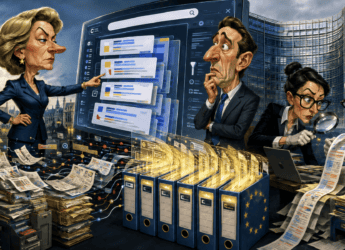
EU AI Act deal would delay high-risk rules to 2027, ban abusive AI content reports the first major reset of the EU AI Act, pending formal adoption. In the early hours of May 7, Council and Parliament negotiators landed a provisional Digital Omnibus deal that would push Annex III high-risk obligations from Aug. 2, 2026, to Dec. 2, 2027, and Annex I product-embedded AI to Aug. 2, 2028. The agreement also adds an Article 5 categorical ban on AI systems that generate child sexual abuse material or non-consensual intimate imagery — a prohibition that, per analyses from Lewis Silkin and Hogan Lovells, reaches general-purpose generative AI providers absent reasonable safeguards. For compliance and eDiscovery teams, the deferral changes procurement timing for AI-augmented hiring, fraud and credit tools, while the Article 5 expansion opens a new layer of exposure when synthetic abuse content surfaces in litigation or investigations. Read more in EU AI Act deal would delay high-risk rules to 2027, ban abusive AI content.
Industry Research
Market Intelligence: eDiscovery market growth from 2012 to 2030 traces eighteen years of eDiscovery market growth, from a $4.73 billion baseline in 2012 to a projected $28.08 billion in 2030 — a roughly 10.4 percent compound annual rate that absorbed the 2020 pandemic contraction and the still-unfolding generative AI transition without breaking stride. The composition has shifted as it grew: services fell from about 70 percent of worldwide spend in 2012 to a projected 61 percent in 2030, while software’s faster compounding reflects AI-assisted review, analytics and processing reclassifying work once delivered by people. The throughline is a widening gap between data volume and dollars spent, with artificial intelligence the central force driving the per-unit cost compression now reshaping the economics of discovery. Learn more in Market Intelligence: eDiscovery market growth from 2012 to 2030.
Lagniappe
Ireland’s AI regulator role gets a hard look at Dublin Tech Summit puts a price tag on Ireland’s ambition to lead AI governance. On the Dublin Tech Summit main stage, William Fry partner Dr. Barry Scannell, OpenAI’s Emma Redmond and former Twitter policy head Colin Crowell agreed the country is positioned to be the de facto regulator of global AI, then worked through the GDPR realities, the slipping EU high-risk timeline, and the looming U.S. preemption fight that could make or break the bet. The takeaway for governance teams is that the operative AI regulator for most organizations is still GDPR — and the documentation burden is rising regardless of how the headline rules land. Read more in Ireland’s AI regulator role gets a hard look at Dublin Tech Summit.
Bold Stage opens Latitude59 2026 with AI, missiles and the New Nordics bet opens Latitude59 2026 in Tallinn, where a missile-defense startup pitched itself as Europe’s next missile house, Estonian President Alar Karis framed AI and skills as a defining question, and panelists named recent drone incursions in allied airspace as the backdrop. With 3,000 participants from 70 countries, the conference’s Bold Stage doubled as a tour of the resilience supply chain the New Nordics intend to sell to the rest of Europe. For compliance and eDiscovery teams, the dual-use technology and procurement-reform mechanics on display land directly inside cross-border data-flow obligations and the dispute pipelines that follow defense contracting. Read more in Bold Stage opens Latitude59 2026 with AI, missiles and the New Nordics bet.
FutureLaw 2026 closes: hard truths, the billable hour, and what gets built next closes FutureLaw 2026 on two unresolved fault lines: the billable hour and the gap between AI demos and AI in production. Simplexico founder Uwais Iqbal drew hard truths from 23,000 AI-assisted adjudications, arguing legal AI should be measured not by benchmark scores but by whether users will choose the tool tomorrow, while Dinari’s Chas Rampenthal, a former LegalZoom general counsel, read Texas Opinion 705 as evidence the billable hour is buckling under generative-AI productivity. For procurement and vendor-risk professionals, the consequential threads run through audit trails, output reviewability and the structural pricing of legal services. Read more in FutureLaw 2026 closes: hard truths, the billable hour, and what gets built next.
Digital embassies get a global rulebook in WEF and Bain white paper gives cross-border AI infrastructure its first global trust framework. The World Economic Forum and Bain & Company published the Global Framework for Innovative and Trusted Digital Embassies, codifying five trust dimensions — political commitment, legal basis, data management, technical safeguards and operational rules — for hosting sovereign workloads abroad. For practitioners, the framework formalizes data classification, residency expectations, logged-access disclosures and exit portability as baseline negotiation terms, and litigation holds, breach-notification duties and discovery requests will increasingly turn on which jurisdiction governs hosted data. Read more in Digital embassies get a global rulebook in WEF and Bain white paper.
Second request pipeline watch: April HSR filings, Q1 GDP, and form rulemaking window closing reads April’s merger pipeline data in context. The FTC’s Premerger Notification Office logged 185 Hart-Scott-Rodino transactions — down 9 percent from March’s 203 but 58 percent above April 2025 — lifting the FY2026 running total to 1,430 across seven months and pointing toward an annualized pace above 2,400. The edition tracks three developments shaping the second half: the Fifth Circuit’s restoration of the pre-2025 HSR form with the joint FTC/DOJ inquiry closing May 26, the IEEPA tariff aftermath feeding CBP’s refund processing, and the BEA’s 2.0 percent advance Q1 GDP estimate. For teams tracking Second Request timing, the signal is sustained capacity demand through year-end. Read more in Second request pipeline watch: April HSR filings, Q1 GDP, and form rulemaking window closing.
- Click here to view recent Five Great Reads Newsletters
- Click here to subscribe to Five Great Reads Update
May 2026 industry spotlight
People, agencies, vendors, and research bodies named in the May edition reporting — listed alphabetically with brief contextual descriptions.
- Abigail Slater – Then-Assistant Attorney General who announced the Justice Department’s proposed RealPage settlement, the backdrop to the division’s reported AI use.
- Alar Karis – President of Estonia, who framed AI, education and skills as a defining question in his Latitude59 2026 opening remarks.
- Anthropic – Released more than 20 Claude connectors and 12 legal practice-area plugins, re-segmenting the legal-AI market.
- Arup – British engineering firm whose Hong Kong office lost about $25.6 million in the 2024 deepfake video-call fraud.
- Cathy Li – Head of the World Economic Forum’s Centre for AI Excellence and co-author of the digital-embassies framework foreword.
- Charlie Taylor – Business Post technology and innovation editor who moderated the Dublin Tech Summit AI-governance session.
- Chas Rampenthal – Chief legal officer at Dinari and former LegalZoom general counsel, who used Texas Opinion 705 to argue the billable hour is breaking.
- Colin Crowell – Global managing director of The Blue Owl Group and former vice president of global public policy at Twitter, on the Dublin AI-strategy panel.
- Dinari – Tokenized-asset company whose chief legal officer argued the billable hour is buckling under AI productivity.
- Barry Scannell – Technology-group partner at William Fry and Ireland AI Advisory Council member who called Ireland “the de facto regulator of AI globally.”
- Dublin Tech Summit – Tenth-anniversary RDS event where deepfake forensics and Ireland’s AI-regulator ambitions were debated.
- Emma Redmond – Associate general counsel and head of privacy and data protection at OpenAI, leading the company’s Irish operation.
- European Parliament and Council of the EU – Reached the provisional Digital Omnibus deal deferring high-risk AI rules and banning abusive synthetic content.
- Florian Mueller – Senior partner at Bain & Company and co-author of the WEF and Bain digital-embassies white paper.
- Frankenburg Technologies – Estonian missile-defense startup positioning itself as Europe’s next missile house.
- FTC Premerger Notification Office – Logged 185 HSR transactions in April 2026, sustaining the elevated merger-filing band into FY2026.
- FutureLaw 2026 – Tallinn legal-technology conference whose closing day pressed the billable hour and the gap between AI demos and production deployment.
- HaystackID – Forensics and eDiscovery firm whose executives reframed digital-evidence standards at the Dublin Tech Summit.
- Jeff Shapiro – HaystackID managing director for Europe, who co-presented the Arup deepfake-fraud case at the Dublin Tech Summit.
- John Wilson – Chief information security officer and president of forensics at HaystackID, who argued in Dublin that proving evidence authenticity now matters more than proving integrity.
- Kusti Salm – Founder of Frankenburg Technologies, the Estonian missile-defense startup pitching itself as Europe’s next missile house.
- Latitude59 – Tallinn startup and deep-tech conference that opened its 2026 edition on AI sovereignty and missile defense.
- Lewis Silkin and Hogan Lovells – Law firms whose analyses read the new Article 5 ban as reaching general-purpose generative AI providers.
- Liisi Org – Chief executive of Latitude59, who opened the Tallinn conference with the line “Computers can code and only humans can care.”
- Ofcom – U.K. regulator that recommended hash-matching to detect non-consensual and AI-generated intimate imagery under the Online Safety Act.
- OpenAI – AI developer whose Irish operation leader joined the Dublin debate on Europe’s rulebook.
- RealPage Inc. – Rental-pricing software company at the center of the proposed consent judgment now in Tunney Act review.
- Simplexico – London-based legal-AI consultancy whose founder presented production-system hard truths at FutureLaw 2026.
- The Blue Owl Group – Advisory firm represented on the Dublin panel by a former Twitter global public-policy head.
- U.S. Department of Justice, Antitrust Division – Reported to be using AI to detect anticompetitive conduct, raising the bar for HSR responders.
- U.S. Federal Trade Commission – Began enforcing the TAKE IT DOWN Act under a 48-hour removal clock and co-leads the HSR form inquiry.
- Uwais Iqbal – Founder of London-based legal-AI consultancy Simplexico, who drew hard truths from 23,000 AI-assisted legal adjudications at FutureLaw 2026.
- William Fry – Irish law firm whose technology-group partner anchored the Dublin AI-governance panel.
- World Economic Forum and Bain & Company – Co-authors of the first global framework for governing digital embassies and sovereign AI workloads.
About ComplexDiscovery OÜ
ComplexDiscovery OÜ is an independent digital publication and research organization based in Tallinn, Estonia. ComplexDiscovery covers cybersecurity, data privacy, regulatory compliance, and eDiscovery, with reporting that connects legal and business technology developments—including high-growth startup trends—to international business, policy, and global security dynamics. Focusing on technology and risk issues shaped by cross-border regulation and geopolitical complexity, ComplexDiscovery delivers editorial coverage, original analysis, and curated briefings for a global audience of legal, compliance, security, and technology professionals.
Learn more at ComplexDiscovery.com.
Assisted by GAI and LLM Technologies
- An Abridged Look at the Business of eDiscovery: Mergers, Acquisitions, and Investments
- eDisclosure Systems Buyers Guide – Online Knowledge Base
Source: ComplexDiscovery OÜ

ComplexDiscovery’s mission is to enable clarity for complex decisions by providing independent, data‑driven reporting, research, and commentary that make digital risk, legal technology, and regulatory change more legible for practitioners, policymakers, and business leaders.