
Editor’s Note: Startup accelerators have long focused on helping founders move faster. At Latitude59 in Tallinn, accelerator leaders, investors, and founders argued that artificial intelligence is changing that equation, increasing the value of judgment, mentorship, and critical questioning. A Future Stage panel featuring Tehnopol’s Anne-Liisa Elbrecht, Karma Ventures’ Linda-Riin Võeras, and Neocortex founder Sercan Altundas examined what founder support looks like when AI can write code, generate pitch materials, and assist with business planning.
For cybersecurity, data privacy, compliance, and eDiscovery professionals, the discussion offers insight into a rapidly changing vendor landscape. Companies are being built faster, often by smaller teams, with increasing reliance on AI-generated work product. The panel’s observations about confident AI recommendations based on incomplete context and the risks associated with founder concentration mirror challenges already emerging in third-party diligence, vendor oversight, and AI governance. As accelerators, investors, and founders adapt to these realities, the evaluation methods they develop may influence the next generation of technology providers entering enterprise procurement processes.
Content Assessment: AI can write the pitch deck but not tell founders what is worth building
Information - 94%
Insight - 93%
Relevance - 90%
Objectivity - 94%
Authority - 95%
93%
Excellent
A short percentage-based assessment of the qualitative benefit expressed as a percentage of positive reception of the recent article from ComplexDiscovery OÜ titled, "AI can write the pitch deck but not tell founders what is worth building."
Industry News – Investment Beat
AI can write the pitch deck but not tell founders what is worth building
ComplexDiscovery Staff
If artificial intelligence can validate a startup idea, write the code and assemble the pitch deck, what is an accelerator for? The question was addressed directly in Tallinn by accelerator leaders, investors and startup founders.
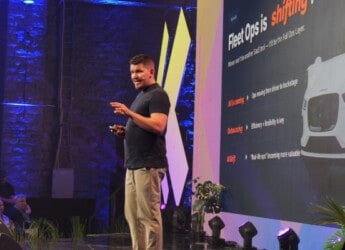
The panel, titled “If AI can build startups, how should we define the role of accelerators in the future? Will there be any accelerators left?” convened on the Future Stage at Latitude59, the startup and technology conference held May 20 to 22 at Tallinn’s Kultuurikatel. It brought together Anne-Liisa Elbrecht, head of the Tehnopol Startup Incubator; Linda-Riin Võeras of early-stage venture firm Karma Ventures; and Sercan Altundas, founder of conversational AI startup Neocortex. Tarmo Virki, co-founder of Estonian startup publication Fomo.Observer and a former Reuters technology correspondent moderated the discussion, according to a June 11 release from conference organizers. The event drew over 3,000 participants from 70 countries, organizers said.
Lower barriers, same hard questions
The panel’s starting point reflected a widely observed shift. AI tooling has collapsed the distance between idea and prototype: code, first pitch decks and early business-model tests now take days rather than months. More ideas start moving earlier as a result. None of that, the panelists agreed, means those ideas are moving in the right direction.
The shift is measurable. A quarter of startups in Y Combinator’s winter 2025 cohort had codebases that were roughly 95 percent AI-generated, YC managing partner Jared Friedman said in March 2025, as reported by TechCrunch. Fortune reported in May 2026 that solo founders are using AI to do the work of entire teams, while finding the approach has limits when judgment, not execution, is the bottleneck.
A theme the Latitude59 panelists returned to repeatedly: AI performs well when a founder already knows what to ask. The trouble starts in unfamiliar territory. A founder who does not understand legal exposure, funding terms, financial models or team construction is not short on answers; they are short on questions. That, the panelists said, is where accelerators earn their keep, helping founders find the questions that decide a company’s next move.
Confident answers, incomplete context
Võeras singled out a failure mode that compliance and security professionals will recognize from their own AI deployments: the tools deliver confident recommendations even when context is incomplete. A founder’s critical thinking does not become optional as AI use grows, she said. It becomes more important, because someone has to judge when a tool is useful and when the moment calls for experience, market understanding or human judgment instead.
Altundas, whose company builds AI-driven characters for games and virtual environments, said AI can act like a single smart adviser. An accelerator, by contrast, surrounds a founder with mentors, other founders, investors and domain experts who carry different backgrounds and real decisions behind them, he said. That mix of perspectives catches errors a model may not, particularly choices that check out technically yet steer the company wrong strategically. Neocortex came up through Tehnopol’s AI accelerator, where it placed among the top three teams in its cohort.
Solo founders and the team question
The panel also took up the rise of the solo founder operating with AI agents. The tools let one person cover ground that once required a team. What they do not change, the panelists said, is how investors and partners price risk: when an entire company depends on one person, the company’s prospects, stability and exposure concentrate in that individual.
Võeras said she would find it hard to place that kind of risk on one person, because a founder who is the company cannot be replaced and an investor would end up monitoring that individual’s workload and wellbeing to protect the capital. Altundas added that strong technology does not settle the question on its own; a broader team still matters to the partners a company wants to work with as it grows. Tehnopol, Elbrecht said, screens for at least two people on a founding team for that reason, even as applicants increasingly list AI agents alongside human co-founders.
When every application sounds the same
Elbrecht’s team has already seen AI arrive in its application pipeline. Tehnopol receives accelerator applications clearly written with AI assistance, and the issue is not the tool, she said. The issue is what happens when the text turns generic. When every application reads alike, the applicant’s voice drops out, and that voice is often the first signal of why a particular team, solution or timing could matter. Using the tools is fine, she said, as long as the writing stays personal, because the application is the first contact a program has with a startup. The tool is acceptable, she said; an application written by AI rather than the founder is not.
Adapt or exit
For Elbrecht, the question is not whether accelerators survive but how fast they change. A program cannot run on what worked five or 10 years ago, she said. When the tools available to startups change, so do founders’ expectations of programs, mentors and the environment around them.
Tehnopol positions its accelerator as an extended team for early-stage technology companies, supporting idea validation, route to market, investment readiness and introductions to the right people. About half of new Estonian technology startups pass through the Tehnopol incubator each year, according to the organization, which also operates the NATO DIANA Estonian Accelerator and a dedicated cyber accelerator. The value, Elbrecht said, runs beyond knowledge transfer to a combination the organizers’ release summed up as “pressure, rhythm and clarity”: someone asking why the company is headed where it is headed, whether the business model holds and whether the team is ready for what comes next.
The panel’s conclusion cut against the framing of its own title. As building gets faster, deciding what deserves to be built gets harder, and that judgment is what accelerators now sell. Speed without focus, market feedback and uncomfortable questions is just faster drift.
What the discussion signals for security and compliance teams
The panel addressed founders and investors, not technology buyers. For cybersecurity, information governance and eDiscovery professionals, two of its observations carry a second reading. What follows is ComplexDiscovery’s analysis, not a claim made on stage.
Võeras’ point about AI handing out confident recommendations on incomplete context mirrors what security and compliance teams meet in their own deployments, where a tool’s assurance can outrun its grounding. And the investor caution she and Altundas described, that a company resting on one person concentrates its risk, rhymes with how third-party risk reviews in regulated sectors weigh vendor continuity, support and accountability. A startup amplified by AI agents can clear a technical evaluation and still leave those questions open.
Elbrecht’s observation that AI-written applications converge on a single flat voice will sound familiar to anyone reviewing AI-drafted briefs, disclosures or security questionnaires. As AI makes creation easier, differentiation may increasingly depend on judgment, experience and originality. The next Latitude59 takes place May 19 to 21, 2027, at Kultuurikatel in Tallinn.
News sources
- A quarter of startups in YC’s current cohort have codebases that are almost entirely AI-generated (TechCrunch)
- Solo founders are using AI to do the work of entire teams, but going it alone has limits (Fortune)
- After five years of working with startups, Anne-Liisa Elbrecht steps up to lead Estonia’s largest business incubator (Tehnopol)
- Karma. People. (Karma Ventures)
- Journalist’s Insights: Tarmo Virki, Co-Founder of FOMO.Observer (Black Unicorn PR)
- Neocortex Joins NVIDIA Inception Program (Neocortex)
- Latitude59 2026: If AI Can Build Startups, How Do We Define The Role of Accelerators in the Future (session recording) (Latitude59 on YouTube)
- Latitude59, “Are accelerators still needed in the age of AI?” press release, June 11, 2026, distributed by Marina Bachmann (Press Officer).





Assisted by GAI and LLM Technologies
Additional Reading
- Latitude59 final day in Tallinn: AI sovereignty, a driverless permit and €450,000 to three startups
- Bold Stage opens Latitude59 2026 with AI, missiles and the New Nordics bet
- Estonia opens Latitude59 with sandbox framework for legal exemptions
- Seven startups from four nations compete for Latitude59’s nearly half-million-euro investment prize
- Big tech, defense and climate to share the main stage at Latitude59 2026
- Latitude59 pitch competition draws 465 startups from 53 countries as prize pool grows to €400,000
- Baltic and Nordic Angel Networks Pool €300,000 for Latitude59 Pitch Competition as Cross-Border Startup Investing Deepens
- Latitude59 Opens Pitch Applications as Investors Raise the Bar on Operational Readiness
Source: ComplexDiscovery OÜ

ComplexDiscovery’s mission is to enable clarity for complex decisions by providing independent, data‑driven reporting, research, and commentary that make digital risk, legal technology, and regulatory change more legible for practitioners, policymakers, and business leaders.