Editor’s Note: Finnish President Alexander Stubb used the opening session of Slush 2026, the not-for-profit startup event in Helsinki, on Nov. 18, 2026, to describe artificial intelligence as a national, economic and social security problem. Speaking with Bloomberg correspondent Oliver Crook, he argued that Finland owns valuable parts of the AI stack: electricity he called 96 percent clean, Nokia’s networks, critical minerals, quantum computing firms such as IQM and Bluefors, and about 50 data centers built or under construction. Google plans to invest at least 13 billion euros in Finnish digital infrastructure in 2027 and 2028, though the Finnish Supervisory Agency called on its subsidiary to suspend land-altering work at two sites pending environmental reviews, and police later opened an investigation at one of them. Stubb promoted a nonbinding call for control of frontier AI models, the most advanced systems, that he launched with Norwegian Prime Minister Jonas Gahr Støre.
For cybersecurity, information governance and eDiscovery professionals, the session maps onto data location, post-quantum encryption planning and AI accountability records. Watch satellite company ICEYE’s pending tender offer for Italian rocket maker Avio and EU post-quantum milestones due at the end of 2026.
Content Assessment: Stubb tells Slush that Finland's AI bet runs through data centers, quantum and clean power
Information - 94%
Insight - 94%
Relevance - 93%
Objectivity - 94%
Authority - 95%
94%
Excellent
A short percentage-based assessment of the qualitative benefit expressed as a percentage of positive reception of the recent article from ComplexDiscovery OÜ titled, "Stubb tells Slush that Finland's AI bet runs through data centers, quantum and clean power."
News Analysis – Artificial Intelligence Beat
Stubb tells Slush that Finland’s AI bet runs through data centers, quantum and clean power
ComplexDiscovery Staff
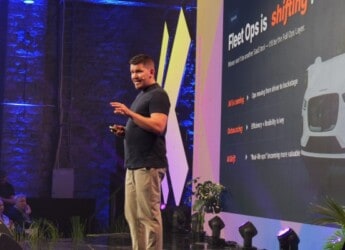
Finnish President Alexander Stubb used the opening session of Slush 2026 in Helsinki on Wednesday to frame artificial intelligence as three security problems at once: national, economic and social.
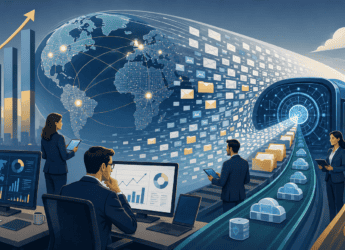
His case for Finland sat almost entirely in the second. The assets he listed, from data centers and quantum hardware to a nearly fossil-free grid, are the same ones that will shape where European data lives and which rules govern it.
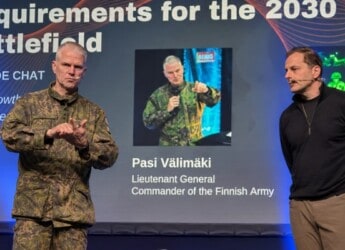
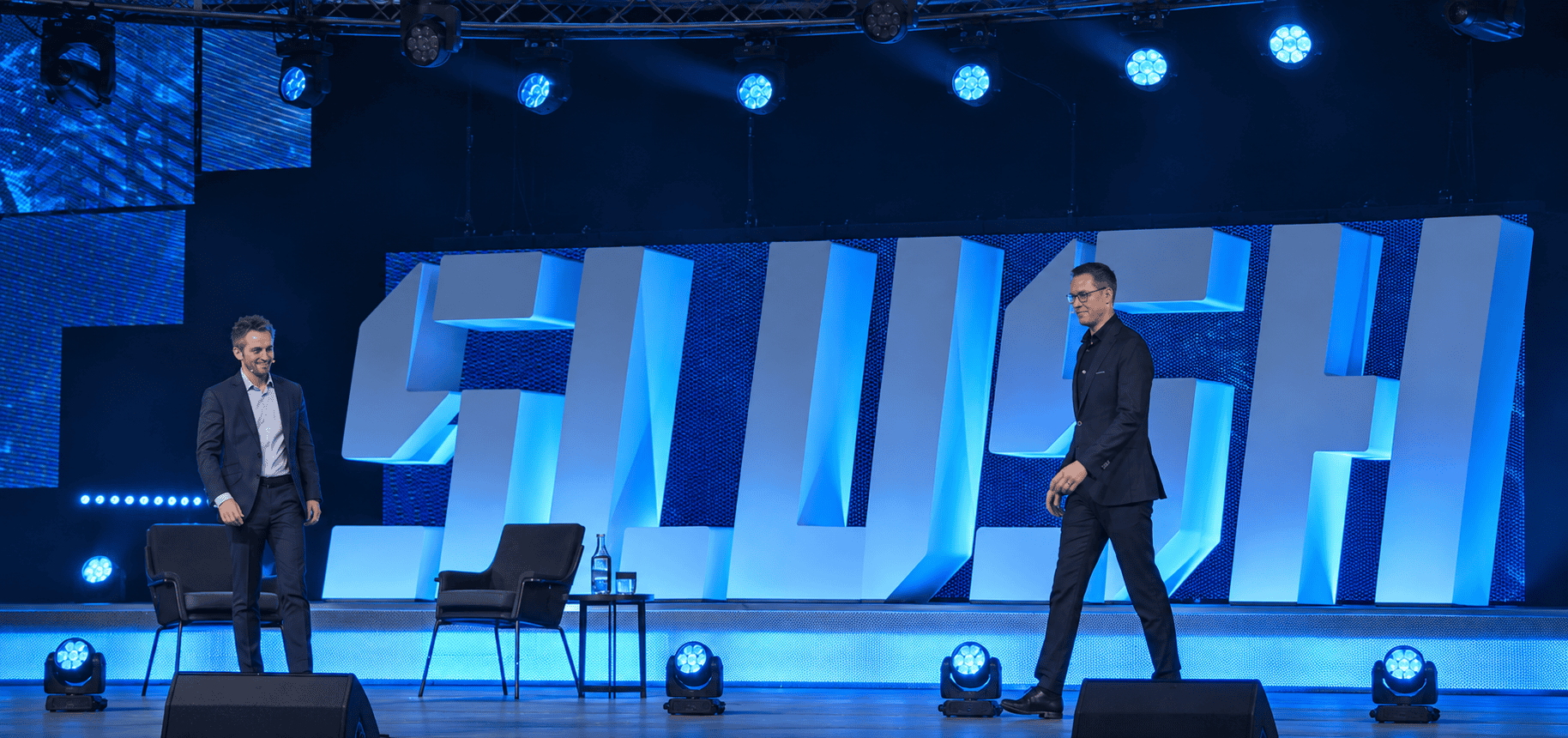
Stubb spoke in a fireside conversation with Oliver Crook, Bloomberg’s chief Europe correspondent. The session followed an opening show in which Slush hosts set a goal of having at least two of the world’s 10 most valuable companies be European technology firms by 2050. Over about 25 minutes the two men covered AI, energy, space, quantum computing, defense and the war in Ukraine. Bloomberg’s own coverage led with Ukraine, reporting that Stubb is cautiously optimistic that peace efforts are moving in the right direction. For cybersecurity, information governance and eDiscovery professionals, the more durable material concerned infrastructure, dependencies and the rules now being written for frontier AI.
Why a founder event gives its main stage to a president
Slush began in 2008 as a 250-person gathering and remains a not-for-profit event. This year it runs Nov. 18 and 19 at Messukeskus, the Helsinki Expo and Convention Centre. Its homepage advertises a crowd of 12,000-plus and says 76 percent of 2026 attendees are startups or investors. Slush announced in January, when it named Noora Saksa chief executive, that it would cut its audience by 10 percent this year to serve early-stage founders better. That concentration of capital helps explain the booking, because a head of state promoting his country’s technology base is speaking to the people who decide where the next funding rounds go.
Three kinds of security, one national sales pitch
Stubb said AI is changing the economy, politics, warfare and science, and that he and other leaders are grappling with three security questions. National security, in his telling, covers a country’s cyber defenses and what its armed forces do. Economic security asks whether a country owns part of the AI stack, meaning an energy grid, large language models, critical minerals and computing capacity, and a country without those pieces, he said, risks becoming irrelevant.
Social security, Stubb said, meant not healthcare or education but the transition as AI replaces many kinds of jobs. He cited historian Yuval Noah Harari’s warning that the technology could create a class of people with no economic role, something earlier industrial revolutions never did. He set those threats against gains in climate work, the energy transition and productivity, and he described himself as an optimistic realist.
Asked which part of the stack Finland should own, Stubb called his answer a commercial break for his country. He said 96 percent of Finland’s electricity is clean. Industry data come close: Finnish Energy, the sector’s trade association, reports that almost 96 percent of electricity produced in Finland in 2025 was carbon-dioxide-neutral, with renewables supplying 57 percent. Stubb also pointed to Nokia’s strength in networks. He said 24 of the critical minerals on the European Union’s list can be found in Finland, a figure he gave without citing a source. The list itself names 34 critical raw materials in all, according to the Geological Survey of Finland.
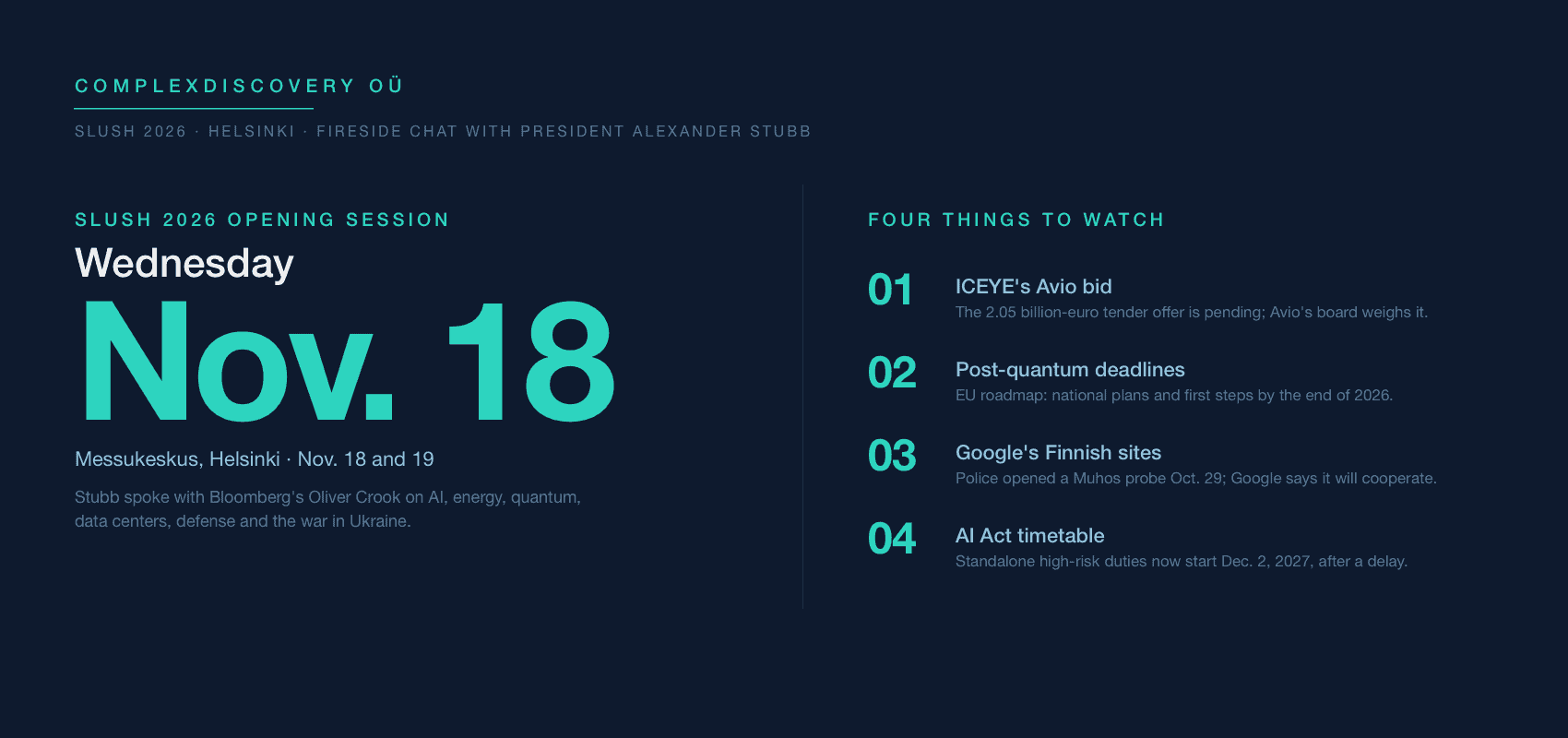
Space came next, with satellite firms ICEYE, Kuva Space and ReOrbit. Stubb described ICEYE’s announcement the day before as a purchase that would make the company the nearest rival to SpaceX and Starlink. The businesses differ, since ICEYE operates radar imaging satellites while Starlink sells satellite internet service. Later in the session Stubb put the claim another way, saying ICEYE was on its way to second place worldwide in new space, the commercial space sector. The deal he cited has not closed. On Nov. 17, ICEYE’s Italian subsidiary Iris 2 launched an all-cash tender offer of 41 euros per share for Italian rocket maker Avio, valuing it at about 2.05 billion euros, and Avio said its board would begin evaluating the offer. Stubb also recalled meeting ICEYE’s Polish and Finnish founders around 2013, when he was trade minister and they showed him a small aluminum box they said was a satellite.
Quantum computing followed. Stubb said IQM outranks IBM in quantum computing, and he named Bluefors, which builds cooling systems for quantum computers, and Canatu, a carbon nanotube maker, among companies he said form a cluster that feeds itself. The IBM comparison depends on the measure. The Quantum Insider’s tracker of publicly disclosed deals ranks IQM first by number of systems sold and IBM first by tracked deal value, and IQM reported on Nov. 5 that it has sold 31 quantum computers and delivered 17.
Stubb did not raise encryption, yet the hardware he promoted has a direct counterpart in security planning. In June 2025 the Network and Information Systems (NIS) Cooperation Group, which brings together EU member states, published a coordinated roadmap for moving to post-quantum cryptography, prompted by a 2024 Commission recommendation. It calls for national plans and first steps by the end of 2026 and migration of high-risk systems by the end of 2030. Medium-risk systems should follow by the end of 2035, with low-risk systems migrated by then as far as feasible. The roadmap coordinates national action and is not legislation. For eDiscovery and records teams, one priority is to find the encrypted archives, collections and productions that must stay confidential past those dates, because data kept for years is exposed the longest. The same inventory should cover the signatures and authentication methods that prove who produced a file and that it has not changed.

Data centers and the more-is-more argument
Crook then turned to the build-out behind Stubb’s claim that Finland has some of Europe’s best AI infrastructure. Finland’s tally of data center projects being planned or executed exceeds 67 billion euros ($75 billion), Bloomberg reported Oct. 8, citing the Confederation of Finnish Industries. Crook asked how such projects deliver for local communities, noting the concerns aired during the U.S. midterm elections. Stubb answered that every industrial revolution rests on its own infrastructure, from the steam engine to the factory to the data center. New infrastructure always meets opposition, he said, because people tend to resist change, and Finland has to build carefully.
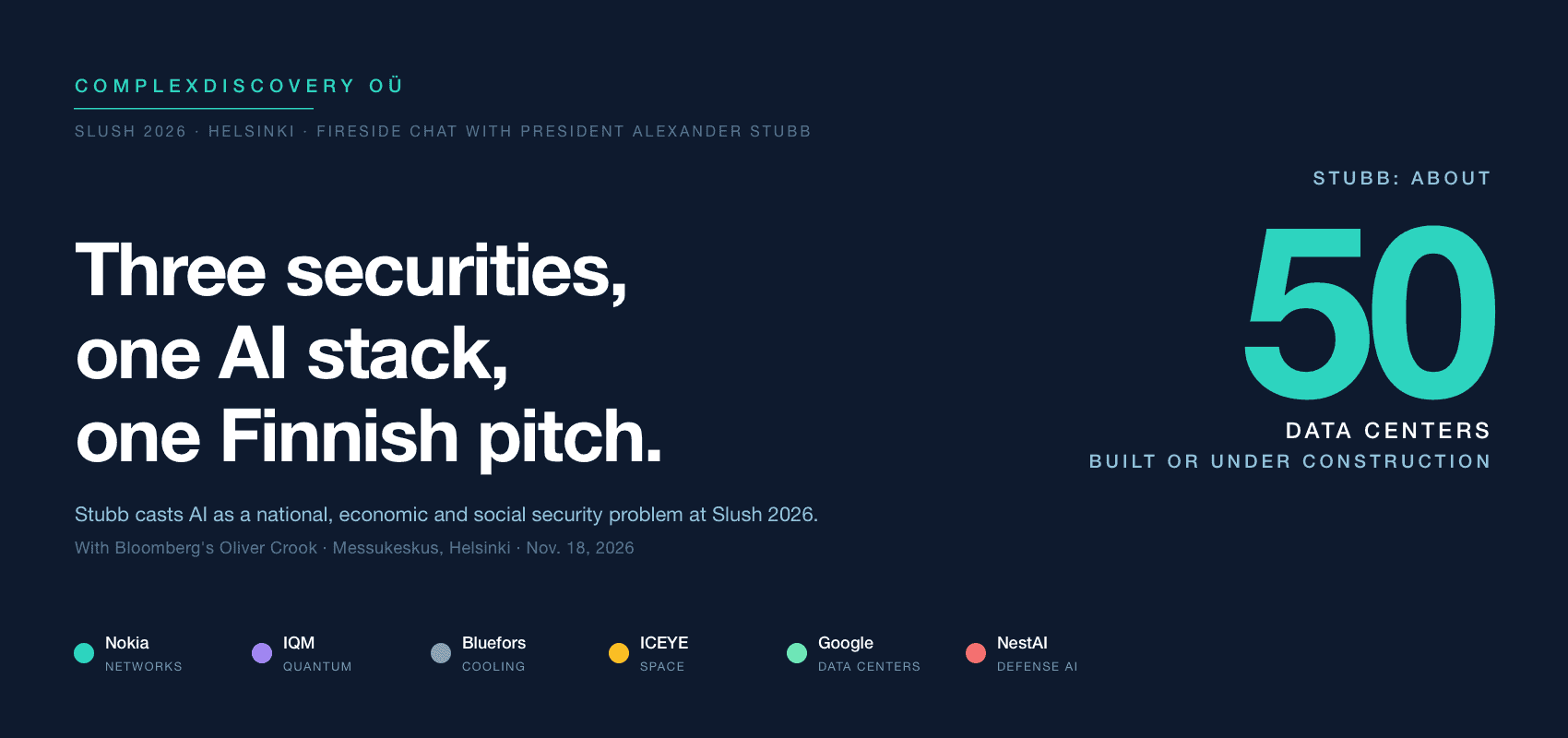
Finland has about 50 data centers built or under construction, Stubb said, with a larger pipeline of projects behind them. In data centers, he argued, more is more, because a concentration of sites signals that a country knows how to build them and draws companies such as Google, Microsoft, Anthropic and OpenAI. He said large technology companies calculate the benefits conservatively. He questioned whether Google’s 13 billion-euro deal is worth that figure or three times as much once system management and new electricity generation are counted.
Google announced on Sept. 9 that it plans to invest at least 13 billion euros in digital infrastructure in Finland during 2027 and 2028, at Hamina, Kajaani, Muhos and Vaala. The company called it its largest single investment in Europe. Stubb’s caution that Finland must build carefully has a recent example. On Oct. 6, the Finnish Supervisory Agency called on Tuike Finland, the Google subsidiary behind the projects, to suspend land-altering preparatory work at the Muhos and Kajaani sites no later than Oct. 23. The suspension runs until environmental impact assessments are completed, and Google said it would comply. Police in Oulu then opened a preliminary investigation on Oct. 29, at the agency’s request, into suspected environmental damage at the Muhos site, and Google said it would cooperate.
Security is part of the pitch as well. In a September interview with Fox News Digital, Stubb said Finland can fend off cyberattacks of any kind, and he described security as a factor companies now weigh when deciding where to invest. For information governance teams, the build-out is a data-location question before it is an energy story. When a hyperscaler adds Nordic capacity, cloud tenants should confirm which regions hold their content and backups and whether retention and legal hold settings follow data that moves. They should also check what notice their contracts require, since those answers shape where a collection effort begins and which legal regime it must account for.
Dependencies as bargaining chips and as choke points
Crook raised concentration risk, recalling the years when Finland’s economy leaned heavily on Nokia. Stubb said Europe handles that through competition policy, the equivalent of U.S. antitrust law. The same worry, he said, applies to chip production concentrated in Taiwan and to China’s strength in processing critical minerals. He treats the issue as one of strategic dependencies, viewed from the side of a state that does not want everything concentrated in one hand, and he offered three questions.
The first is what a country depends on others for, and he cited Finland’s reliance on penicillin from China and software from the United States. The second is what others depend on that country for, which he called the offensive side and said a country should maximize. His examples were Nokia in networks, nickel and cobalt for a United States that does not want to buy from China, icebreakers and Finland’s quantum firms. The third is how to diversify.
Asked whether Europe can be technologically sovereign, Stubb said no country is fully sovereign or autonomous in technology, the United States and China included, though Europe is more dependent. Stubb, whose political outlook formed after the Cold War ended, said he once saw interdependence in trade, energy, currency and technology as purely beneficial. Such ties, he said, can now be used as choke points.
The same three questions translate to a legal department or a records program. Which software and cloud providers could halt review, retention or collection if access to their platforms changed because of a sanction, an outage or a contract dispute? Which internal capabilities give the organization bargaining power with those providers? Where does a second source exist if one fails? An exit plan written before a dispute usually costs less than one written during it.

Rules for a technology with agency
Crook noted that most of the largest AI companies sit in the United States, where policymakers have been reluctant to regulate, and he asked how much support Stubb is finding for rules. Stubb described cooperation at three levels. Companies, he said, need controls on frontier technology before releasing it, much as societies regulate nuclear power or medicine. Governments need to cooperate with one another. He said he had been skeptical of EU AI regulation because rules would always lag the technology, but that he now sees the AI Act as imperfect yet containing the main points. The act entered into force in August 2024, about two years before his remarks.
The third level is global, which is why he and Norwegian Prime Minister Jonas Gahr Støre took their initiative to the United Nations. Titled “A Call for Control of Frontier AI Models,” it was launched on Sept. 21 on the sidelines of the U.N. General Assembly. Stubb said it now has 30-plus countries, and the Finnish presidency’s page reported 34 leaders from 32 countries as of Oct. 30. It asks AI companies for safety protocols, mandatory testing and independent evaluation. It asks governments to coordinate common standards and share reports of serious safety incidents, and it urges U.N. member states to build on existing international mechanisms and explore creating an international institution able to set standards. Neither the United States nor China signed at launch.
Stubb said cooperation with the Americans and many others is now in place at the company and government levels, while some countries remain reluctant at the global level. He called AI the most consequential technology in human history and the first technology with agency, which in his view makes controls unavoidable.
The AI Act’s own timetable has moved since it took effect. The Digital Omnibus on AI, in force since July 27, 2026, postponed obligations for standalone high-risk AI systems to Dec. 2, 2027. High-risk AI embedded in regulated products moved to Aug. 2, 2028. The Article 50 transparency obligations kept their Aug. 2, 2026, start, with a short transition for some content-marking duties. The declaration is a political call rather than law. For eDiscovery practitioners, though, the testing records, evaluations and incident reports it asks for are the kind of documentation that becomes evidence when an AI system’s behavior is disputed, and governance programs should plan now for how to retain it.
Drones, cyber and a war Stubb does not expect to end this year
Crook asked how Finland, one of NATO’s newest members, manages the risk of AI-directed weapons such as drone swarms. Stubb returned to his point that AI is the most consequential technology humanity has seen, saying its risks include killer robots and drones. Russia’s war in Ukraine, he said, has given the defense industry a boost whose lessons are now reaching Europe. European countries are signing drone deals with Ukraine, he said, because Ukrainians bring two assets to those deals: battlefield data drawn from combat experience and the capacity to produce hardware. He recalled visiting Fire Point, the Kyiv maker of the Flamingo missile, which he said has about 100 factories. Ukraine as a whole, he said, now has capacity to produce 10 million drones this year.
The cyber thread from his opening returned here. Warfare is no longer only land, sea and air, Stubb said, but also space and cyber, and Finland has had to diversify its defense forces accordingly. He said he speaks with his chief of defense weekly. He named NestAI, the defense AI company launched in 2025 by Peter Sarlin, whose earlier company Silo AI was sold to AMD. He also said established defense companies are moving into drones, naming Insta among them. Promoting Finnish defense companies abroad feels a little strange ethically, he said, and would have ruffled feathers a decade ago, but protecting the country now requires modern technology.
On the war itself, Stubb said Ukraine is doing well offensively, with long-range strikes on bridges, oil refineries, logistics centers and data centers. It struggles defensively, he said, because its air defenses cannot stop enough incoming attacks, which are destroying civilian infrastructure and lives, and he described an impasse and a war of attrition. Citing Ukrainian figures, he said Russian dead and wounded reached about 53,000 in October alone.
Stubb said Finland and Norway are closely involved behind the scenes in peace efforts. He is cautiously optimistic, he said, after recent meetings in Oslo and Abu Dhabi and a phone call with Russian President Vladimir Putin. He said he was in Berlin with Chancellor Friedrich Merz on Tuesday and would return Thursday for a Coalition of the Willing meeting with Ukrainian President Volodymyr Zelenskyy. Peace will not come without a process and an agenda, he said. He does not expect the war to end this year, and he said Ukraine must prepare for a harsh winter that calls for air defense, protection of energy installations and financing.
Thinking as the last line of defense
Asked to look five to 10 years ahead, Stubb said humanity will probably have reached artificial general intelligence or a singularity to some degree, likely after a few catastrophic events along the way. He said he remains optimistic that human creativity will direct AI toward good, and that he sees it as an opportunity rather than a doomsday technology. His closing advice to the founders in the hall was personal: use AI to improve intelligence rather than to replace the capacity to think independently, and read books.
That advice speaks to the third security question he opened with, though it does not settle it. Data centers, quantum suppliers and international declarations bear on national and economic security. The social question concerns the people whose work AI takes over, and Stubb’s advice addresses one part of it: whether people keep their own judgment as machines take on more of the work. For review teams using generative AI, that means reviewers who can still explain a privilege call or a relevance decision without the tool. If a president’s test for AI is whether it sharpens or replaces the thinking of the people who use it, how would your review protocols, retention schedules and vendor contracts score?
News sources
- A Call for Control of Frontier AI Models (Office of the President of the Republic of Finland)
- President Stubb and Prime Minister of Norway: The rapid development of AI requires international cooperation (Office of the President of the Republic of Finland)
- Slush | About Us (Slush)
- Noora Saksa appointed as new Slush CEO (Slush)
- Alexander Stubb (Slush)
- Google Deepens Commitment to Finland with Two-Year €13 Billion investment in AI Infrastructure (Google)
- A Coordinated Implementation Roadmap for the Transition to Post-Quantum Cryptography (European Commission and NIS Cooperation Group)
- Digital Omnibus on AI (Future of Life Institute, EU AI Act Explorer)
- Critical and strategic raw materials (Geological Survey of Finland)
- Energy production (Finnish Energy)
- Interim Report for Q3 2026 (IQM Quantum Computers via GlobeNewswire)
- How many quantum computers have been sold? (The Quantum Insider)
- Finland’s Stubb Cautiously Optimistic on Ukraine Peace Talks (Bloomberg)
- Finland’s Data Center Tally Tops €67 Billion on AI Boom (Bloomberg)
- Presidentti Stubb: Mitä enemmän datakeskuksia, sen parempi: “Enemmän on enemmän” (Yle)
- ICEYE Launches €2.05B Takeover Bid for Italian Rocket Builder Avio (European Spaceflight)
- ICEYE bids to acquire Vega-C rocket maker Avio (AeroTime)
- Finland orders halt to work on Google’s data center sites (AFP via Courthouse News)
- Police open preliminary probe into Google’s data centre site activities in Muhos (Yle)
- Finland launches criminal probe of suspected environmental damage by Google (Al Jazeera)
- EXCLUSIVE: Google bets $15B on Finland as nation’s president explains why (Fox News Digital)
- Finland and Norway lead 22-nation call for global AI oversight body, as US and China stay out (FAIR EDIH)
- Finland’s NestAI lands €100M, partners with Nokia to build AI for defense applications (TechCrunch)
- Ukrainian Flamingo maker eyes anti-ballistic air defense by 2027 (The Kyiv Independent)
- Slush 2026 (The Recursive)
- EU AI Act Update: Digital Omnibus Finalizes 8 Compliance Changes (Orrick)
- EU Commission Roadmap Targets 2030 for Post-Quantum Cryptography Transition (PostQuantum.com)
- Slush 2026 brings a smaller, sharper bet on European startups to Helsinki (ComplexDiscovery)

Assisted by GAI and LLM Technologies
Additional reading
- Välimäki and Donahue tell DECOI x Borderland founders to test in Ukraine and plug into NATO’s data layer
- Days before Slush, an attack on Estonian drone maker Threod raises the stakes for defense tech
- Before the Abu Dhabi talks, a claimed Rosstat leak and hacked alert apps test what can be confirmed
- Spoofed nuclear alert caps four days of Ukraine war assessments that separate claims from evidence
- Kyiv says Starshield speeds are back, but who capped them is still disputed
- Diesel license, Starshield cap and intelligence warnings strain US support for Ukraine
- Drones hit two Yandex data centers, and a Kremlin decree sets terms for state management
- A cell tower near Lyman and Russia’s fight over its own war record
- How a general’s walk across a bridge tested Putin’s claim to Svyatohirsk
- Germany names Russia for the Leipzig drone, and keeps most of its evidence out of view
- Estonia scrambled jets over a drone no official has identified
- Russia leans on drones and dissent-proofing as fuel crisis bites
- Senate passes Graham sanctions act, shifting Russia pressure from policy to statute
Source: ComplexDiscovery OÜ

ComplexDiscovery’s mission is to enable clarity for complex decisions by providing independent, data‑driven reporting, research, and commentary that make digital risk, legal technology, and regulatory change more legible for practitioners, policymakers, and business leaders.