Editor’s Note: Three ComplexDiscovery walkers finished the Camino Portugués Coastal Route in September, about 167 miles from Matosinhos to Santiago de Compostela, and reported from the trail through a LinkedIn series that asked one question at every stop: how does anyone know that? The answers, drawn together here stage by stage with the Sept. 7 route overview, are a field guide to provenance.
Replica Roman tanks labeled as replicas, an arch count the sources reviewed do not explain, two official dates that only looked like a conflict, a monastery that publishes its own legend as legend, and a papal bull that confirms an archbishop’s judgment on the relics rather than offering scientific proof of them.
For eDiscovery, information governance, and cybersecurity professionals, the parallels are immediate: designations whose historical descriptions differ from later research, superlatives that widen one adjective at a time, and the discipline of saying plainly when a search came up empty.
The series’ method, checking the document before repeating the sign, is the one this publication intends to keep walking with.
Content Assessment: Fifteen days on the Camino Portugués: what a coastal walk taught ComplexDiscovery about records
Information - 94%
Insight - 94%
Relevance - 91%
Objectivity - 91%
Authority - 92%
92%
Excellent
A short percentage-based assessment of the qualitative benefit expressed as a percentage of positive reception of the recent article from ComplexDiscovery OÜ titled, "Fifteen days on the Camino Portugués: what a coastal walk taught ComplexDiscovery about records."
News Feature
Fifteen days on the Camino Portugués: what a coastal walk taught ComplexDiscovery about records
ComplexDiscovery Staff
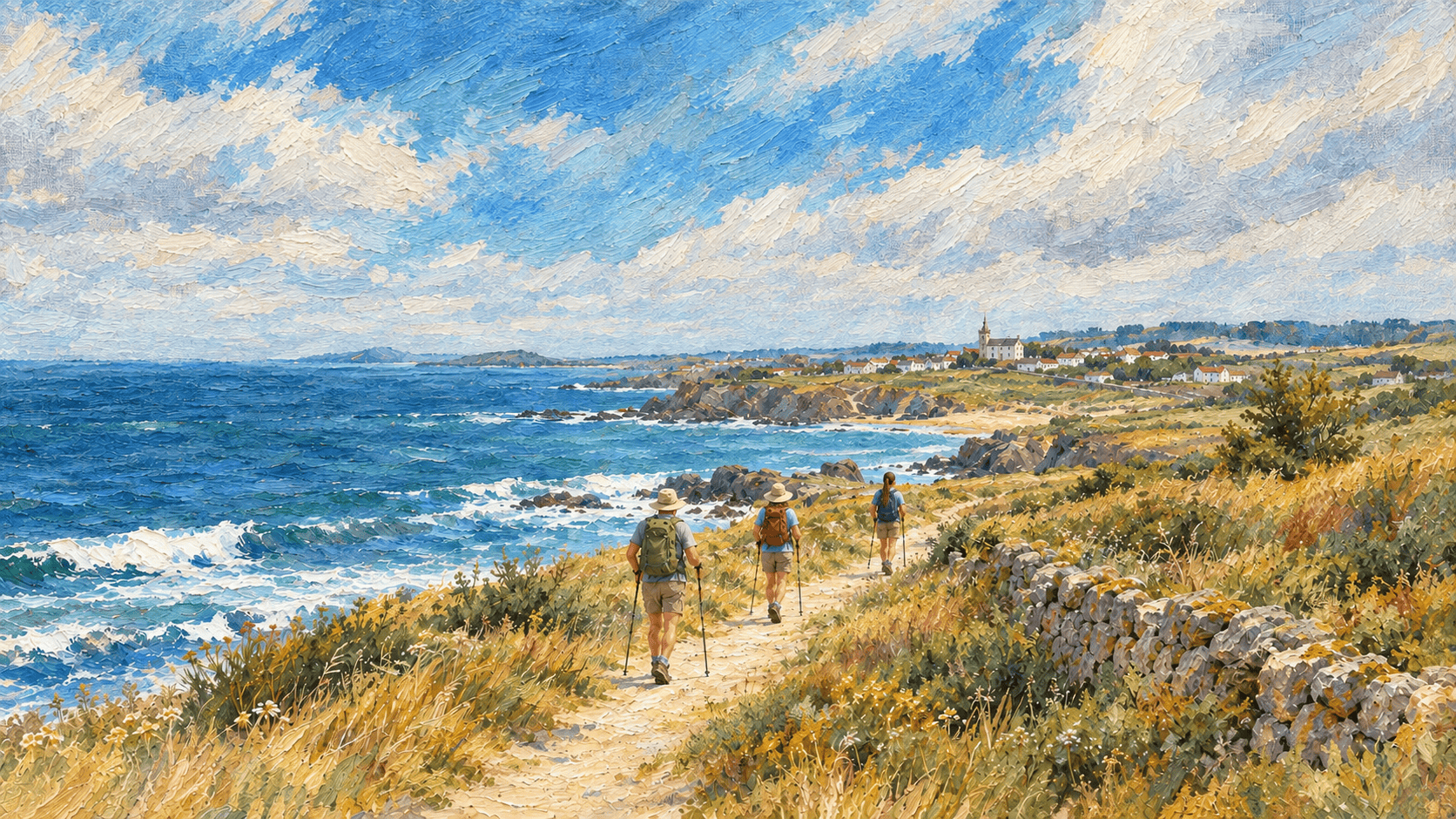
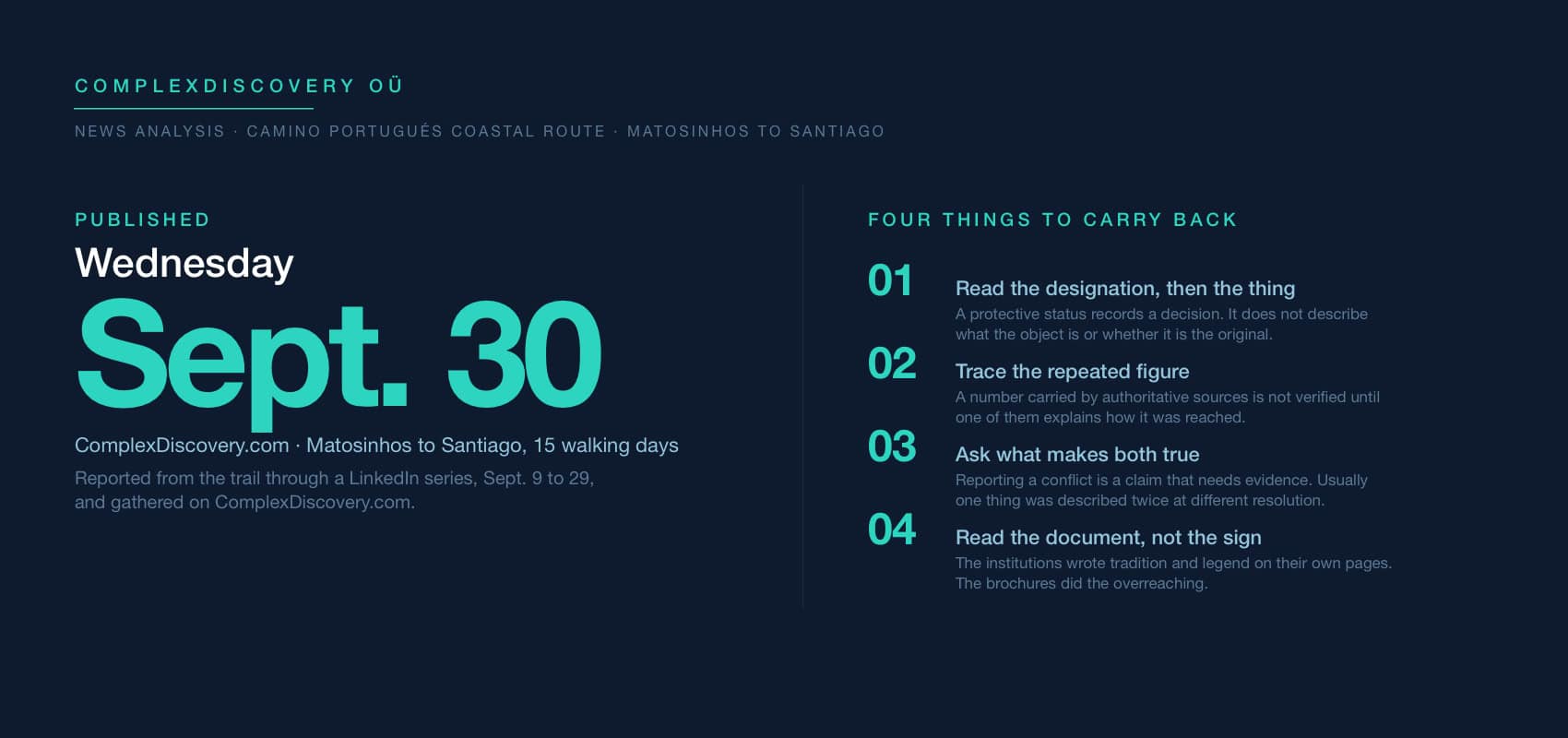
Three walkers from ComplexDiscovery set out from a beach north of Porto on a Friday morning in September with a question they intended to ask at every stop for 15 days. How does anyone know that?
By the time they reached Santiago de Compostela, about 167 miles later, the question had been put to Roman ruins, a Cistercian monastery, a papal bull and two official websites that print different transcriptions of the same stone. The answers were rarely the ones printed on the signs.
The walk was the Camino Portugués Coastal Route, from Matosinhos up the Atlantic shore, across the Minho into Galicia by boat, and inland through Pontevedra onto the Variante Espiritual, with a late stage by water up the Ría de Arousa toward Padrón before the final approach on foot. ComplexDiscovery OÜ announced the trip in a Sept. 7 route overview and then reported from the trail through a series of LinkedIn posts, one for nearly every stage, rather than through the site. This article draws those posts and the overview together, stage by stage, and it adds the checks a reader would want before repeating any of it.
The premise was set before the first stamp went into the credencial.
The credencial. A credencial del peregrino, or pilgrim’s passport, is a folded card issued by parishes, Camino associations, hostels and the Pilgrim’s Office itself. Pilgrims collect stamps in it at churches, hostels, cafes and town offices along the way, and it is the record the Pilgrim’s Reception Office in Santiago reviews before issuing a Compostela. The office’s published rules require at least 100 continuous kilometers on foot or horseback, or 200 by bicycle, on a single recognized route, with the credencial evidencing the final stages; guides commonly describe two stamps a day over that closing stretch. The ComplexDiscovery walkers took their first stamp at Matosinhos on Sept. 10, the day before the walking began.
Almost everything on the route comes with two histories, the series said on the day of departure: what the record establishes, and what tradition has attached to it over a thousand years. The gap between the two turned out to be where the professional lessons lived, and they are lessons eDiscovery, information governance and cybersecurity practitioners usually learn the expensive way, in review budgets, audit findings and sanctions motions. On the coast they came free, one a day, and the walkers found that the noticing cost the experience nothing.
A replica on the first beach and a number the sources do not explain
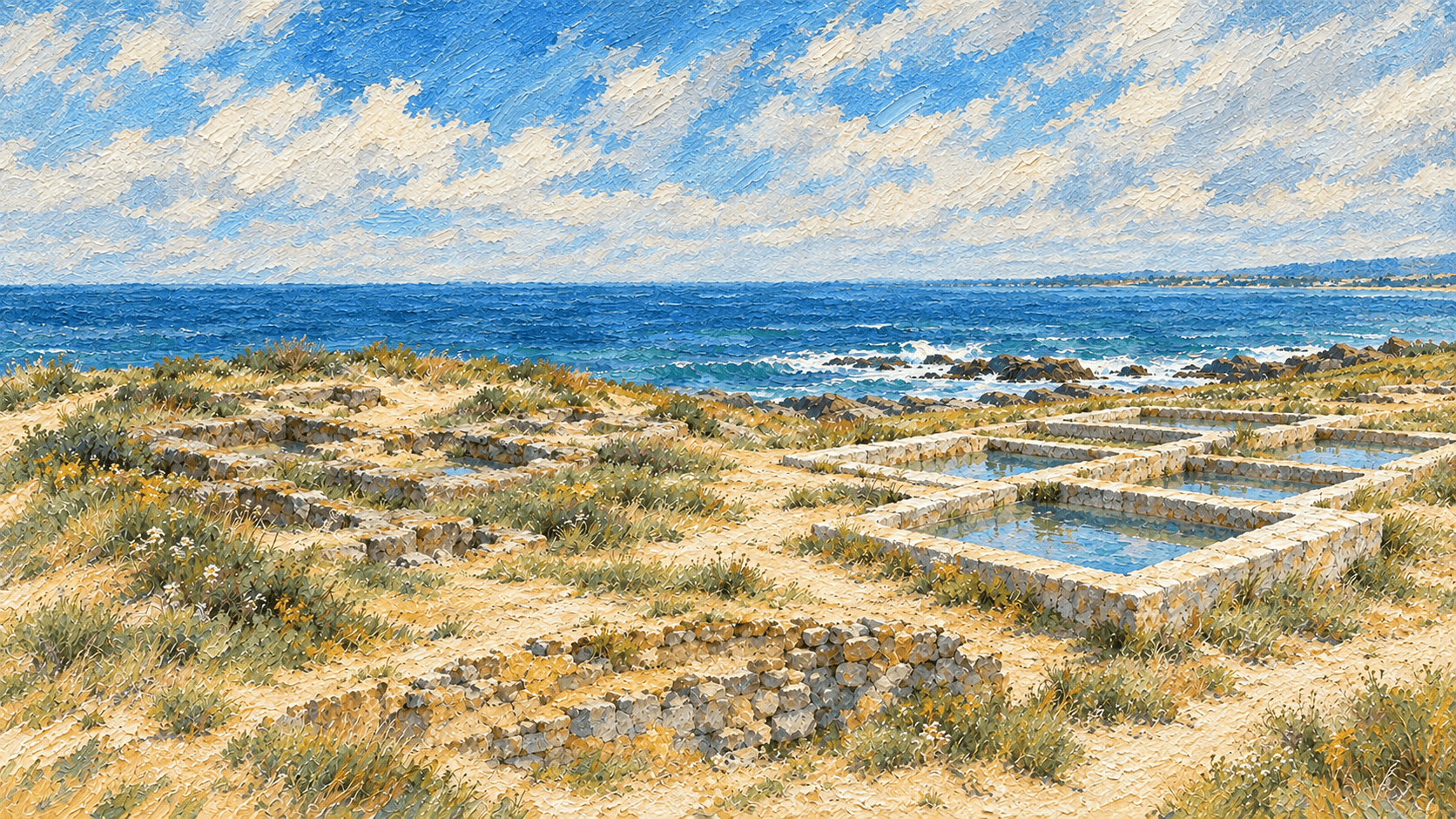
The route earned its premise inside two hours. At Praia de Angeiras, north of Matosinhos, 32 rock-cut tanks record a Roman fish-salting industry. The municipal museum dates them to the second through fourth centuries, the series reported, while the municipality’s heritage page and the parish council of Lavra place them in the fourth and fifth. Two overlapping ranges, three local official pages, and none of them explain the difference. What the museum does say plainly is that the original tanks are silted over and that the 16 tanks a visitor photographs beside the Casa do Mar are replicas built above them.
The first stage also passed two works by the architect Álvaro Siza that Portugal classified as national monuments in 2011, sharing a protective rank the Roman tanks have held since 1970. The series drew a distinction anyone who works with records will recognize. “A protective designation records that somebody decided a thing mattered,” the day-one post said. “It does not describe what the thing is, when it was made, or whether the version in front of you is the original.”
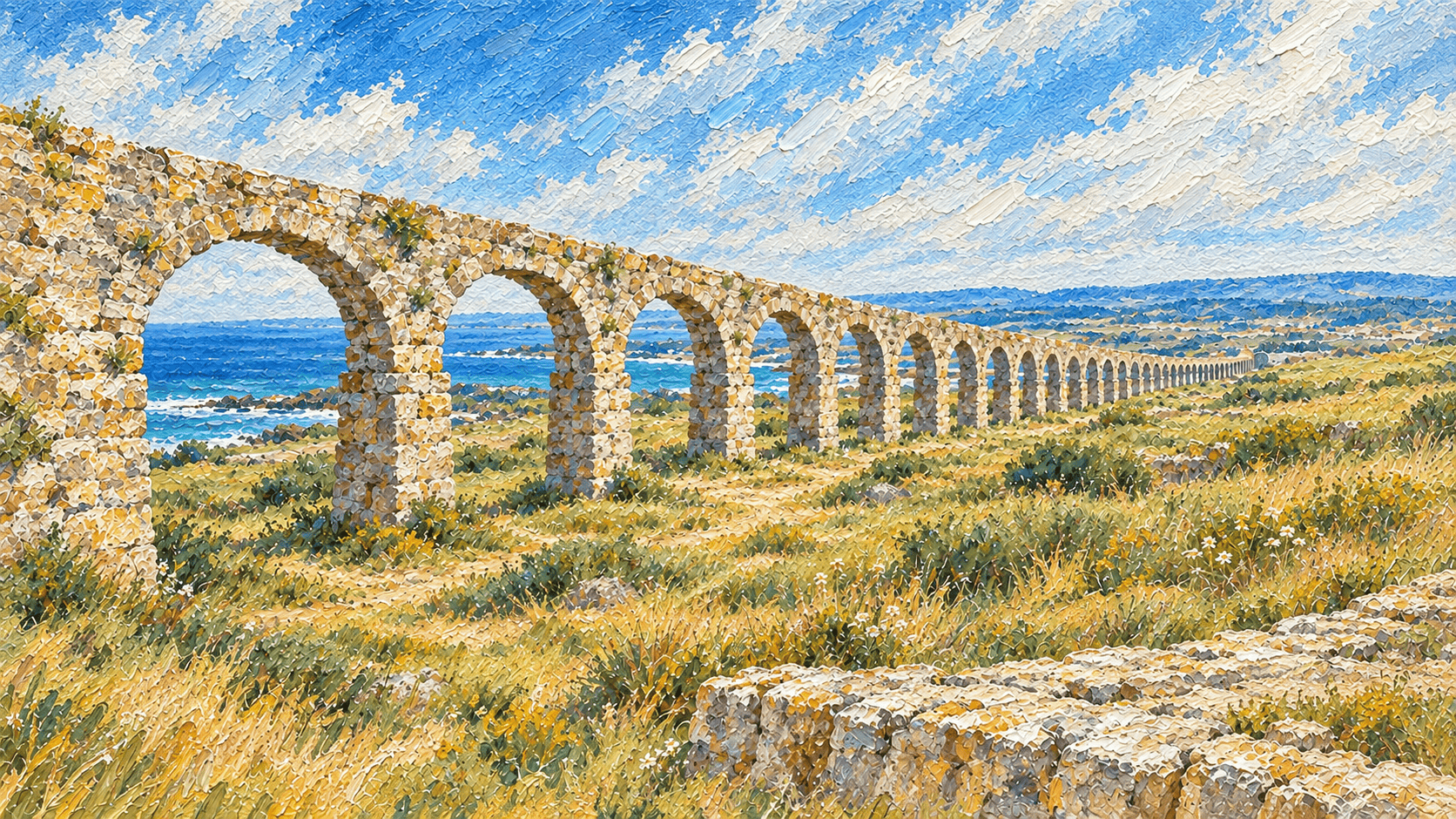
Day two supplied the second lesson in the form of a repeated number. The aqueduct at Vila do Conde is said to have 999 arches, and the figure appears in the record kept by Portugal’s heritage authority and on a neighboring municipal site. Neither page explains how the total was reached, the series found, and the encyclopedia entry that carries the number cites a newspaper article for it. The documented history is better than the legend: construction began in 1626, stalled, resumed in 1705 under the military engineer Manuel Pinto de Vila Lobos, and delivered water to the monastery of Santa Clara in October 1714, 88 years after work started. A figure repeated by authoritative sources is not thereby verified, the day-two post concluded. Practitioners who have chased a statistic through three vendor decks and found the same press release at the bottom of each will recognize the shape.
The same post added a quieter observation about names. Portugal’s heritage record still files the Santa Clara complex under three of them, including the reformatory it later became, and the series noted that the name a record carries often describes what an institution turned into under later administration rather than what it was built to be. Anyone who has traced a document through a retention schedule that outlived three reorganizations knows that filing label. The next day the naming problem had a hill under it.
Layers above Viana and a tomb whose stratigraphy was lost
The third day climbed to the sanctuary above Viana do Castelo, which guidebooks call a basilica. It has held the title only since June 2025, when the Vatican’s Dicastery for Divine Worship granted the rank of minor basilica by decree, and the building’s formal dedication is to the Sacred Heart of Jesus rather than to Santa Luzia, which is the name of the hill. The church is not old either: construction began in 1904, and the interior was finished in 1959. The ancient thing on that hill is the Iron Age hillfort behind it, roughly a third of which is exposed, and part of which was lost to a hotel and to the road that brings visitors up to see the church. A 20th-century building with a 2025 title, standing on a 2,000-year-old settlement partly paved over to reach the building. Layers, the day-three post said, in the literal sense. Reading the record is rarely the same as reading the sign.
Day four ended at a dolmen on the edge of Vila Praia de Âncora, and every source the series consulted gives it a confident date. The confidence is the problem. The municipality that owns the tomb calls it late Neolithic and glosses that as the end of the third millennium and the start of the second; the regional authority the municipality belongs to places the Atlantic megalithic phenomenon in the fifth and fourth millennia B.C., with persistence in some regions into the third, and names the third and second millennia as later ages, so the municipal label sits inside a span its own regional authority labels differently. Popular guides then weld a period label from one source to a date from another.
What explains the confusion is in the record rather than against it, the series found. The tomb was dug in the 19th century without scientific method, to enlarge collections, and when João de Castro Nunes excavated it again in 1948 he reported, in a paper published in 1951, that the interior was completely disturbed and no serious stratigraphy could be attempted. No source the series reached gave a radiocarbon date. The day-four post treated that as the rare case where the day-one question gets a real answer: the earlier disturbance took the stratigraphy with it, and the record says so. A custodian collection that was self-collected and reorganized before a legal hold can leave a forensic examiner in the same position. The next day’s problem ran the other way: sources that differed and turned out to agree.
Where two official sources only look like a conflict
Not every discrepancy on the route was a real one, and learning the difference became the walk’s most useful habit. Day five crossed the Minho by water taxi, and the crossing itself offered a live example. The municipal ferry between Caminha and A Guarda has been out of service since 2020 by Portuguese accounts, or since October 2021 by A Guarda’s tourism office, a difference the route overview had already flagged. Caminha’s council announced a shallow-draft replacement in December 2025, and Galician press reported in May 2026 that the old boat would not return. Both can be true. The old vessel is not coming back and a different one is planned, and by mid-September the crossing was still a private water taxi.
Above A Guarda, the first Galician town after the boat, the Iron Age hill town on Monte Santa Trega carries two official chronologies. A Guarda’s tourism office starts the documented story in the fourth century B.C., while the regional government’s museum service puts the settlement’s peak between the first century B.C. and the first century A.D. The two descriptions sit several centuries apart, and the series concluded they do not compete: one marks arrival, the other the high point.
The series turned that into a rule that runs against reporting instinct. On finding two sources that differ, the first question is what would have to be true for both to be right at once. “Reporting a conflict is a claim like any other, and it needs the same evidence as reporting a fact,” the day-five post said. Review teams meet the same trap when a deposition and a contemporaneous email seem to disagree and turn out to describe one event at different resolution. Escalating that as a contradiction wastes the escalation.
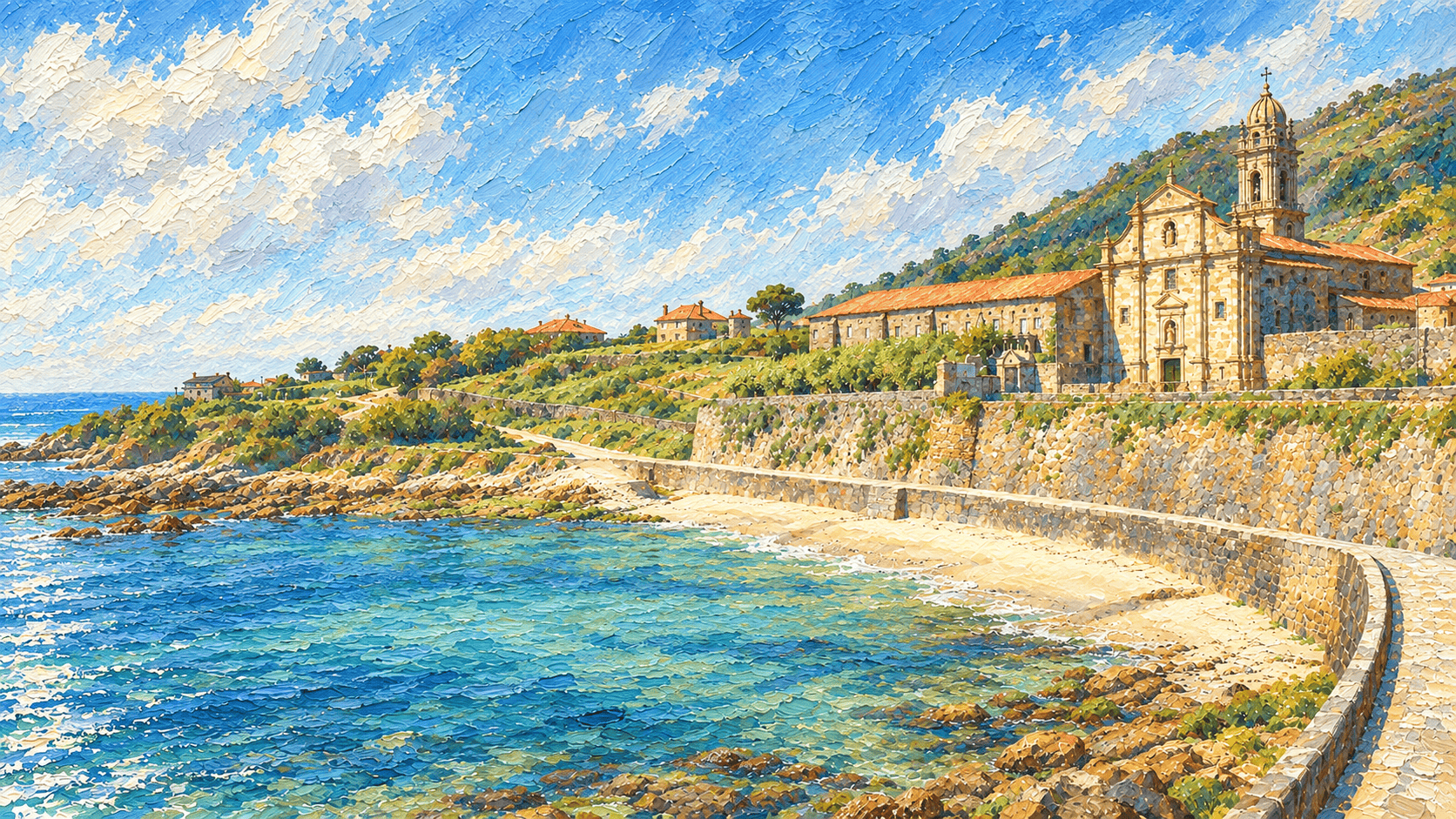
Day six tested the rule from the other direction, at the Cistercian monastery of Santa María de Oia, which stands close enough to the Atlantic that surf breaks against its ground. On April 20, 1624, the monastery’s shore battery engaged five corsair vessels for about three hours, and the monks were afterward known as the artillery monks. The account survives as a printed news pamphlet, a relación catalogued at the University of Seville. Those pamphlets were a commercial genre, printed to be sold, and the day-six post characterized them as prone to inflation. The engagement is documented, the post said, and the scoreboard is advertising: the casualty figures are a contemporary assertion, and repeating them as a count would be exactly the error the genre invites. Seventeenth-century news had the same problem modern news does. The event happened; the numbers came from someone with a reason to publish them.
When the honest source is the institution
The pattern that emerged over the middle stages was one the final post named directly: the most careful voices belonged to the institutions themselves, and the brochures did the overreaching. Baiona, on day seven, holds that the first news of Columbus’s crossing reached Europe in its harbor in 1493. Spain’s Archivo Histórico de la Nobleza supports the event and concedes the gap in the same description: it states that Martín Alonso Pinzón reached Baiona days before Columbus made Lisbon and sent word to the Catholic Monarchs, and that no documentary proof of that communication survives. Begoña Fernández Rodríguez, an art historian at the Universidad de Santiago de Compostela, examined the claim in the heritage journal e-rph in 2013 and found the date unsettled between Feb. 28 and March 1, and she argues the arrival went largely unremarked until the 19th century, with Baiona’s identification with it assembled afterward through monuments, festivals and urban renewal. The plaque went up in 1928, the replica caravel in 1992, the festival in 1996. “The absence of a record is not the absence of an event. It is also not proof of one,” the day-seven post said. Anyone who has reconstructed what happened inside an organization from what survived in its files knows that shape.
Armenteira, reached on day 12 after a long climb from Combarro, was the walk’s best example of an institution doing the work itself. The monastery’s own website presents its founding story under a heading that translates as origins wrapped in legend. The tale of an abbot who stepped out to listen to a bird and returned centuries later is repeated at numerous medieval monasteries, the site adds without prompting, and the documented date it starts from is 1162, when the house first appears in Cistercian records.
The series distilled the monastery’s practice into five steps that any records program could adopt. “Publish the tradition. Say that it is a tradition. Name the source you took it from. Check your version against that source. Then state the date you can actually defend, and start the record there,” the day-12 post said. Armenteira publishes the tradition, labels it, names its source and states its defensible date, all in public. One difference remains: its page cites a 13th-century song from the court of Alfonso X for the legend, and gives 200 years where the song gives 300.
The day after brought the counterexample. At Vilanova de Arousa, a Spanish decree of January 1976 protected the Pazo do Cuadrante as the house where the writer Valle-Inclán was born. Margarita Santos Zas, a professor emerita at the same university who directed its Valle-Inclán research chair, cites the baptismal record for his birth on Oct. 28, 1866, and places it in a different house on San Mauro street. The Xunta’s museums website is of two minds about the pazo itself: one page says he was born in its main room, and the page for the museum inside it says the rooms reproduce the house where he had supposedly been born. Records do not correct themselves, the series observed. The decree still says what it said in 1976, and the scholarship that disagrees with it lives somewhere else entirely. Authority is a signal and not a substitute for verification, the companion post added, and when a designation and the underlying record point in different directions, the decision depends on checking both.
When a designation’s description and later research differ
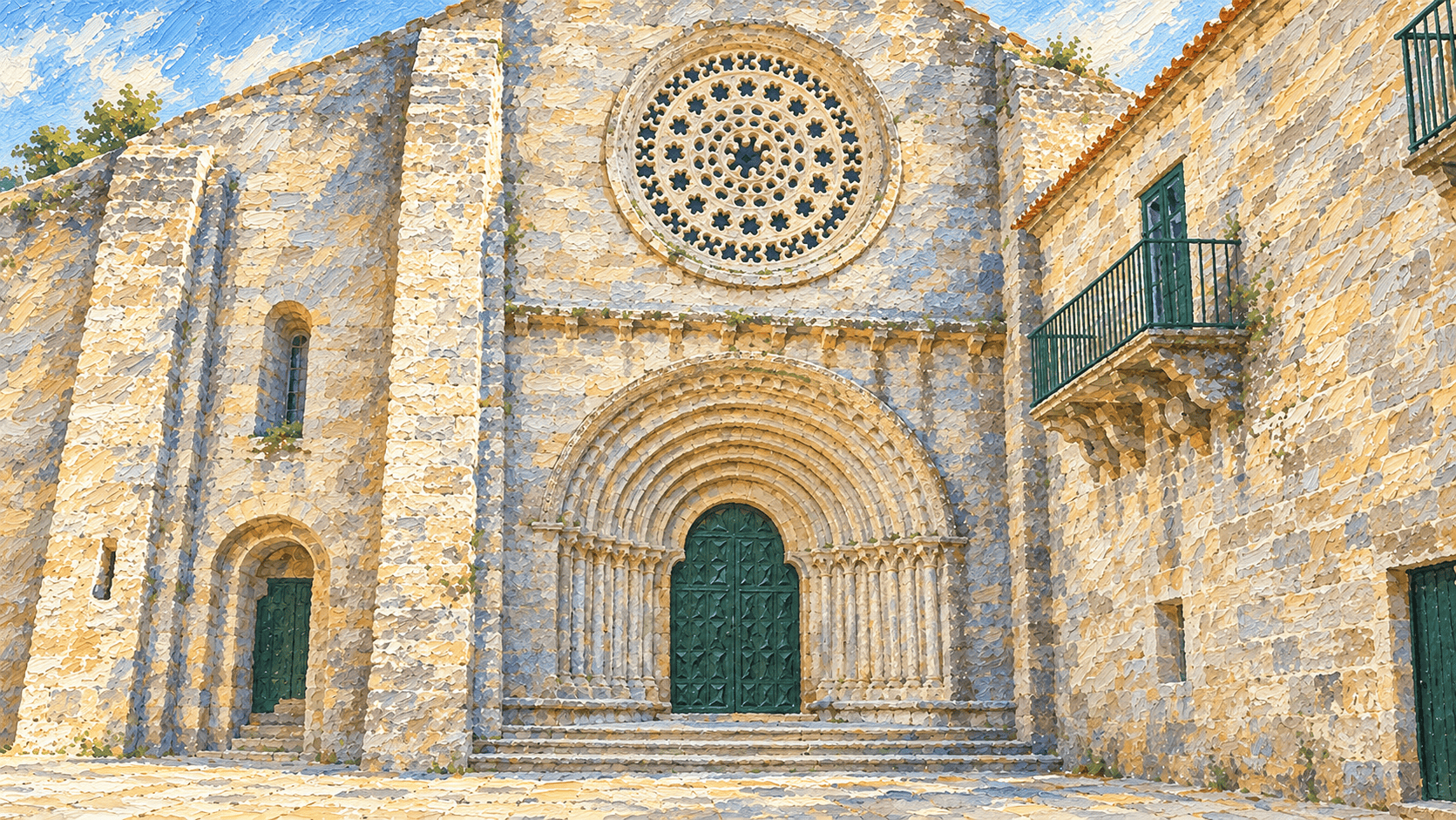
The Panxón arch, passed on day eight, showed what happens when a designation’s historical description and later research differ. A 1964 Spanish decree calls the fragment the only Visigothic architecture in Galicia and describes it as probably sixth-century. Absolute dating of the church’s mortar by researchers on the EMCHAHE project on early medieval Galician churches, published in the journal Heritage in 2019, produced a range that the series reported as 890 to 1015, two to three centuries after the Visigothic kingdom ended in 711. The Spanish state, the municipality, and the Xunta’s Camino page now give three different dates. The 1964 decree describes the remains as probably sixth-century, and the later mortar study reports a range of 890 to 1015, while the arch keeps the top-tier protection the decree granted. The decree also places the monument in Vigo; it stands in Nigrán. A designation, once made, mostly just stays made, and the historical description it carries does not update with the research.
Vigo, on day nine, supplied the walk’s cleanest lesson in source drift, and it happened underground. Beneath an 11-story apartment block on Rúa Rosalía de Castro sits a Roman saltworks excavated in 1998 and preserved as the Salinae archaeological center. The regional maritime museum that operates the site describes it as the Roman Empire’s only conserved and museum-converted marine solar-evaporation saltworks. A Xunta press release states the claim without the word solar, and the regional Camino page compresses it further into a one-of-a-kind site; the series read the three formulations as a widening sequence. The excavator himself had written in the past tense and with every qualifier intact: before this find, the series reported him saying, no conserved marine solar-evaporation saltworks was known in the Roman world. “The people who dug it wrote carefully, and the people who promote it did not, and the gap opened one adjective at a time,” the day-nine post concluded. Anyone who has watched a qualified finding in a methodology section become an unqualified headline in a vendor’s summary deck has watched the same mechanism.
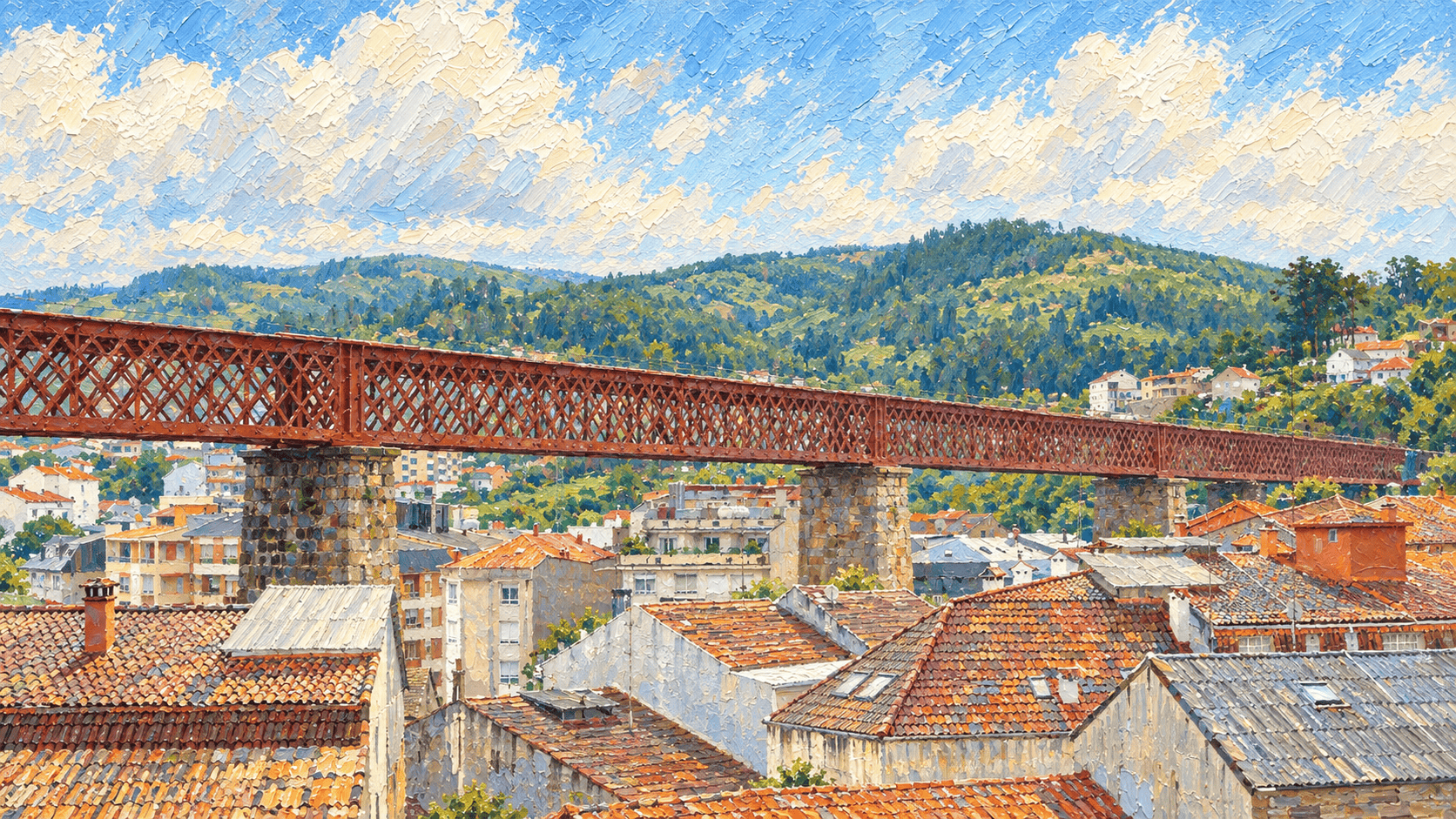
Redondela, on day 10, added the famous-name problem. Spain opened a national monument file on the town’s two railway viaducts in January 1978, and nothing in checking records indicates that the file ever closed. Local tradition credits the older viaduct to Gustave Eiffel; no institutional source reached does, and the metal spans were built by the French firm Fives-Lille, which later built the hydraulic lifts in the Eiffel Tower. The council’s own page gives a length and a height that every other account checked contradicts. A famous name gets attached, the post said, because it is the only one anyone remembers, and the real one is harder to say. The short post from the same day drew the business version: ambition needs supporting structures, and clear processes, capable teams and dependable technology carry an organization farther than vision alone.
Pontevedra, on day 11, closed the loop on descriptions. Tourism copy says the sanctuary of the Virxe Peregrina is shaped like a scallop shell. The 2011 decree that protects it describes an interior organized around the dome as a rotunda, and the word for scallop does not appear in it. The confraternity that owns the building does use the scallop comparison, as a typology made up of four elements: the circular plan, the vestibule, the presbytery, and the facade. The sources describe different aspects of one building, and the day-11 post’s lesson was to read the legal instrument before repeating the tourism copy. The same stage held three monuments a few minutes apart, protected in 1895, 1931 and 2011 under three constitutional orders, which the series read as a fact about a state rather than a fact about a building. The companion post on the same day gave the lesson every project manager has needed at least once: strategy sets the direction and disciplined execution turns a distant objective into achievable steps, and speed is not always progress.
What the certificate actually certifies
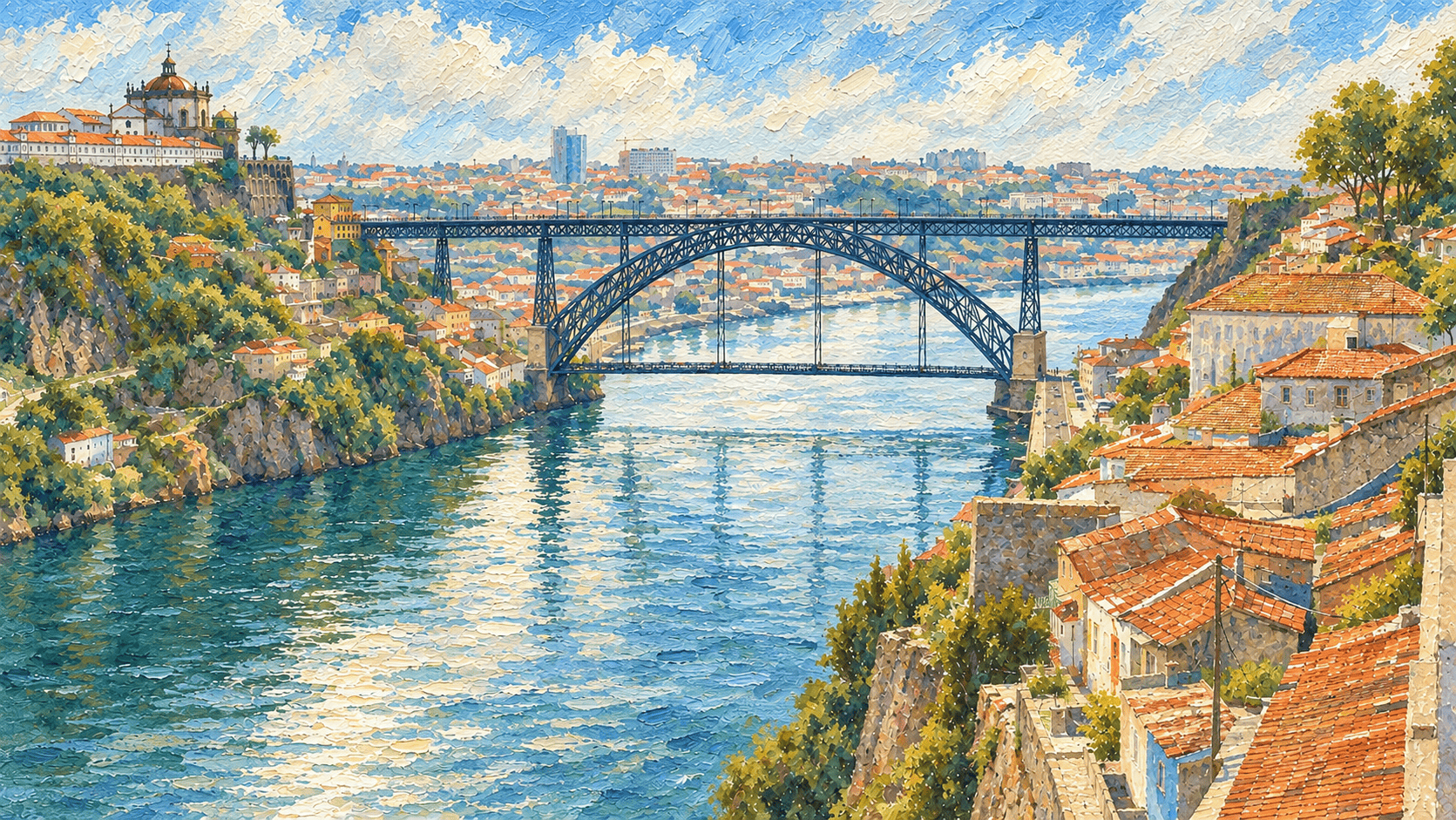
After Armenteira and Vilanova de Arousa, as told above, day 14 went by boat along a route marked by 17 stone crosses in the Ría de Arousa and along the Ulla that look immemorial from the water. They went up from 1965, and four date from 2004. At Padrón, under the main altar, sits the stone the whole landing story rests on, and two official webpages print its surviving letters one character apart before either offers a translation. A reconstruction is not a reading, the post said, and before anyone argues what the stone means, the official transcriptions of what it says differ. Provenance was the business lesson of the day: context can create authority, but it cannot replace evidence.
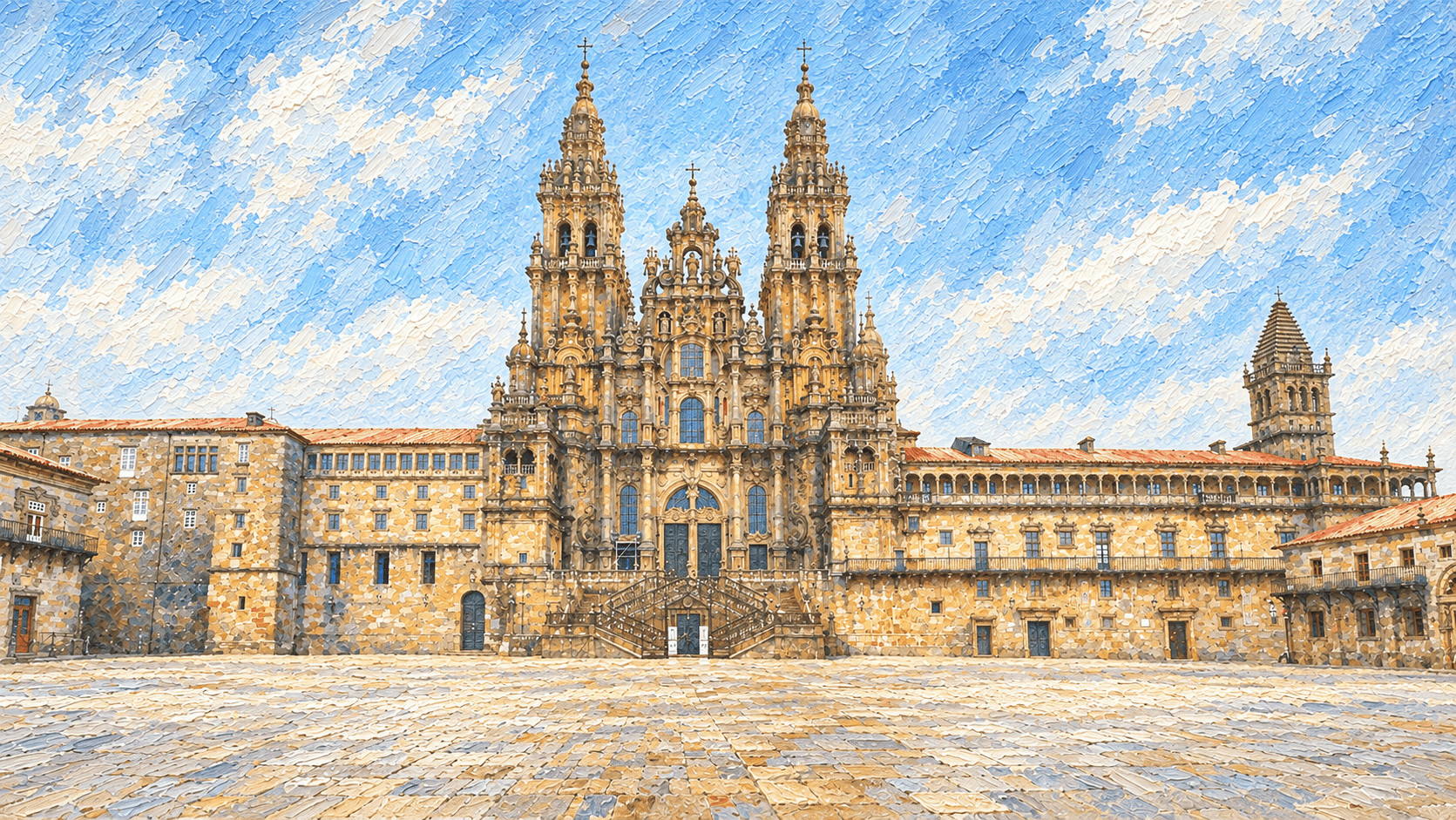
The walk ended on day 15 beneath the cathedral’s high altar, and with the most instructive document on the route. The usual line, repeated on the Pilgrim’s Office’s own history page, is that Pope Leo XIII proclaimed in 1884 that the relics at Santiago were those of the apostle James. The bull he issued, Deus Omnipotens of Nov. 1, 1884, is structured differently: it approves and confirms, with all doubts and controversies declared ended and with perpetual force, the sentence of the cardinal archbishop of Compostela on the identity of the bodies. “A bishop judged. A pope confirmed the judgment. That is a real answer, and it is not the same claim as proof,” the final post said. The distinction is between ecclesiastical authentication and scientific verification. The evidence the bull describes was an investigation at Compostela in 1884 and opinions sought from archaeologists, historians and anatomists in Madrid and Compostela, before radiocarbon dating was developed, and no official record the series reached shows a scientific examination since. Two institutions a street apart file the sea-voyage story under headings that translate as tradition and legend. The flat assertion came from the tourism site.
Then the certificate. The Compostela handed to arriving pilgrims certifies, in one Latin clause, that the bearer devoutly visited the temple for the sake of piety, and the office’s eligibility rules cover pilgrims on foot, on horseback or by bicycle. For three people who had come on foot, the final post put it in their own terms. “In the end, the certificate attests the walking. The claim about the urn is not in it,” it said, and it treated that as the right result.
The business lessons the series drew alongside the archival ones were plainer, and the arrival post gathered them. “Meaningful outcomes rarely come from one dramatic effort,” the day-15 post said. “They are built through a clear destination, steady execution and the willingness to adjust without losing direction.” The return trip tested the last part. A bus to Porto, then a canceled flight and a proposed rerouting through Rio de Janeiro, then further cancellations and unplanned days in Porto before a planned departure via Newark. On the trail, progress depended on preparation, judgment and taking the next step, the final travel post said. On the way home, airlines, crews and decisions made elsewhere determined what happened next. Responsibility does not always bring control, and in those moments the task is to preserve options, communicate the revised plan and stay ready when the route opens. The pause, an earlier return post added, left time to notice what a planned departure would have left behind, and the lasting value of a finished route is what is retained once the pace changes and familiar responsibilities return.
The habit that transfers from the walk is the same one the Sept. 7 overview promised: separating what a document establishes from what tradition has attached to it, and saying plainly when a date is contested or a search came up empty rather than reaching for the version that reads better. The Pilgrim’s Office in Santiago announced in January that it had issued 530,987 Compostelas in 2025, its highest annual figure. Each one certifies a completed pilgrimage and a visit made in that spirit, not what lies in the urn. The people who issue them know the difference, and so, after 15 days, did three walkers who spend their working lives with records.
Which claim in your own practice have you been repeating because it is widely repeated, rather than because you went back to the record and confirmed it?
News Sources
- Camino Portugués Coastal Route: what the record shows and what tradition added (ComplexDiscovery OÜ)
- Flying to the Camino Portugués Coastal Route: 4,700 miles to walk 167 (ComplexDiscovery Author, LinkedIn)
- Camino Portugués Coastal Route, day one: some of the Roman ruins here are reproductions (ComplexDiscovery Author, LinkedIn)
- Camino Portugués Coastal Route, day two: the aqueduct at Vila do Conde is said to have 999 arches (ComplexDiscovery Author, LinkedIn)
- Camino Portugués Coastal Route, day five: today the walk crosses a national border in a small boat (ComplexDiscovery Author, LinkedIn)
- Camino Portugués Coastal Route, day seven: Baiona says the first news of Columbus’s crossing landed here in 1493 (ComplexDiscovery Author, LinkedIn)
- Camino Portugués Coastal Route, day eight: Spain calls the arch at Panxón the only Visigothic architecture in Galicia (ComplexDiscovery Author, LinkedIn)
- Camino Portugués Coastal Route, day nine: there is a Roman saltworks under an apartment block in Vigo (ComplexDiscovery Author, LinkedIn)
- Camino Portugués Coastal Route, day twelve: a long climb to a monastery with the best founding legend on the walk (ComplexDiscovery Author, LinkedIn)
- Camino Portugués Coastal Route, day thirteen: Spain protected a house in 1976 as the birthplace of Valle-Inclán (ComplexDiscovery Author, LinkedIn)
- Camino Portugués Coastal Route, day fifteen: the final walk from Teo into Santiago de Compostela (ComplexDiscovery Author, LinkedIn)
- Camino Portugués Coastal Route, the last day: the usual line is that Pope Leo XIII declared the relics authentic (ComplexDiscovery Author, LinkedIn)
- After completing the Camino Portugués, the trip home has followed an unexpected route (ComplexDiscovery Author, LinkedIn)
- Año de récord en el Camino con 530.987 peregrinos y un atractivo creciente en EE UU (Galiciae)
- Cifras oficiales de la Oficina del Peregrino: 530.987 personas completaron una ruta jacobea en 2025 (Federación Española de Asociaciones de Amigos del Camino de Santiago)
- Cuántos peregrinos llegan a Santiago: datos 2025 y 2026 (santiago.es, unofficial independent guide)
- An interdisciplinary study of early mediaeval churches in north-western Spain (Galicia) (Heritage, MDPI (Sanjurjo-Sánchez, Blanco-Rotea, Sánchez-Pardo))
- Cronotipología y datación absoluta de iglesias altomedievales en Galicia. Primeros resultados del proyecto EMCHAHE (Minerva, Universidade de Santiago de Compostela)
- Letras apostólicas de N. S. P. León XIII en las cuales se confirma la declaración dictada por el Cardenal Arzobispo de Compostela (Biblioteca Virtual Miguel de Cervantes)
- The Pilgrimage to Santiago de Compostela (Oficina de Acogida al Peregrino)
- Primer documento sobre la vuelta de Cristóbal Colón de América (Archivo Histórico de la Nobleza, Ministerio de Cultura (cited via the series))
- La creación de una identidad patrimonial. Baiona y el descubrimiento de América (e-rph, Universidad de Granada (cited via the series))
- Leyenda, historia y arte (Monasterio de Santa María de Armenteira (cited via the series))
- La Compostela (Oficina de Acogida al Peregrino (cited via the series))





Assisted by GAI and LLM Technologies
Additional reading
- Nine months across Europe’s tech-sovereignty arc, from Tallinn to London
- One hexagon, three industries, two feet: a brand lesson in sneakers
- When the agent becomes a witness: an Oxford-style tutorial on AI evidence, accountability and discovery
- An Oxford tutorial for newsroom leaders who must learn faster than the news
- An Oxford tutorial for cybersecurity, governance and eDiscovery
- The Planning Paradox: an Oxford-style tutorial tests why business plans fail
Source: ComplexDiscovery OÜ
ComplexDiscovery’s mission is to enable clarity for complex decisions by providing independent, data‑driven reporting, research, and commentary that make digital risk, legal technology, and regulatory change more legible for practitioners, policymakers, and business leaders.